Table of Contents
- Quick Summary: The Arcade Operator’s Blueprint
- The Core Philosophy: Pinball as a Profit Center
- Step 1: Define Your Arcade’s DNA & Demographics
- Step 2: Master the Commercial-Grade Selection Criteria
- Step 3: Build a Balanced, Profitable Lineup (The 3-Tier Model)
- Step 4: Source & Vet Machines Like a Pro
- Step 5: Implement the Arcade Lifecycle Strategy
- The Ultimate Arcade Pinball Checklist
Quick Summary: The Arcade Operator’s Blueprint
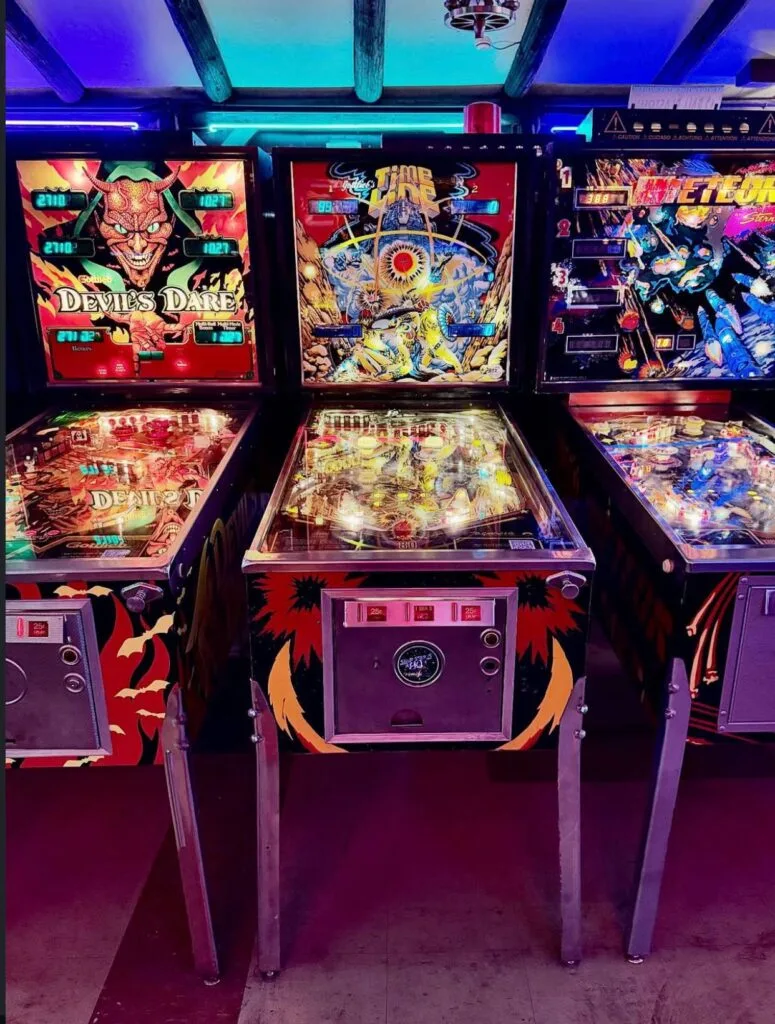
Choosing pinball for arcades is a strategic business decision. The goal is to select machines that maximize revenue per square foot by appealing to your specific customer base, boasting exceptional durability, and encouraging repeat play. Success hinges on balancing crowd-pleasing themes with bulletproof reliability.
The Core Philosophy: Pinball as a Profit Center
For an arcade, a pinball machine is not a collector’s item—it’s a hard-working asset. Every choice must be evaluated through the lens of:
- ROI (Return on Investment): How quickly will it pay for itself?
- Uptime: How often will it be working versus broken?
- Player Appeal: How many credits will it earn per day?
Step 1: Define Your Arcade’s DNA & Demographics
Your customer base dictates your entire strategy.
- Family Entertainment Centers (FECs): Prioritize bright, colorful, family-friendly themes with forgiving gameplay. Think Toy Story 4 (JJP), Jurassic Park (Stern Pro), The Mandalorian (Stern Pro). Durability is non-negotiable.
- Barcades & Adult Venues: Leverage nostalgia, music, and pop culture. Titles like The Addams Family, Godzilla (Pro), AC/DC (Pro), and Stranger Things (Pro) thrive. Social, spectator-friendly games are key.
- Competitive/Enthusiast Arcades: Focus on deep rulesets and tournament-standard games. Godzilla (Premium), Iron Maiden (Pro), Deadpool (Pro), and well-maintained classics like Medieval Madness are essential. Player respect for the lineup matters.
Step 2: Master the Commercial-Grade Selection Criteria
Beyond theme, these practical factors separate profitable machines from money pits.
- Durability First: Research common failures. Avoid games notoriously fragile plastic ramps or finicky mechs in high-traffic settings.
- The “Pro Model” Advantage: For modern Sterns, the Pro model is typically the superior commercial choice. It has fewer complex toys to break, lower purchase cost, and the same core gameplay, leading to better ROI and higher uptime.
- Parts & Service Ecosystem: Can you easily get replacement ramps, plastics, and boards? Is there a service manual? A game with no parts support is a ticking time bomb.
- Ease of Service: Open the backbox. Are boards stacked and hard to access? Clean, modular layouts mean faster repairs and lower labor costs.
Step 3: Build a Balanced, Profitable Lineup (The 3-Tier Model)
A diverse lineup maximizes coin drop from all player types. Aim for this mix:
- Tier 1: The Gateway Games (60% of plays): Easy to understand, hard to drain quickly. High spectacle. (Examples: Jurassic Park Pro, The Mandalorian Pro, Attack from Mars).
- Tier 2: The Crowd-Pleaser Classics (30% of plays): Universally loved, proven earners with more depth. Your reliable workhorses. (Examples: The Addams Family, Medieval Madness, Spider-Man (Stern)).
- Tier 3: The Enthusiast Depth (10% of plays): Complex games for dedicated players. They may earn fewer total credits, but they attract a loyal, high-spending crowd and elevate your arcade’s reputation. (Examples: Godzilla Premium, The Shadow, Tales of the Arabian Nights).
Step 4: Source & Vet Machines Like a Pro
Where and how you buy impacts longevity and cost.
- Source from Reputable Operators/Distributors: They often sell “arcade-ready” machines already vetted for commercial use. New machine warranties are invaluable.
- The Pre-Purchase Inspection is Mandatory: Never buy site-unseen for commercial use. Test in person:
- Run the switch test and solenoid test for 5+ minutes.
- Check for playfield wear in front of pop bumpers.
- Inspect ramps for stress cracks and cabinet corners for damage.
- Verify board integrity (no corrosion, previous repairs).
- Budget for Immediate Refurbishment: Even a good used game needs a commercial shop job: new rubbers, coils sleeves, LED conversion (for visibility and heat reduction), and a full clean before it hits your floor.
Step 5: Implement the Arcade Lifecycle Strategy
Plan for the entire lifespan of the machine on your floor.
- The Honeymoon Phase (Months 1-6): Market new arrivals heavily. Track earnings data religiously.
- The Steady State (Months 7-36): Perform scheduled preventative maintenance. This is the profit zone.
- The Refresh Point (~Year 3): Before earnings plateau, plan to sell, trade, or rotate the machine. The used pinball market allows you to recoup 60-80% of your initial cost, which you can reinvest in a new title to renew customer interest.
The Ultimate Arcade Pinball Checklist
Before purchasing, confirm each point:
- Theme matches our core demographic.
- Pro Model chosen over Premium for reliability (if applicable).
- Earning data from other operators is positive.
- Parts are readily available for common failures.
- Passed full diagnostic test (switch, solenoid, gameplay).
- Budget includes shipping, initial shop, and a 20% repair reserve.
- Placement plan is defined (high-traffic, good sightlines).
- Exit strategy is considered (3-year resale value estimate).
The Operator’s Bottom Line: The best pinball machine for your arcade is the one that earns the most money with the least hassle. It’s a tool. Choose tools that are right for the job: robust, appealing, and easy to maintain. By applying this strategic framework, you build a pinball lineup that isn’t just a collection of games, but a optimized, revenue-generating system.