
TL;DR:
- Pinball machines are valuable collectibles due to their rarity, cultural history, and strong community demand. Restored machines from the 1990s produce significant investment returns, especially when condition, theme, and craftsmanship are prioritized. Specialized sales channels and careful evaluation help collectors maximize long-term profit and preserve pinball’s cultural legacy.
A pinball machine is defined as a collector’s item by its rare combination of cultural heritage, mechanical artistry, limited production runs, and proven investment returns. Few objects in the vintage game market carry this much weight across so many dimensions at once. Restored machines from the 1990s Digital Dot Display (DMD) era now deliver net gains around $3,500 per unit, making them as much a financial asset as a nostalgic treasure. Understanding why pinball is a collector’s item means looking at history, condition, market dynamics, and the passionate community that keeps demand alive. This guide covers all of it.
Why pinball is a collector’s item: history and cultural significance
Pinball’s collectible status begins with a story of defiance. New York City banned pinball machines from 1942 to 1976, a 34-year prohibition rooted in the belief that the game was a form of gambling that preyed on children. At its peak, an estimated 11,000 machines operated in the city before authorities seized and destroyed them. That act of destruction is exactly what makes surviving machines from that era so rare and desirable today.
The ban did not kill pinball. It drove it underground, creating a subculture of illicit play spaces that elevated pinball’s cultural mystique far beyond what mainstream acceptance ever could have. Collectors understand that an object with a forbidden past carries a story. That story adds emotional and historical weight that no modern reproduction can replicate.
The ban ended in 1976 when a skilled player demonstrated to New York City officials that pinball required genuine skill, not luck. That moment reframed the machine from a gambling device to a game of craft. It also marked the beginning of pinball’s golden age in American arcades, a period that produced the most sought-after titles in the collector market today.
“Pinball’s history is not just background noise for collectors. The bans, the underground culture, and the legal battles transformed these machines into artifacts of American defiance. Owning one is owning a piece of that story.”
The emotional and nostalgic value this history generates is not abstract. Collectors pay premiums for machines tied to specific eras because those machines represent lived cultural moments. A 1990s machine themed around a blockbuster film or a rock band is not just a game. It is a time capsule.
What makes a pinball machine valuable today?
Several concrete factors determine whether a machine commands collector prices or sits unsold in a garage.
Rarity and production volume. Machines produced in limited runs are inherently more desirable. When a manufacturer released only a few thousand units of a specific title, scarcity drives up value over time. This is the same principle that governs rare coins, vintage watches, and first-edition books.
Condition and originality. Collectors prioritize machines with original parts, undamaged cabinet paint, and authentic electronics. A machine that has been heavily modified or repainted loses long-term value, even if it plays perfectly. Originality separates a functional machine from a museum-quality collectible.
Theme and pop culture connections. Machines tied to popular franchises, films, and bands maintain higher demand because their fan bases sustain interest across decades. Titles like The Addams Family, Attack from Mars, and Ghostbusters hold value partly because their source material never stops attracting new fans.
Mechanical complexity and craftsmanship. A well-engineered machine with intricate ramps, multiball systems, and custom artwork signals quality. Collectors recognize and reward high-end craftsmanship. The more complex and well-executed the design, the more prestige the machine carries.
Community and fan base. Machines with dedicated communities retain collectible value longer. Active forums, modification support, and organized tournaments keep specific titles in the conversation for years. Community-driven interest is one of the most underrated factors in long-term price stability.
Pro Tip: Before buying, search the title on dedicated pinball forums. A machine with an active, enthusiastic community is a safer long-term investment than a rare title nobody discusses.
Condition and originality together form the single most important evaluation axis. Serious collectors use a simple mental framework: the closer a machine is to its factory state, the higher its ceiling price. Restoration that replaces worn parts with period-correct components is acceptable. Repainting the cabinet in a non-original color is not.
Investment potential and market dynamics in 2026
Pinball machines are a legitimate alternative asset class for collectors who approach them with discipline. A-list titles from the 1990s DMD era currently offer 30%–50% ROI after professional restoration. That return is not guaranteed, but it is achievable for collectors who understand the cost structure.
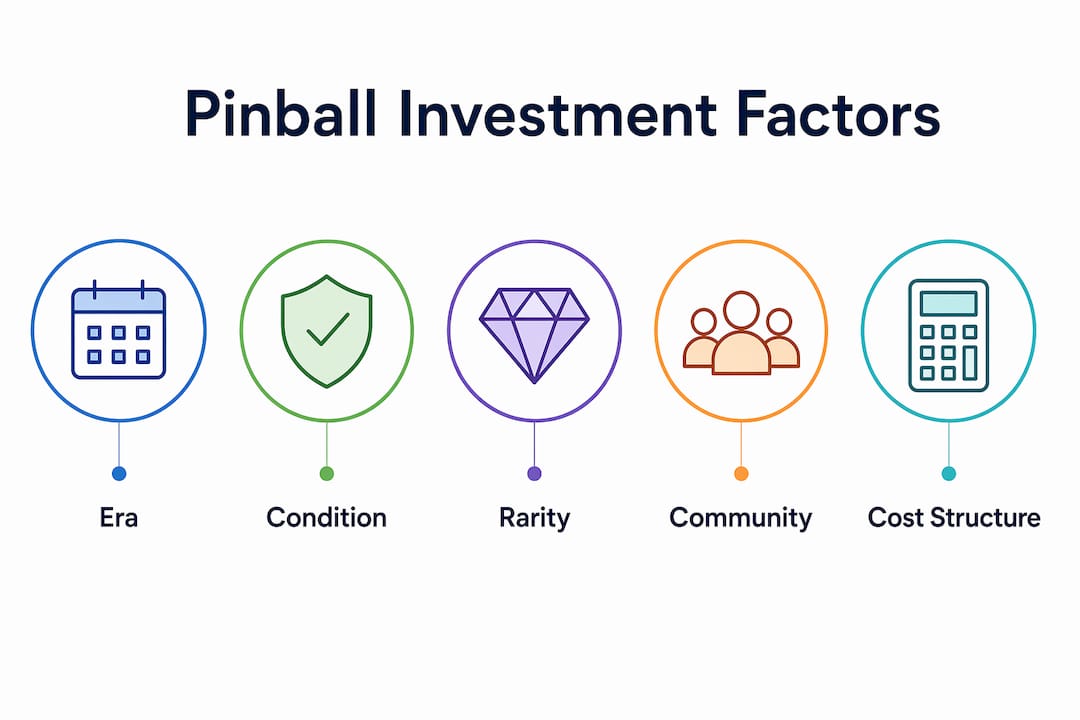
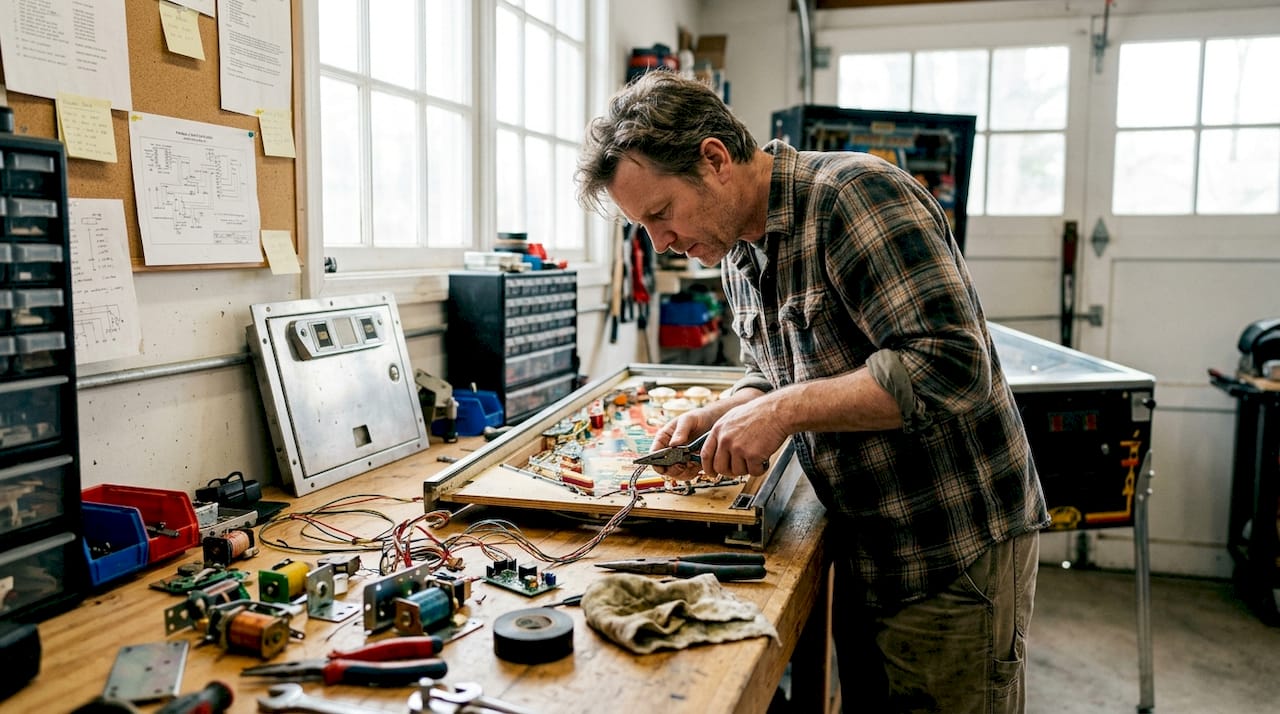
The cost structure matters enormously. Full restorations can exceed 100 hours of labor, and parts plus shipping represent a significant additional expense. The critical metric is value lift per labor hour. Achieving more than $50 in value lift per hour is the threshold that separates profitable restoration from an expensive hobby. Collectors who track this number make better acquisition decisions.
| Factor | Impact on ROI |
|---|---|
| Machine era (1990s DMD) | Highest appreciation potential |
| Condition at acquisition | Lower cost basis improves net gain |
| Theme popularity | Sustains price floor over time |
| Restoration quality | Directly lifts resale value |
| Selling channel | Specialized forums add 15%–20% to sale price |
Mid-tier “B-list” titles from the 1990s often deliver better ROI than A-list machines because their acquisition cost is lower and parts are more widely available. Specializing in machines from a single manufacturer also reduces labor hours, since technicians build familiarity with specific circuit boards and mechanical systems. That familiarity compounds into real financial advantage over time.
Pro Tip: Calculate your true cost before buying any restoration project. Add the acquisition price, estimated parts cost, and your labor hours at a professional technician rate of at least $50 per hour. If the math does not show a clear profit margin, pass on the machine.
Storage, insurance, and selling fees are costs that casual collectors routinely underestimate. A machine sitting in a climate-controlled storage unit for 18 months while awaiting a buyer erodes net returns. Selling through specialized forums and auction platforms yields higher prices than local classifieds, but requires professional photography and a documented restoration portfolio to command top dollar.
How to evaluate and acquire pinball machines
Smart acquisition is the foundation of profitable collecting. The best collectors spend more time evaluating machines before purchase than they spend on the restoration itself.
- Check the playfield first. Worn or faded playfield art is expensive to restore correctly. Mylar lifting, ball swirl marks, and insert cracking all signal heavy use. A clean playfield dramatically reduces restoration cost and time.
- Inspect the cabinet art. Original cabinet artwork in good condition is a major value driver. Repainted or touched-up cabinets are acceptable if done professionally, but they rarely match the value of factory-original paint. Understanding pinball machine value starts with the cabinet.
- Test all electronics before buying. Boards with burned components or corroded connectors can cost hundreds of dollars to repair. Ask the seller to power the machine and demonstrate full gameplay. A seller who refuses is a red flag.
- Research parts availability. Machines from manufacturers with active parts ecosystems are far easier and cheaper to restore. Obscure titles with discontinued parts can trap you in an expensive search for components.
- Verify the title’s collector demand. A machine may be rare without being desirable. Cross-reference the title on collector databases and recent auction results to confirm actual market demand before committing.
Pro Tip: Bring a flashlight and a phone with a pinball price guide app to any in-person inspection. Check the coin door for the original manufacture date sticker. An unmodified machine with its original date sticker intact commands a collector premium.
Shipping is one of the most overlooked costs in collecting pinball machines. A machine that costs $2,000 to buy can cost $400–$600 to ship safely across the country. Factor freight costs into your offer price, not your profit calculation. Collectors who learn how to move arcade machines safely protect both their investment and the machine’s condition.
Avoid the common pitfall of overpaying for a machine based on emotional attachment to the theme. The strongest collector demand comes from the synergy of nostalgia, rarity, and functional craftsmanship. All three must be present for a machine to hold its value over time.
Key Takeaways
Pinball machines hold collector value because rarity, original condition, cultural history, and active community demand work together to sustain and grow prices over time.
| Point | Details |
|---|---|
| History drives desirability | The NYC ban and underground culture gave surviving machines a cultural story that adds real premium value. |
| Condition is the top valuation factor | Original parts, undamaged cabinet art, and unmodified electronics separate collectibles from ordinary used machines. |
| 1990s DMD era offers best ROI | Restored machines from this period deliver 30%–50% returns when acquisition and labor costs are managed carefully. |
| B-list titles beat A-list for profit | Lower acquisition cost and shared parts availability make mid-tier machines the smarter investment for most collectors. |
| Selling channel affects net return | Specialized forums and auction platforms add 15%–20% to sale prices compared to casual local sales. |
Why pinball still surprises me after years in the hobby
I have watched collectors chase A-list titles for years, convinced that owning the most famous machine in the room is the path to the best return. The data consistently proves otherwise. The collectors who build real wealth in this hobby are the ones who specialize quietly in a single manufacturer’s catalog, learn the electronics cold, and buy B-list titles that the flashy buyers overlook.
What surprises me most is how often new collectors underestimate the community factor. A machine with a passionate, active fan base is not just more fun to own. It is genuinely more liquid. When you are ready to sell, those community members are your buyers. They already know the title, they already want it, and they will pay a fair price without lengthy negotiation.
The cultural dimension also deserves more respect than the investment spreadsheets give it. Preserving vintage pinball benefits the broader history of American popular culture. These machines are interactive art. The cabinet artwork alone represents a distinct graphic design tradition that has no equivalent in any other collectible category. Collectors who appreciate that dimension tend to make better long-term decisions because they hold machines through market dips instead of panic-selling.
My honest advice for anyone entering this hobby: buy one machine you love before you buy one machine you think will appreciate. That first machine teaches you more about condition, mechanics, and community than any guide can. After that, the investment logic becomes intuitive.
— Jim
Premiumpinballs: a trusted source for serious collectors
Collectors who know what they want deserve a source that matches their standards. Premiumpinballs carries a curated inventory of refurbished, used, and new premium machines, including iconic titles like The Addams Family, Attack from Mars, and Ghostbusters.
Every listing includes detailed condition information, pricing, and direct purchase options. Whether you are building a collection around investment potential or looking for a statement piece that anchors a game room, Premiumpinballs offers the selection and expertise to match. Explore the best pinball machines for 2025 or browse the full inventory to find machines that combine collector appeal with lasting prestige. Flexible payment options, shipping, and in-store pickup make the acquisition process as polished as the machines themselves.
FAQ
Why is pinball considered a collector’s item?
Pinball machines are collector’s items because they combine cultural history, mechanical craftsmanship, limited production runs, and proven resale value. Machines tied to iconic franchises and specific eras carry both nostalgic and financial appeal.
What is the best era for collecting pinball machines?
The 1990s DMD (Digital Dot Display) era produces the strongest collector demand and the highest restoration ROI, with restored machines delivering 30%–50% returns on well-managed projects.
How does condition affect pinball machine value?
Condition is the primary valuation factor. Machines with original parts, undamaged cabinet art, and unmodified electronics command the highest prices. Heavy modifications or repaints reduce long-term collector value significantly.
Are B-list pinball titles worth collecting?
Mid-tier B-list titles from the 1990s often offer better ROI than A-list machines because their acquisition cost is lower and parts are more widely available, making restoration faster and more profitable.
Where should I sell a restored pinball machine?
Selling through specialized pinball forums and auction platforms yields 15%–20% higher prices than local sales. A professional restoration portfolio and high-quality photography are the two most effective tools for maximizing sale price.