
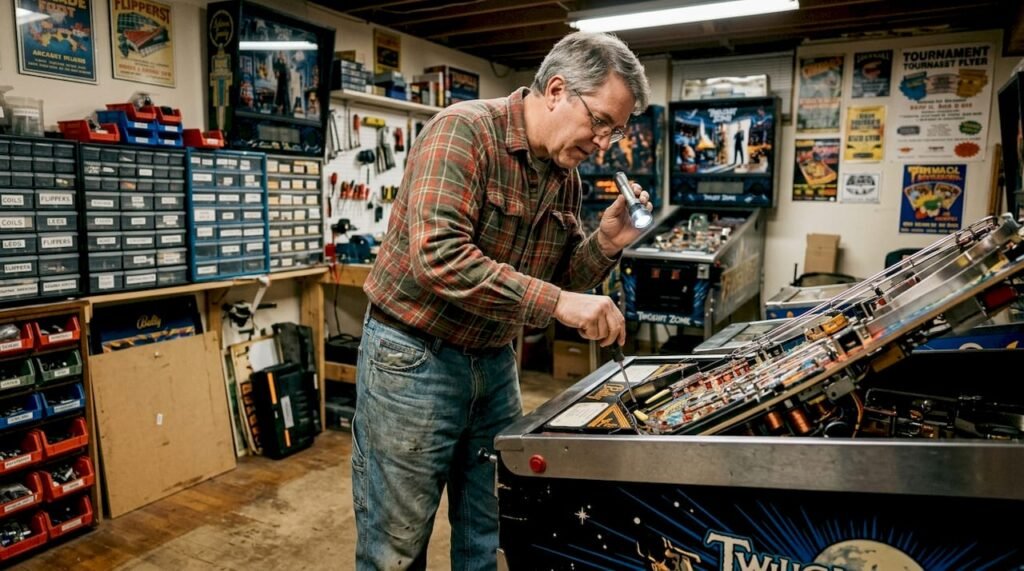
Many pinball enthusiasts assume a standardized numerical grading system exists for machines, similar to PSA ratings for trading cards. In reality, pinball grading relies on descriptive condition classes that focus on three key components: the backglass, playfield, and cabinet. Understanding this three-class grading system helps collectors accurately assess condition, determine fair market value, and make confident buying or selling decisions. This guide breaks down grading criteria, restoration impacts, and practical appraisal strategies to help you evaluate pinball machines like an expert.
Table of Contents
- Key takeaways
- Understanding the three-class grading system
- Key components and criteria for grading pinball machines
- Impact of restoration and market value considerations
- How to apply grading when buying, selling, or appraising pinball machines
- Explore premium pinball machines for your collection
- Frequently asked questions
Key Takeaways
| Point | Details |
|---|---|
| Three class grading | Pinball machines are classified into Class 1, Class 2, or Class 3 based on the combined condition of backglass, playfield, and cabinet. |
| Backglass drives grade | Backglass condition such as flaking or fading is a primary grading indicator and a major factor in value. |
| Restoration can raise grade | High quality restorations can elevate a machine’s grade when performed properly. |
| Documentation supports grading | Consistent lighting and photo documentation create objective records that support grading decisions. |
Understanding the three-class grading system
The three-class grading system represents the standard framework collectors use to evaluate pinball machines. This approach focuses on observable condition rather than arbitrary numerical scores. Class 1 designates machines in near-mint condition with minimal wear, pristine artwork, and fully functional components. Class 2 indicates good overall condition with visible signs of play but no major damage or missing parts. Class 3 covers machines in fair or acceptable condition with noticeable wear, possible minor damage, and components that may need attention.
Each class reflects the combined condition of three primary areas: backglass, playfield, and cabinet. A machine cannot achieve Class 1 status if any single component shows significant deterioration, even if other areas remain pristine. This holistic approach ensures consistent evaluation across different machines and eras. Restored or refinished elements influence class assignment, with high-quality restorations potentially elevating a machine’s grade when executed properly.
Visual indicators by class:
- Class 1: Bright, unfaded artwork; smooth playfield surface; intact decals; zero flaking on backglass; all original parts functioning perfectly
- Class 2: Minor playfield wear around high-traffic areas; slight backglass fading; small cabinet scuffs; all mechanics operational with possible minor adjustments needed
- Class 3: Visible playfield wear with possible insert sinking; backglass showing flaking or fading; cabinet dents or paint loss; mechanics functional but may require service
| Class | Backglass | Playfield | Cabinet | Market Position |
|---|---|---|---|---|
| Class 1 | No flaking, vivid colors | No wear, level inserts | Perfect paint, decals intact | Premium pricing |
| Class 2 | Minor fading, minimal flaking | Light wear, stable inserts | Small scuffs, decals good | Mid-range value |
| Class 3 | Noticeable flaking or fading | Visible wear, possible sinking | Dents, paint chips, decal loss | Budget pricing |
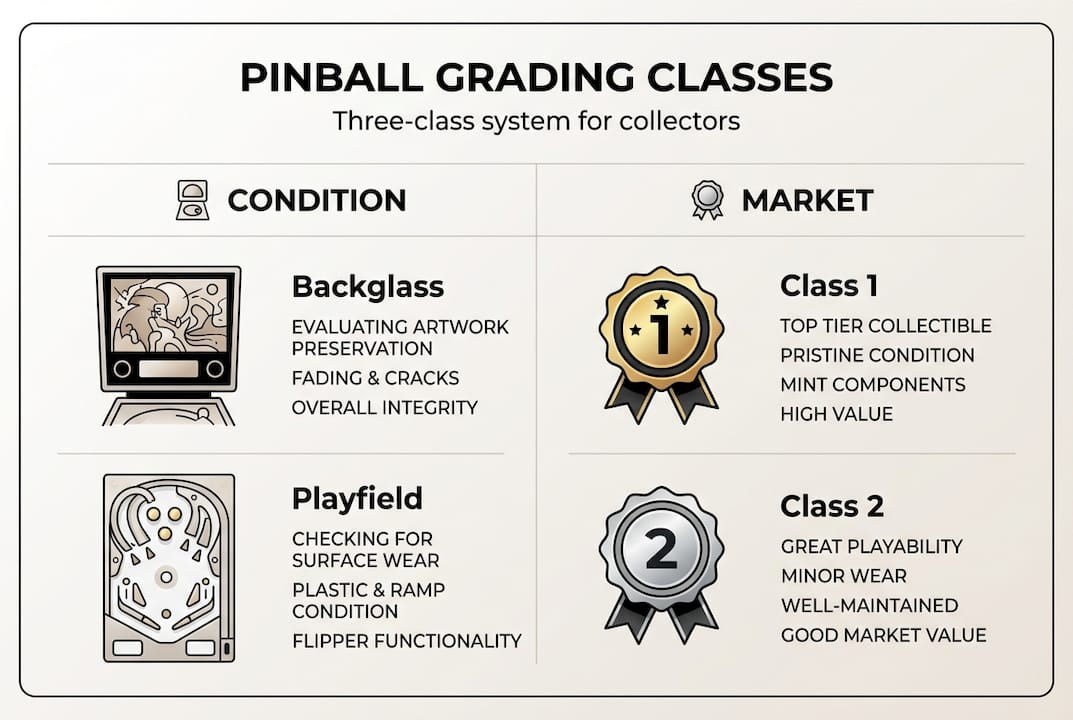
Pro Tip: Always evaluate machines under consistent lighting conditions and document findings with photos. This creates objective records that support your grading decisions and builds credibility with buyers when you decide to sell.
Understanding pinball machine value requires mastering these grading fundamentals. The class system provides a common language for collectors, sellers, and appraisers to communicate condition expectations accurately.
Key components and criteria for grading pinball machines
Backglass condition serves as a primary grading indicator because replacement options remain limited for many vintage titles. Flaking and fading represent the most common backglass issues, often caused by moisture exposure or improper storage. Cracks from impact or stress fractures significantly reduce grade classification. Minor edge flaking may still allow Class 2 designation, while extensive flaking or major cracks typically drop a machine to Class 3.
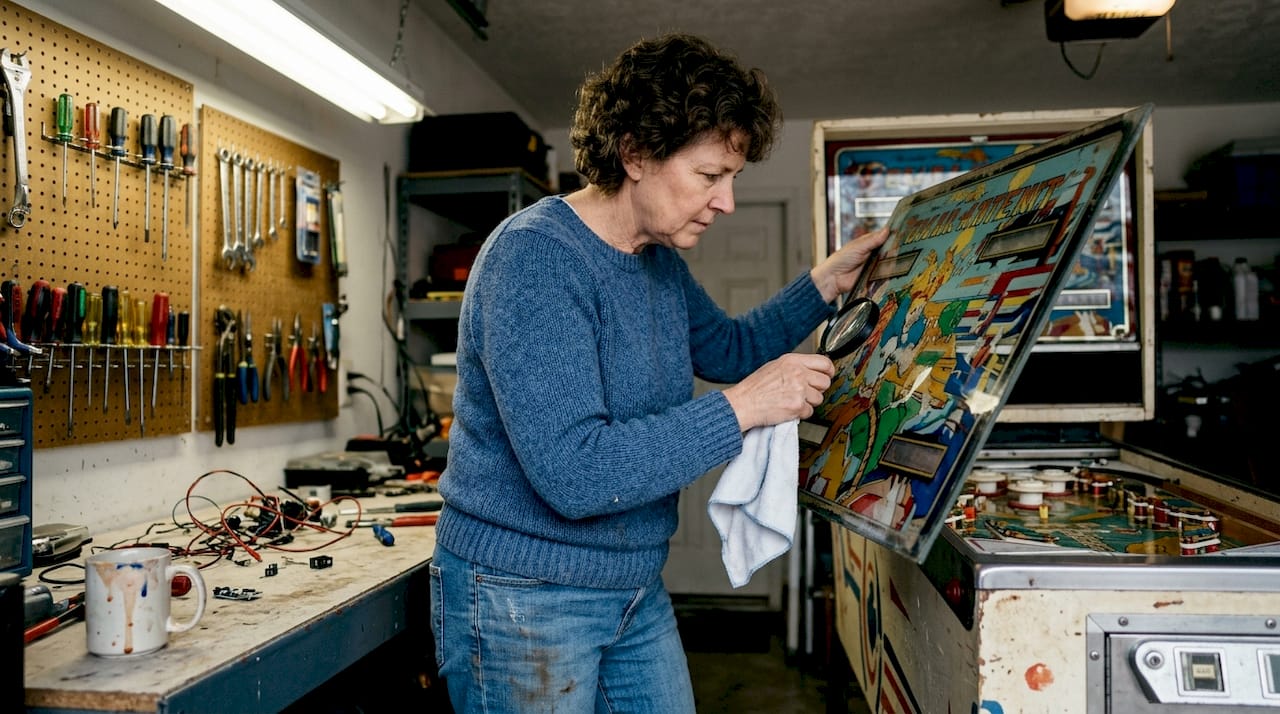
Playfield evaluation requires close inspection of multiple factors. Insert sinking and artwork deterioration indicate heavy play or poor maintenance. Ball swirl marks around targets and ramps show normal wear but excessive patterns suggest Class 2 or 3 designation. Clear coat condition matters significantly, as hazed or chipped protective layers expose artwork to accelerated damage. Mylar patches sometimes cover worn areas, which affects authenticity considerations for serious collectors.
Cabinet assessment focuses on structural integrity and cosmetic condition. Dents from moving or storage mishaps immediately lower grade classification. Paint chips expose bare wood to moisture damage and indicate rough handling. Decal wear or complete loss affects both aesthetics and historical accuracy. Side art condition particularly influences value for machines with elaborate cabinet graphics.
Essential grading checkpoints:
- Backglass: Check corners and edges for flaking, examine colors under bright light for fading, inspect glass for cracks or separation
- Playfield: Test insert stability by pressing gently, look for ball swirl patterns indicating wear concentration, verify clear coat integrity
- Cabinet: Examine all sides for dents or structural damage, assess paint condition and color matching, verify decal completeness and adhesion
- Mechanics: Operate all flippers through full range of motion, test bumpers and slingshots for proper response, verify all switches register correctly
- Electronics: Check display functionality, test sound system operation, verify all lighting works correctly
Mechanical function represents the fourth critical evaluation area. Flippers must snap crisply and return smoothly. Bumpers and slingshots should fire consistently with proper force. All switches must register accurately to ensure fair gameplay. Expert collectors avoid over-lubrication in electromechanical games, as excess oil attracts dirt and causes switch problems.
Pro Tip: When evaluating playfields, use a straight edge to check for warping or sagging. Even minor playfield distortion affects ball roll and indicates potential structural issues that impact long-term value.
Familiarity with pinball machine parts enables more accurate condition assessment. Recognizing original versus replacement components helps determine authenticity, which influences both grading and collector appeal.
Impact of restoration and market value considerations
Restoration work creates ongoing debate within the collector community. Some purists prefer completely original machines regardless of condition, viewing any modification as diminishing historical authenticity. Others recognize that playfield restoration increases value by 40-60% when executed with professional-grade materials and techniques. Quality matters enormously, as poor restoration attempts often cause more harm than leaving original components intact.
Modern reproduction parts spark particular controversy. CPR reproduction playfields offer alternatives when originals deteriorate beyond repair, but some collectors discount machines with non-original playfields regardless of condition. Replacement backglasses face similar scrutiny, with original examples commanding premium prices even when showing minor wear. Cabinet decals and side art reproductions generally receive broader acceptance, especially when original artwork has deteriorated significantly.
Documentation transparency builds market trust and protects value. Sellers who clearly disclose restoration work, replacement parts, and modification history typically achieve better prices than those who obscure machine history. Detailed photo records of restoration processes demonstrate quality workmanship and justify premium pricing for professionally restored machines.
| Condition State | Collector Perspective | Market Value | Grade Impact |
|---|---|---|---|
| All-original, excellent | Preferred by purists | Highest for rare titles | Can achieve Class 1 |
| All-original, worn | Restoration candidate | Moderate, project pricing | Typically Class 2-3 |
| Professional restoration | Accepted by players | Strong value if documented | Can achieve Class 1-2 |
| Amateur restoration | Viewed skeptically | Discounted significantly | Often Class 3 |
Restoration considerations for grading:
- Professional playfield restoration with proper clear coating can elevate grade classification when quality matches or exceeds original
- Cabinet refinishing improves cosmetic grade but may reduce value for machines with rare original artwork
- Reproduction parts should always be disclosed and documented to maintain buyer confidence
- Partial restorations that mix original and new components require careful evaluation of each area separately
- Poor quality restoration work can drop a machine below its pre-restoration grade
Pro Tip: Keep detailed records of all restoration work including materials used, techniques applied, and before/after photos. This documentation justifies your asking price and helps future owners maintain the machine properly.
Understanding advantages of refurbished pinballs helps collectors balance originality preferences against playability and condition. The relationship between condition and pinball pricing becomes clearer when you recognize how restoration quality affects market perception.
How to apply grading when buying, selling, or appraising pinball machines
Systematic evaluation prevents costly mistakes and ensures fair transactions. Expert pinball collectors distinguish pinball-specific grading from general arcade game evaluation, recognizing that playfield condition matters more for pinball than cabinet cosmetics matter for video games. This specialized focus reflects gameplay priorities and replacement part availability unique to pinball collecting.
Step-by-step appraisal process:
- Document machine details including title, manufacturer, production year, and serial number for accurate market research
- Photograph all four sides of cabinet, playfield from multiple angles, backglass close-ups, and any damage or wear areas
- Test all mechanical functions systematically, noting any issues with flippers, bumpers, switches, or other components
- Assign preliminary grade to each major component (backglass, playfield, cabinet) using three-class criteria
- Determine overall machine grade based on lowest component grade, as weakest area defines classification
- Research recent sales of comparable machines in similar condition using authoritative pricing guides
- Adjust valuation based on rarity, desirability, and local market conditions
Pricing benchmarks vary significantly by condition class. A Class 1 example of a popular title might command 150-200% of the price for the same title in Class 3 condition. Rare machines show even wider spreads, as collectors pay substantial premiums for top-condition examples of hard-to-find titles. Using condition class with current market data from pricing guides provides realistic value expectations.
Common appraisal pitfalls to avoid:
- Overvaluing machines based on emotional attachment or nostalgic memories rather than objective condition assessment
- Ignoring hidden issues like playfield wear under mylar, cabinet water damage, or intermittent electronic problems
- Failing to research recent comparable sales, relying instead on outdated pricing information or wishful thinking
- Overlooking restoration quality differences between professional and amateur work
- Neglecting to verify all mechanical and electronic functions before finalizing purchase decisions
Market conditions influence pricing beyond pure condition grades. Local supply and demand, seasonal buying patterns, and trending titles all affect values. Machines featured in popular media or tournaments often see temporary price increases regardless of condition. Understanding these market dynamics helps you time purchases and sales strategically.
Pro Tip: Join online pinball communities and monitor recent sales threads to develop accurate pricing instincts. Real transaction data from actual buyers and sellers provides more reliable benchmarks than published guides alone.
Applying grading knowledge to collectible pinball valuation transforms subjective opinions into objective assessments. The comprehensive pinball machine value guide principles covered here enable confident decision-making whether you are buying your first machine or expanding an established collection.
Explore premium pinball machines for your collection
Now that you understand grading criteria and value assessment, finding machines that meet your quality standards becomes straightforward. Premium Pinballs offers carefully curated inventory spanning vintage classics to modern premium titles, with detailed condition documentation for every machine. Our refurbished machines undergo professional restoration using proper techniques and materials, ensuring they meet Class 1 or Class 2 standards.
Browse our selection of best pinball machines for arcades to find titles that combine playability with strong resale value. Discover the advantages of refurbished pinballs that deliver like-new performance at more accessible price points. Our transparent approach to pinball pricing ensures you understand exactly what condition you are purchasing and why each machine carries its specific value.
Frequently asked questions
What defines the three classes of pinball machine grading?
Class 1 represents the best condition with near-mint components, minimal wear, and pristine artwork across backglass, playfield, and cabinet. Class 2 indicates good overall condition with minor visible wear but no major damage or missing parts. Class 3 covers acceptable condition with noticeable wear, possible cosmetic damage, and components that function but may need service.
How does restoration impact pinball machine value?
Professional restoration can increase machine value by 40-60% when executed with quality materials and proper techniques. However, some collectors prefer completely original machines and may discount restored examples regardless of quality. Transparent documentation of restoration work helps maintain buyer confidence and supports premium pricing for professionally restored machines.
What are the key areas to check when grading a pinball machine?
Evaluate backglass condition for flaking, fading, or cracks that indicate deterioration. Inspect playfield for wear patterns, insert stability, and clear coat integrity that affect gameplay and appearance. Assess cabinet for dents, paint condition, and decal completeness that impact cosmetic appeal. Test all mechanical components including flippers, bumpers, and switches to verify proper function.
Where can I find reliable pricing information for graded pinball machines?
The Pinball Price Guide provides authoritative pricing benchmarks organized by condition class for thousands of titles. Online pinball communities and marketplace sales data offer real-time transaction information reflecting current market conditions. Combining published guides with recent comparable sales gives the most accurate value assessments for machines in specific condition classes.