
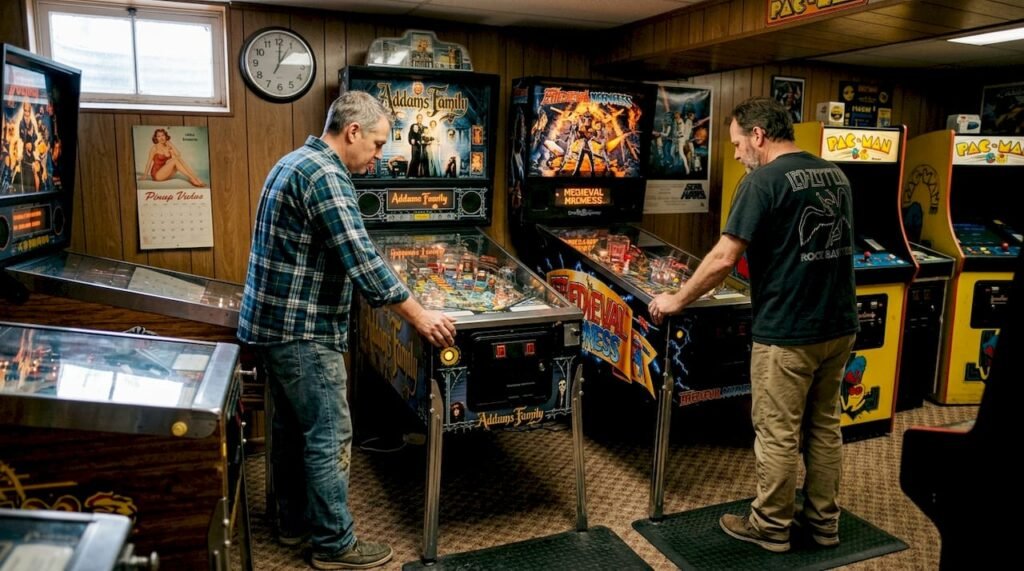
Choosing the right vintage pinball machine can feel overwhelming when you’re faced with thousands of models spanning nearly a century of innovation. Understanding the history and mechanical evolution of classic pinball games transforms you from a casual buyer into an informed collector who recognizes true value. This guide walks you through the electromechanical era’s defining features, profiles iconic machines that shaped pinball culture, and explains how mechanical design influences both gameplay and collectibility. Whether you’re hunting for your first restoration project or adding a premium piece to your collection, knowing this history helps you make smarter decisions and appreciate the craftsmanship behind these enduring arcade legends.
Table of Contents
- Key takeaways
- Understanding classic pinball era and mechanics
- Iconic classic pinball machines and their historical significance
- How mechanical design influenced pinball gameplay and collectibility
- Comparing classic pinball machines: a collector’s guide
- Discover classic and refurbished pinball machines at Premium Pinballs
- FAQ
Key Takeaways
| Point | Details |
|---|---|
| Era overview | The electromechanical era from 1947 to 1977 defined classic pinball by using relays and mechanical scoring instead of digital components. |
| Flipper coil design | Flipper coils use a powerful initial winding to launch the flipper and a weaker hold winding controlled by an EOS switch to prevent overheating. |
| Tilt mechanisms | Tilt features detect abusive handling and protect gameplay and delicate components during play. |
| Iconic machines | Iconic machines such as Bally Ballyhoo and Williams Baffle Ball shaped the hobby by defining early design language and demonstrating revenue potential. |
| Restoration value impact | Condition and restoration quality significantly influence value and desirability for vintage pinball machines. |
Understanding classic pinball era and mechanics
The electromechanical era from 1947 to 1977 defined what collectors now consider classic pinball. These machines relied entirely on relays, switches, score reels, and chimes rather than digital components. Every sound you heard and every point scored happened through precise mechanical choreography that required skilled engineering and regular maintenance.
Flipper coils represent the heart of electromechanical gameplay. These coils use dual windings: a powerful initial winding fires the flipper upward with force, while a weaker hold winding keeps it raised when you hold the button. The EOS switch positioned at the end of the flipper’s stroke cuts power from the strong winding to the hold winding, preventing overheating and extending coil life. Without proper EOS function, flipper coils burn out quickly or deliver weak performance.
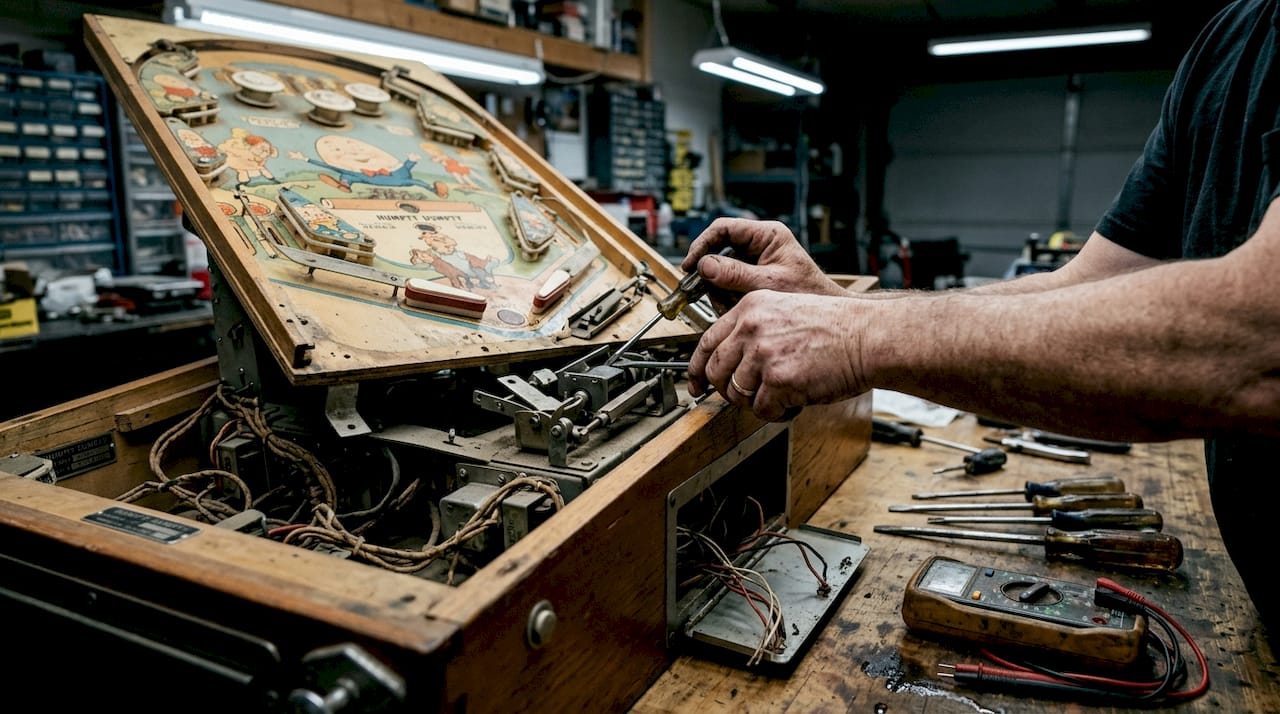
Common mechanical issues plague vintage machines. Plunger mushrooming occurs when the metal tip of the flipper coil spreads from repeated impacts, causing binding and sluggish response. Weak or misadjusted EOS switches fail to cut power properly, leading to overheated coils and reduced flipper strength. Springs lose tension over decades, requiring replacement to restore original snap and responsiveness.
Tilt mechanisms served as the era’s anti-cheating technology. A plumb bob suspended inside the cabinet would complete a circuit if players shook or lifted the machine excessively, ending the ball in play. Slam tilts detected violent impacts that could artificially trigger scoring mechanisms. These features protected both the delicate mechanical components and the fairness of gameplay, making them essential to understanding how classic machines were designed to resist abuse.
Pro Tip: When evaluating vintage machines, test flipper strength and listen for consistent chime sounds. Weak flippers or silent score reels often indicate deferred maintenance that will require rebuild kits and expert attention before the machine delivers authentic gameplay.
Mechanical complexity varies significantly across models. Some machines feature simple single-level playfields with basic bumpers and targets, while others incorporate multiple levels, drop targets, and intricate relay logic for bonus scoring. Understanding these pinball machine parts helps you assess restoration difficulty and ongoing maintenance requirements. Simpler machines often prove more reliable for beginners, while complex models reward experienced collectors with deeper gameplay and greater challenge.
Iconic classic pinball machines and their historical significance
Bally Ballyhoo stands among the earliest pinball models from 1932, representing the pre-flipper era when players relied solely on gravity and playfield design. Williams Baffle Ball from 1931 helped establish pinball as a commercial entertainment medium, proving the concept could generate consistent revenue in Depression-era America. These early machines lacked the complexity collectors prize today but established the foundation for everything that followed.
Gottlieb Humpty Dumpty introduced flippers in 1947, revolutionizing pinball from a passive game of chance into an active skill-based challenge. This single innovation transformed the industry and created the template every subsequent machine would follow. Collectors value Humpty Dumpty not just for rarity but for its pivotal role in pinball evolution, making it a centerpiece in serious collections despite its relatively simple design.
Bally Fireball from 1972 produced 3,815 units and featured signature zipper flippers that rapidly opened and closed, creating unique gameplay challenges. The machine’s distinctive artwork and mechanical innovations made it popular in its era and highly sought after today. Production volume affects collectibility: machines produced in smaller quantities typically command higher prices, while higher production models like Fireball remain accessible to collectors seeking iconic gameplay without extreme rarity premiums.
Collector interest stems from multiple factors beyond simple age. Innovations like Humpty Dumpty’s flippers or Fireball’s zipper mechanisms create historical significance. Rarity drives competition among collectors, especially for machines with production runs under 1,000 units. Playability matters enormously because collectors want machines they can enjoy, not just display. The intersection of these factors determines which machines appreciate in value and which remain affordable entry points for new collectors.
Several machines bridge affordability and collectibility. Gottlieb’s 1970s lineup includes numerous titles produced in moderate quantities with solid gameplay and attractive artwork. Bally machines from the same period often feature innovative mechanical features at reasonable prices. Understanding these reasons to collect pinball helps you identify models that deliver both historical interest and practical enjoyment without requiring premium budgets.
How mechanical design influenced pinball gameplay and collectibility
Tilt mechanisms including plumb bob and slam tilt protected machines from damage while ensuring fair competition. The plumb bob’s sensitivity could be adjusted, with tournament settings using tighter tolerances to prevent any advantage from machine manipulation. Home collectors often adjust tilt sensitivity based on personal preference, though maintaining some tilt function protects the mechanical components from stress that shortens their lifespan.
Slam tilts respond to violent impacts that could jar score reels or trigger relay switches artificially. Players who lifted and dropped machines to advance scoring faced immediate game termination and potential ejection from arcades. This protection proved essential in commercial settings where revenue depended on fair play and machine longevity. Collectors restoring machines for home use should verify slam tilt function even if they never intend to abuse their investment.
Electromechanical flipper mechanics face predictable wear patterns that rebuild kits address systematically. Coil sleeves wear from repeated plunger movement, creating slop that reduces power transfer. Springs weaken over decades, losing the tension needed for crisp returns. EOS switches develop pitting on contacts, preventing clean power cutoff and causing coil overheating. Rebuild kits provide all necessary components to restore original performance, making them essential investments for serious collectors.
Mechanical condition directly impacts machine value in ways cosmetic condition cannot match. A machine with perfect artwork but weak flippers and unreliable scoring sells for significantly less than a cosmetically average machine delivering flawless gameplay. Collectors prioritize playability because pinball exists to be played, not just admired. Restoration projects should address mechanical issues before cosmetic improvements to maximize both enjoyment and resale value.
Pro Tip: Document mechanical condition before purchasing vintage machines. Request videos showing flipper strength, score reel advancement, and chime function. Sellers willing to demonstrate these features typically maintain their machines better than those offering only static photos of cabinet artwork.
Restoration complexity varies by machine design. Single-level playfields with basic bumper and target layouts require fewer specialized parts and less intricate adjustment. Multi-level machines with drop targets, multiple flippers, and complex bonus logic demand more expertise and harder-to-source components. Understanding these benefits of refurbished pinballs helps you decide whether to tackle restoration yourself or invest in professionally refurbished machines that deliver immediate playability.
Comparing classic pinball machines: a collector’s guide
Over 6,500 pinball models exist since 1931, with vintage electromechanical machines prized for their mechanical purity and historical significance. Comparing machines systematically helps collectors identify which models align with their interests, budgets, and restoration capabilities. The following comparison highlights key factors that influence collecting decisions.
| Machine | Year | Units Produced | Notable Features | Collector Appeal |
|---|---|---|---|---|
| Williams Baffle Ball | 1931 | Unknown | Early pin game design | Historical significance, extreme rarity |
| Bally Ballyhoo | 1932 | Moderate | Pre-flipper era | Early pinball example, decorative value |
| Gottlieb Humpty Dumpty | 1947 | Limited | First flipper machine | Revolutionary innovation, museum quality |
| Bally Fireball | 1972 | 3,815 | Zipper flippers | Iconic gameplay, moderate availability |
| Gottlieb Sky Jump | 1974 | 2,275 | Ski theme, drop targets | Unique theme, solid playability |
Rarity drives premium pricing but doesn’t guarantee superior gameplay. Machines produced in quantities under 1,000 units often command prices reflecting scarcity rather than play value. Collectors seeking playable machines rather than display pieces should prioritize mechanical reliability and parts availability over extreme rarity. Models produced in moderate quantities between 2,000 and 5,000 units typically offer the best balance of collectibility and practical ownership.
Mechanical complexity affects both initial cost and ongoing maintenance. Machines with extensive relay logic, multiple score reels, and intricate bonus calculations require more expertise to maintain. Simpler designs with straightforward scoring and fewer moving parts prove more forgiving for collectors developing restoration skills. Your first vintage machine should match your technical confidence and available time for maintenance.
Condition assessment requires systematic evaluation. Check playfield wear for ball tracks and insert damage. Test all mechanical functions including flippers, bumpers, slingshots, and score reels. Verify backglass condition since reproduction backglasses rarely match original quality. Examine cabinet structure for water damage, which compromises both appearance and structural integrity. Understanding pinball machine value helps you recognize fair pricing for different condition grades.
Budget alternatives exist for collectors entering the hobby. Gottlieb machines from the 1970s often sell below Bally and Williams equivalents despite comparable quality. Machines with damaged backglasses cost significantly less while still delivering full gameplay if mechanical condition remains sound. Sports-themed machines typically command lower prices than fantasy or adventure themes, offering value for collectors prioritizing play over theme. Consulting pinball pricing guides helps identify undervalued models before market recognition drives prices higher.
Premium collector targets justify higher investments through superior gameplay, historical importance, or exceptional rarity. Gottlieb Humpty Dumpty commands premium prices as the first flipper machine. Bally machines featuring unique mechanical innovations like Fireball’s zipper flippers attract serious collectors. Williams machines known for complex rule sets and deep gameplay reward skilled players willing to master their intricacies. These premium machines appreciate steadily when maintained properly, making them both enjoyable assets and sound investments.
Discover classic and refurbished pinball machines at Premium Pinballs
Now that you understand what makes classic pinball machines valuable and how mechanical design affects gameplay, you’re ready to explore quality options that deliver authentic vintage experience. Premium Pinballs offers carefully curated selections of both classic originals and expertly refurbished pinball machines that combine vintage appeal with reliable modern performance.

Refurbished machines provide collectors the best of both worlds. You get the mechanical purity and gameplay of electromechanical classics without the uncertainty of decades-old components that may fail unexpectedly. Expert technicians rebuild flipper assemblies, replace worn springs, clean and adjust score reels, and verify all mechanical functions before machines reach your game room. This professional attention delivers near-new playability while preserving the authentic character that makes classic pinball special.
Whether you’re seeking top pinball machines for arcades or building a home collection, Premium Pinballs provides the expertise and inventory to match your goals. Explore detailed listings that document condition, features, and history. Discover what makes pinball machines enduring entertainment investments that appreciate over time while delivering immediate enjoyment.
FAQ
What makes a pinball machine “classic”?
Classic pinball typically refers to electromechanical machines produced between 1947 and 1977, before digital electronics replaced mechanical scoring and control systems. These machines used relays, switches, and score reels to manage gameplay, creating the distinctive sounds and tactile feedback collectors prize. The term emphasizes mechanical purity and historical significance rather than simply age.
How can collectors assess the condition of vintage pinball machines?
Condition assessment examines playability, cosmetic state, mechanical wear, and component originality. Test all flippers for strength and responsiveness, verify score reels advance correctly, and check bumpers and slingshots for proper action. Inspect playfield for wear patterns and insert damage. Evaluate backglass for flaking or fading. Review cabinet for water damage or structural issues. Standardized condition assessment guides help collectors compare machines objectively and negotiate fair prices.
Why are tilt mechanisms important in electromechanical pinball machines?
Tilt mechanisms prevent machine damage and ensure fair gameplay by detecting excessive shaking or lifting. The plumb bob tilt stops play when physical manipulation exceeds acceptable limits, protecting delicate relay systems and score reels from stress. Slam tilts respond to violent impacts that could artificially trigger scoring mechanisms. These features proved essential in commercial arcades where revenue depended on preventing cheating and extending machine lifespan through protection from abuse.
What are common maintenance challenges with vintage pinball machines?
Flipper coil wear, EOS switch deterioration, and spring fatigue represent the most frequent maintenance issues. Coil plungers develop mushrooming that causes binding and weak performance. EOS switches accumulate contact pitting that prevents proper power cutoff, leading to overheating. Springs lose tension over decades, reducing flipper snap and return speed. Rebuild kits address these issues systematically by providing replacement sleeves, springs, switches, and hardware. Expert repair or dedicated learning restores machines to original performance standards and prevents progressive damage from worn components.