
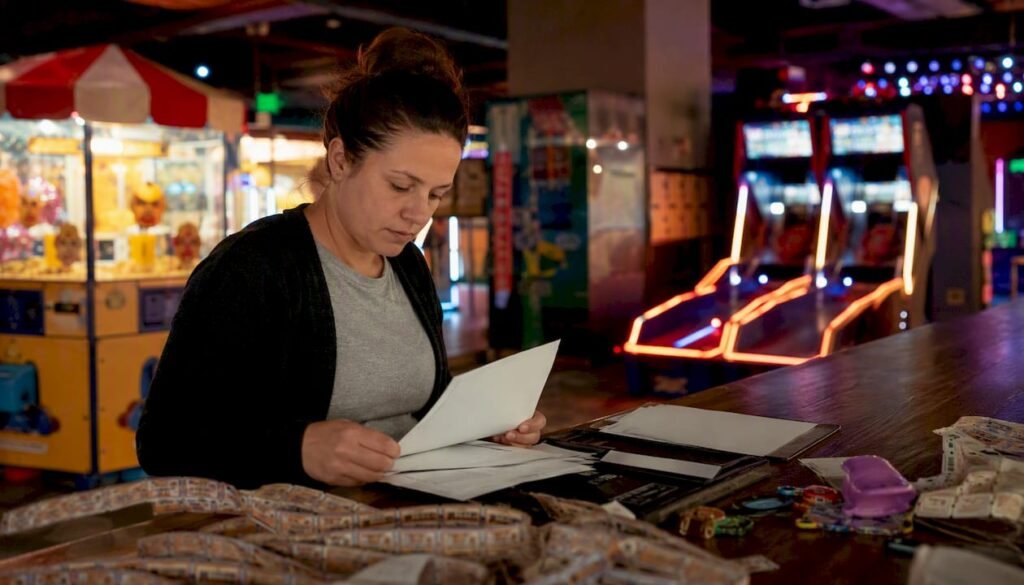
Every arcade operator in the United States should carry, at minimum, general liability (or a business owner’s policy), commercial property, equipment breakdown, business interruption, and workers’ compensation coverage. Add-ons worth serious consideration include prize inventory, inland marine, crime and cash-handling, and cyber liability. According to specialty insurers, annual premiums typically vary widely depending on your operation’s size, machine count, and selected coverages. A small retro arcade with a handful of machines sits near the lower end; a large family entertainment center with VR, redemption games, and event hosting pushes toward the top.
Before you request a single quote, take three immediate actions:
- Inventory every machine with make, model, serial number, purchase price, and current replacement value.
- Gather your revenue and payroll figures for the past 12 months, since underwriters use both to set limits and price risk.
- Pull your maintenance records, including inspection certificates, repair logs, and any prior claims history.
These three steps separate operators who get accurate, competitive quotes from those who get inflated estimates or coverage gaps buried in the fine print.
Key Takeaways
Arcade operators who carry the right combination of specialty coverages, accurate machine valuations, and documented maintenance records consistently get better terms, faster claims, and fewer coverage surprises.
| Point | Details |
|---|---|
| Core coverage stack | Carry GL or BOP, commercial property at replacement cost, equipment breakdown, business income, and workers’ comp as your baseline. |
| Specialty programs matter | Standard commercial policies frequently exclude participant injuries and lack tailored equipment language; use a specialty amusement carrier. |
| Annual cost range | Expect $1,000–$10,000 annually; small arcades sit near the lower end, large FECs with VR and events near the top. |
| Documentation drives pricing | Maintenance logs, machine inventories, and security records directly influence underwriting terms and premium levels. |
| Red flags to reject | Blanket participant-activity exclusions, narrow equipment breakdown definitions, and sublimits on prize inventory are deal-breakers. |
Table of Contents
- What does arcade machine insurance actually cover?
- Which specialized coverages do arcades frequently need?
- When do optional coverages become essential?
- How do insurers price arcade coverage?
- What will underwriters ask, and how do you prepare?
- How do you choose limits, endorsements, and avoid bad policies?
- Common exclusions and claim scenarios that reveal coverage gaps
- What operators who know their machines understand about insurance
- Sources
What does arcade machine insurance actually cover?
Arcade machine insurance explained properly starts with five foundational policies, each protecting a distinct layer of your business.
General liability and the BOP option
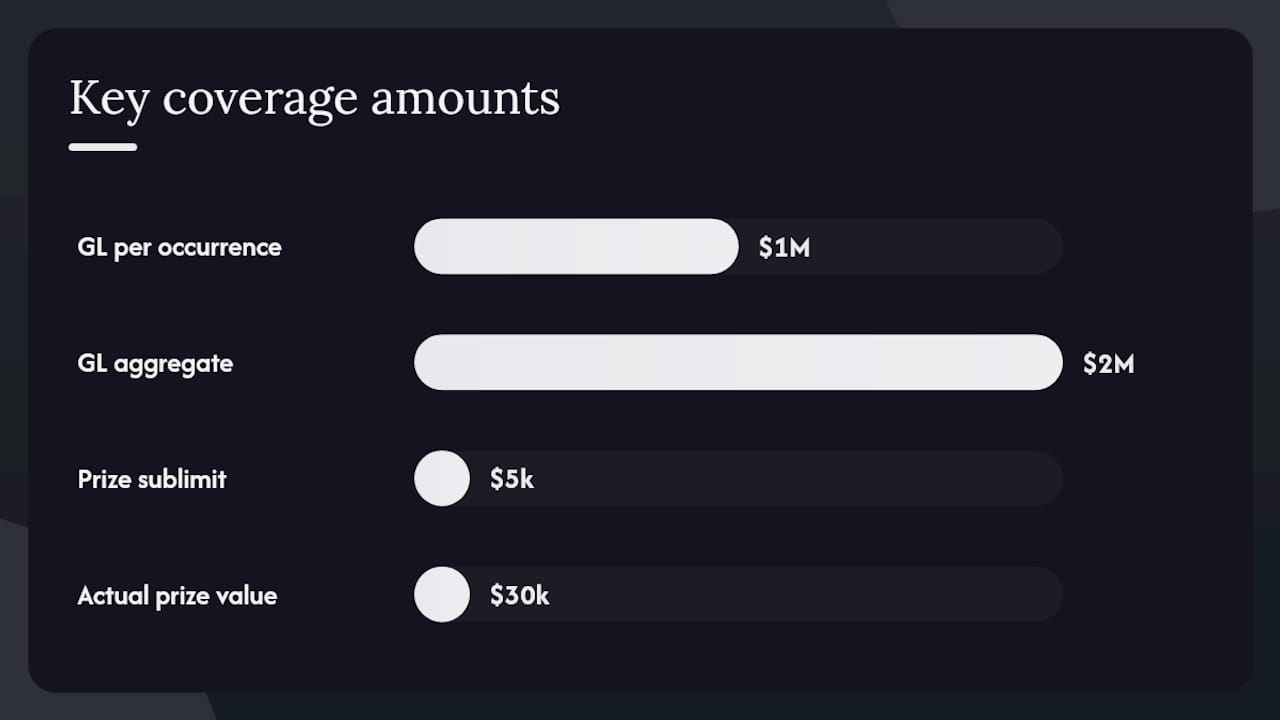
General liability (GL) pays for third-party bodily injury and property damage claims. In an arcade context, that means a guest who trips over a machine’s power cord, a child who claims a cabinet edge caused a cut, or a neighboring tenant whose property is damaged by water from your HVAC. A standard GL policy typically starts at a $1 million per-occurrence / $2 million aggregate limit, which is the floor most landlords and event venues require on your certificate of insurance.
A business owner’s policy (BOP) bundles GL and commercial property into one package and is often the most cost-effective route for smaller arcades. The trade-off: BOPs carry preset limits and may not include participant-injury language or specialized equipment coverage. Larger or mixed-attraction venues almost always need endorsements beyond what a BOP provides.
Pro Tip: Ask your broker whether the GL policy includes “participant injury” or “participant accident” language. Standard commercial GL frequently excludes injuries to paying participants in supervised activities, which is exactly the exposure an arcade creates.
Commercial property coverage
Commercial property insures your building (if owned), contents, machines, signage, and leasehold improvements. The critical decision here is replacement cost value (RCV) versus actual cash value (ACV). ACV deducts depreciation, so a ten-year-old pinball machine that cost $8,000 new might settle for $2,000 under ACV. RCV pays what it actually costs to replace the machine today, which matters enormously when you’re dealing with premium titles that hold or appreciate in value. Knowing your machines’ current replacement-cost exposure is the single most important step before setting property limits.
Equipment breakdown coverage
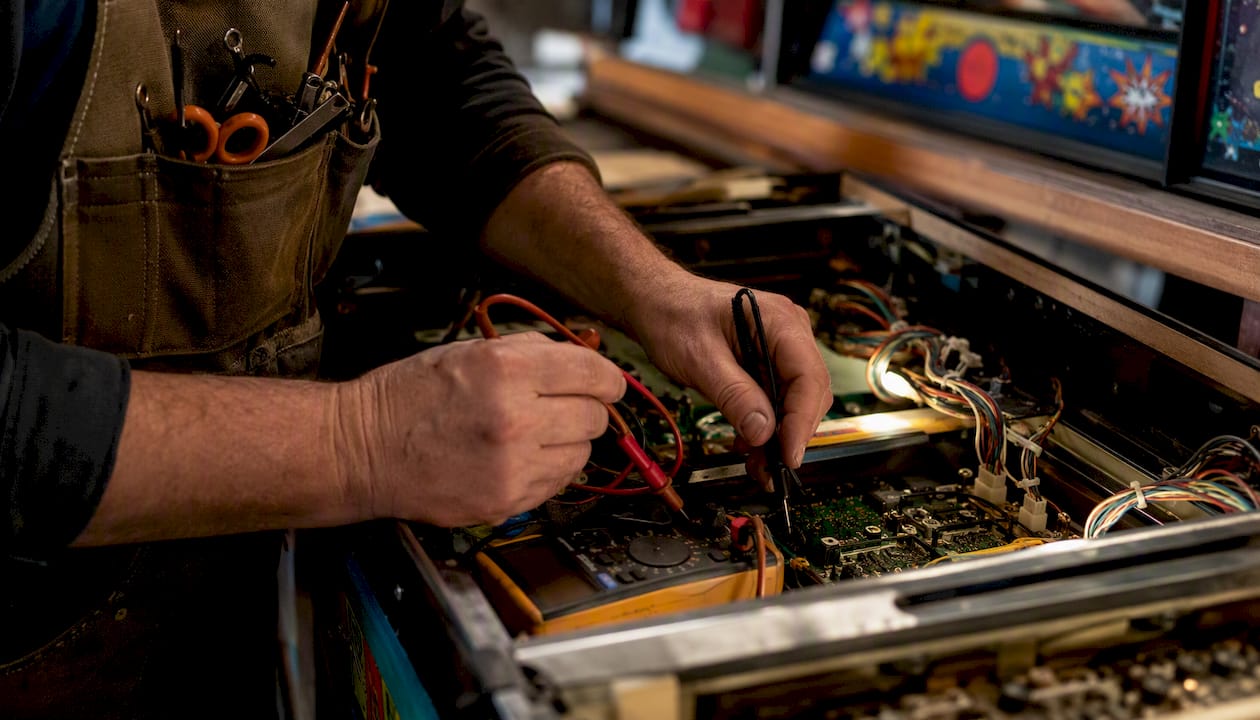
Equipment breakdown (sometimes called “boiler and machinery” or electronic equipment coverage) pays for sudden mechanical or electrical failure of motors, printed circuit boards, monitors, VR headsets, and redemption ticket dispensers. Standard property policies exclude mechanical breakdown as a matter of course. This coverage fills that gap. Watch for sublimits on electronic components and waiting periods before business interruption kicks in after a covered breakdown.
Business interruption / business income
If a covered loss forces you to close, business income coverage replaces lost revenue and continues payroll during the restoration period. For an arcade, the math is straightforward: multiply your average daily revenue by the number of days you’d be closed, then add fixed expenses. Extra expense coverage, often bundled alongside, pays for temporary relocation or rental equipment to get you back open faster.
Workers’ compensation
Workers’ compensation is legally required in virtually every U.S. state once you have employees. For arcade staff, common claims include repetitive-motion injuries from machine maintenance, slips on game-room floors, and back injuries from moving heavy cabinets. Payroll drives the premium calculation, so accurate payroll reporting directly affects your cost.
Which specialized coverages do arcades frequently need?
Specialty arcade packages commonly include equipment breakdown, crime and theft coverage for cash and prize inventory, business interruption, and excess liability. Standard commercial policies leave several high-value exposures completely unaddressed.
Equipment-specific policies for high-value machines
A premium pinball machine or a commercial VR rig can carry a replacement cost of $8,000 to $20,000 or more. Standard property coverage may lump all machines under a blanket contents limit with no individual item scheduling. Scheduling high-value machines separately or using a specialized equipment floater guarantees that a single catastrophic loss doesn’t exhaust the entire contents limit and leave the rest of your floor unprotected.
Prize inventory coverage
Prize and redemption stock is one of the most commonly misclassified assets in an arcade. Underwriters may treat it as “inventory” (a retail classification) rather than “property,” which can trigger a denial if the policy language doesn’t explicitly cover stock. High-value prizes, gift cards, and bulk redemption merchandise should be scheduled with specific limits or covered under a stock endorsement. Treat them the same way a retailer treats merchandise: document quantities, values, and storage locations.
Inland marine for off-site machines
Moving machines to events, temporary locations, or a second venue creates a coverage gap. Standard commercial property policies cover machines at the listed premises only. An inland marine floater (sometimes called an equipment floater) extends coverage during transit and at temporary locations. Given the weight and fragility of arcade cabinets, transit damage is a real exposure. Reviewing how to move arcade machines safely before any relocation also reduces the likelihood of a claim in the first place.
Crime, theft, and cash-handling endorsements
Arcades are cash-intensive businesses. Token machines, prize counters, and change kiosks create daily cash-handling exposure that standard property policies don’t address. A crime endorsement covers:
- Employee dishonesty (internal theft of cash or prizes)
- Robbery and burglary (external theft of cash from registers or safes)
- Safe burglary (forced entry into a cash safe)
- Computer fraud (manipulation of POS systems to divert funds)
Deductibles on crime policies vary widely. A $1,000 deductible is common for small operations; larger venues with higher cash volumes often negotiate lower deductibles in exchange for documented cash-handling protocols.
Pro Tip: Keep a daily cash-reconciliation log and a prize-inventory count sheet. Underwriters and claims adjusters both require documentation to process crime and prize-theft claims. Without it, even a legitimate claim can be denied for lack of proof of loss.
When do optional coverages become essential?
Some endorsements look optional on paper but become non-negotiable the moment your operation crosses certain thresholds.
Cyber liability for POS and customer data
Cyber incidents rank among the top business risks for any company that handles cardholder or customer data. An arcade’s point-of-sale system, loyalty program database, or online booking platform creates exactly that exposure. A cyber liability policy typically covers forensic investigation, breach notification, credit monitoring for affected customers, regulatory fines, and third-party liability. If your arcade processes card payments, cyber coverage is not a luxury. Operators running digital payment setups should review their arcade payment processing controls alongside their cyber policy to close any gaps between technical controls and insurance protection.
Liquor liability for barcades
If your venue serves alcohol, a standard GL policy’s liquor liability exclusion will leave you exposed to dram-shop claims. Liquor liability coverage pays for bodily injury or property damage caused by an intoxicated guest you served. Many states impose statutory liability on alcohol-serving establishments, making this coverage legally critical rather than merely advisable.
Umbrella and excess liability
A $1 million GL limit sounds substantial until a catastrophic injury claim arrives with medical bills, lost wages, and pain-and-suffering damages that exceed it. A commercial umbrella policy sits above your primary GL (and often your auto and employers’ liability) and provides an additional $1 million to $5 million or more in coverage for a relatively modest additional premium. Venues hosting birthday parties, corporate events, or large public gatherings should treat umbrella coverage as a baseline, not an upgrade.
Pro Tip: If a venue lease or event contract requires you to name the landlord or event organizer as an additional insured with “primary and non-contributory” language, verify that your GL policy supports that wording before signing. Many standard policies do not include it automatically.
How do insurers price arcade coverage?
Video arcade insurance costs vary widely, with small arcades often paying a few hundred to a few thousand dollars annually and larger family entertainment centers paying several thousand depending on scope and risk. The spread exists because underwriters price each of the following factors independently.
Primary pricing drivers:
- Annual revenue: Higher revenue signals more foot traffic and greater liability exposure.
- Payroll: Workers’ comp and employer’s liability premiums are calculated directly from payroll.
- Number and replacement value of machines: More machines, higher property and equipment breakdown premiums.
- Claims history: A clean five-year loss run earns better terms; multiple claims trigger surcharges or coverage restrictions.
- Foot traffic and hours of operation: A venue open until 2 AM on weekends carries more liability exposure than one closing at 9 PM.
- Alcohol service: Adds liquor liability exposure and often increases GL base rates.
- Location and crime risk: ZIP-code-level crime data influences property and crime premium calculations.
- Security measures: Documented CCTV, alarm systems, and tamper-proof machine housings reduce underwriting friction and can lower premiums.
Scenario examples:
A small retro arcade with 15 machines, $150,000 in annual revenue, no alcohol, and a clean loss history might pay $1,500–$3,000 annually for a BOP plus equipment breakdown.
A medium family arcade with 40 machines, a redemption counter, $400,000 in revenue, and prize inventory might pay $4,000–$7,000 for a specialty package including crime and business income.
A large FEC with VR attractions, a bar, events, and $1 million-plus in revenue could easily exceed $10,000 annually when umbrella, liquor liability, and cyber coverage are included.
On-site safety consultations and loss-prevention surveys offered by specialty brokers, covering electrical checks, CCTV audits, and cash-handling protocols, can materially reduce underwriting friction and sometimes lower premiums. Scheduling one before renewal is a practical investment.
What will underwriters ask, and how do you prepare?
Underwriters use detailed intake forms that separate attraction type, supervision protocols, maintenance records, and inspection history to price risk accurately. Submitting a vague or incomplete application is one of the fastest ways to get an inflated quote or a coverage exclusion you won’t discover until you file a claim.
Here is the document checklist to assemble before you contact any insurer or broker:
- Machine inventory list: Make, model, serial number, year, purchase price, and current replacement value for every machine.
- Annual revenue and payroll figures: Last 12 months, broken out by revenue stream if possible (tokens, food, events, bar).
- Maintenance and inspection logs: Dated records of routine maintenance, repairs, and third-party inspection certificates.
- Floor plan or site layout: Square footage, machine placement, and any designated event or party areas.
- Security documentation: CCTV coverage map, alarm system certificates, and cash-handling procedures.
- Prior insurance policies and loss runs: Five years of claims history from your current or previous carrier.
- Lease or venue contracts: Any additional-insured or certificate-of-insurance requirements from your landlord or event partners.
- Waiver and release templates: Sample participant waivers used for VR or supervised activities.
- Proof of employee training: Safety orientation records, especially for machine maintenance and cash handling.
- Liquor license (if applicable): Copy of license and annual alcohol sales figures.
Specialty carriers place arcade risks with underwriters who understand gaming-equipment usage intensity, crowd flow, and loss patterns rather than lumping arcades into miscellaneous retail classes. Separating your attraction types on the submission form, VR versus pinball versus redemption, reduces ambiguity and helps place the risk with the right carrier at the right rate.
Pro Tip: Present your maintenance logs as a narrative, not just a spreadsheet. A brief cover note explaining your inspection schedule, who performs repairs, and how quickly you take machines offline for service signals to underwriters that you manage risk proactively. That perception translates directly into better terms.
How do you choose limits, endorsements, and avoid bad policies?
Selecting the right limits starts with a simple principle: your property limits should reflect the actual replacement cost of everything you’d need to rebuild or replace after a total loss, not the depreciated value on your books.
For GL, start at $1 million per occurrence / $2 million aggregate and upgrade to higher limits or a commercial umbrella if you host events, serve alcohol, or operate VR attractions. Participant-injury endorsements, equipment breakdown, prize inventory, and additional-insured language for your lease are the four endorsements most arcades cannot afford to skip.
Before binding any policy, ask your broker these questions: Does the GL include participant-injury coverage, or is it excluded? Does equipment breakdown cover electronic components and PCBs, or only mechanical parts? What is the waiting period before business income kicks in after a covered loss? Are prizes and redemption stock explicitly covered, or do they fall under a general contents limit? Is the property coverage replacement cost or actual cash value?
Red flags to watch for in quotes and policy language:
- Blanket “participant activity” exclusions that eliminate coverage for any injury occurring during supervised play.
- Narrow equipment breakdown definitions that cover only “mechanical” failure and exclude electrical or electronic components.
- Sublimits on prize inventory that cap coverage at $5,000 when your redemption stock is worth $30,000.
- Extended waiting periods (72 hours or more) before business income coverage activates after a covered loss.
- No inland marine provision when you regularly move machines to events or secondary locations.
Specialty programs include participant-injury and equipment-breakdown features precisely because standard commercial policies frequently exclude these exposures. Working with a broker who places business with specialty amusement carriers is not a preference; for most arcade operators, it is the only way to get coverage that actually matches the risk.
Pro Tip: Request the A.M. Best rating of any carrier before binding. An A- (Excellent) or better rating indicates financial strength adequate to pay large claims. Carriers rated below B+ warrant serious scrutiny.
Common exclusions and claim scenarios that reveal coverage gaps
Understanding what your policy won’t cover is as valuable as knowing what it will.
Exclusions operators commonly encounter:
- Wear and tear / gradual deterioration: No property policy covers a monitor that fades over years of use. Only sudden, accidental damage qualifies.
- Failure to maintain: If a machine causes injury because a documented maintenance issue was ignored, the carrier may deny the GL claim on the grounds that the loss was preventable.
- Voluntary property removal: If you lend a machine to a friend’s event without an inland marine floater, any damage during that period is typically excluded.
- Data breach without cyber add-on: A standard GL policy’s “personal and advertising injury” coverage does not extend to data breaches. Without a cyber endorsement, notification costs and regulatory fines fall entirely on you.
- Off-premises transport without inland marine: Transit damage to a machine being moved to a second location is excluded under standard property forms.
Three claim scenarios:
Scenario 1: VR headset injury. A guest using a VR attraction stumbles and strikes their head on a cabinet edge, requiring emergency care. The GL policy pays the medical and legal costs — but only if the policy includes participant-injury language. Without it, the carrier denies the claim as a “participant activity” exclusion. The gap: a standard BOP without the endorsement.
Scenario 2: Redemption prize theft. An employee systematically removes high-value prizes over three months. The crime endorsement’s employee-dishonesty coverage pays — but only if the operator can document the inventory discrepancy with dated count sheets. Without records, the claim is denied for insufficient proof of loss.
Scenario 3: Electrical failure and downtime. A power surge burns out the PCBs on six machines simultaneously. Equipment breakdown coverage pays for the repairs. Business income coverage pays for the lost revenue during the two-week repair period — but only after the policy’s waiting period expires. An operator with a 72-hour waiting period loses three days of revenue with no reimbursement.
Waivers reduce litigation risk but do not replace insurance. A signed waiver may limit a guest’s ability to sue, but it does not prevent a claim from being filed, and courts in many states have found waivers unenforceable for gross negligence. Coverage is the backstop that waivers cannot provide.
Contractually shifting risk through vendor certificates of insurance and additional-insured requirements on third-party contractors (repair technicians, event vendors) adds another layer of protection. Require every outside vendor working on your premises to name you as an additional insured on their GL policy.
What operators who know their machines understand about insurance
There is a perspective that gets lost in most insurance discussions: the machines themselves tell you what coverage you need.
A premium pinball title from Stern or Jersey Jack carries a replacement cost that surprises people who haven’t priced the market recently. A well-maintained Addams Family or Attack From Mars in commercial-grade condition is not a $2,000 asset on a depreciation schedule. It is a $7,000 to $12,000 piece of precision engineering with collector-grade appeal, and insuring it at actual cash value is a decision that looks reasonable until the day you file a claim and discover the settlement covers barely half of what a replacement costs.
The same logic applies to VR rigs, redemption systems, and any machine you’ve moved between locations. Transit is where damage happens, and inland marine coverage is the policy that travels with the machine. Reviewing how to move arcade machines before any relocation reduces the physical risk; having the right floater in place covers the financial one.
At Premiumpinballs, we see operators regularly who underestimate their machine values when setting property limits, then discover the gap at the worst possible moment. The best pinball machines for arcades are also among the most valuable assets on your floor. Treat them accordingly on your insurance schedule, and work with a specialty amusement broker who understands what these machines are actually worth, not what an accountant’s depreciation table says they’re worth.
For operators managing warranties alongside insurance, understanding the boundary between what a manufacturer warranty covers and what an insurance policy covers is equally important. The warranty management guide at Premiumpinballs walks through that distinction in practical terms, and it’s worth sharing with your broker so they understand which repair scenarios fall to the warranty and which fall to the policy.
This article is general information, not a substitute for advice from a qualified financial advisor. Consult a qualified financial professional about your own circumstances before acting on anything here.
Sources
These vetted resources cover specialty programs, underwriting intake guidance, and risk data relevant to U.S. arcade operations:
- Arcade Insurance to Protect Your Entertainment Business
- Amusement and entertainment device insurance | Kelly Insurance Group
- Video Arcade Insurance – EK Insurance
- Insurance For Arcade – Pro Insurance Group
- Arcade Insurance – SafePark USA
- Cfo