
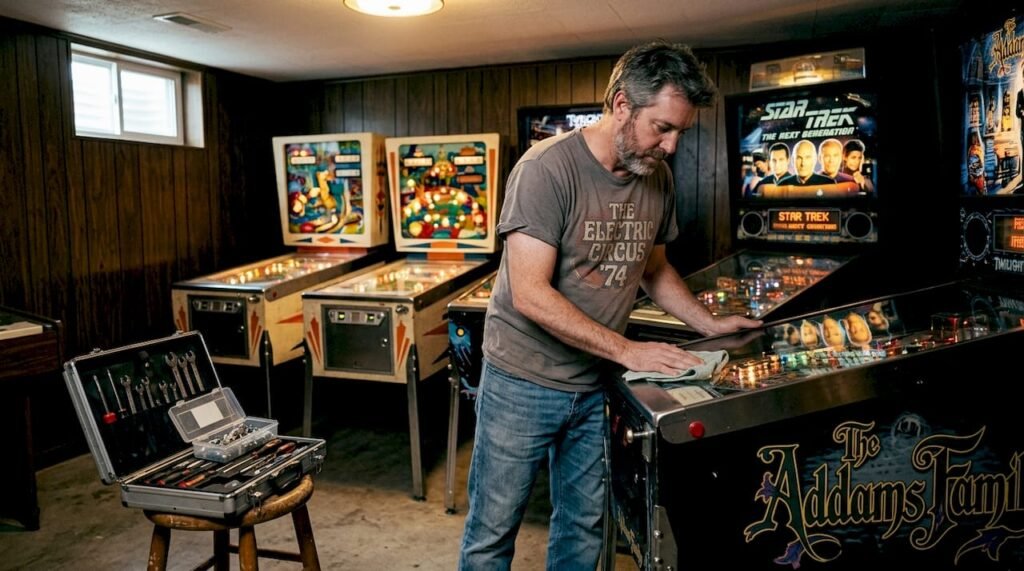
A single modern pinball machine contains roughly
3,500 individual parts and demands more than 30 hours of skilled, hands-on labor before it ever sees a game room floor. That staggering level of craftsmanship challenges the casual assumption that these are simple arcade toys. In reality, a pinball machine is a precision-engineered, hand-assembled work of art whose story begins long before the first ball is launched and continues well after decades of play. This guide walks you through every phase of that journey, from the earliest design sketches to the collector’s market, so you can appreciate, maintain, and invest in these machines with genuine expertise.
Table of Contents
- Understanding the pinball machine life cycle
- From concept to cabinet: Design and manufacturing steps
- Life on location: Operational use and typical wear
- Restoration and preservation: Bringing machines back to life
- Resale, collecting, and the impact of provenance
- Find your next pinball machine or restoration project
- Frequently asked questions
Key Takeaways
| Point | Details |
|---|---|
| Multi-phase craftsmanship | Pinball machines are created through a meticulous process involving design, engineering, hand assembly, and rigorous testing before entering the field. |
| Ongoing maintenance | Each machine faces mechanical and electronic wear that requires routine maintenance and timely repairs to ensure peak performance. |
| Restoration boosts value | Thorough, well-documented restoration can dramatically raise a machine’s appeal and market price for collectors. |
| Collector priorities vary | Some collectors prioritize originality and documentation, while operators might focus on quick modular repairs for uptime. |
| Provenance matters | A machine’s ownership history, originality, and restoration record are major factors in determining its resale value. |
Understanding the pinball machine life cycle
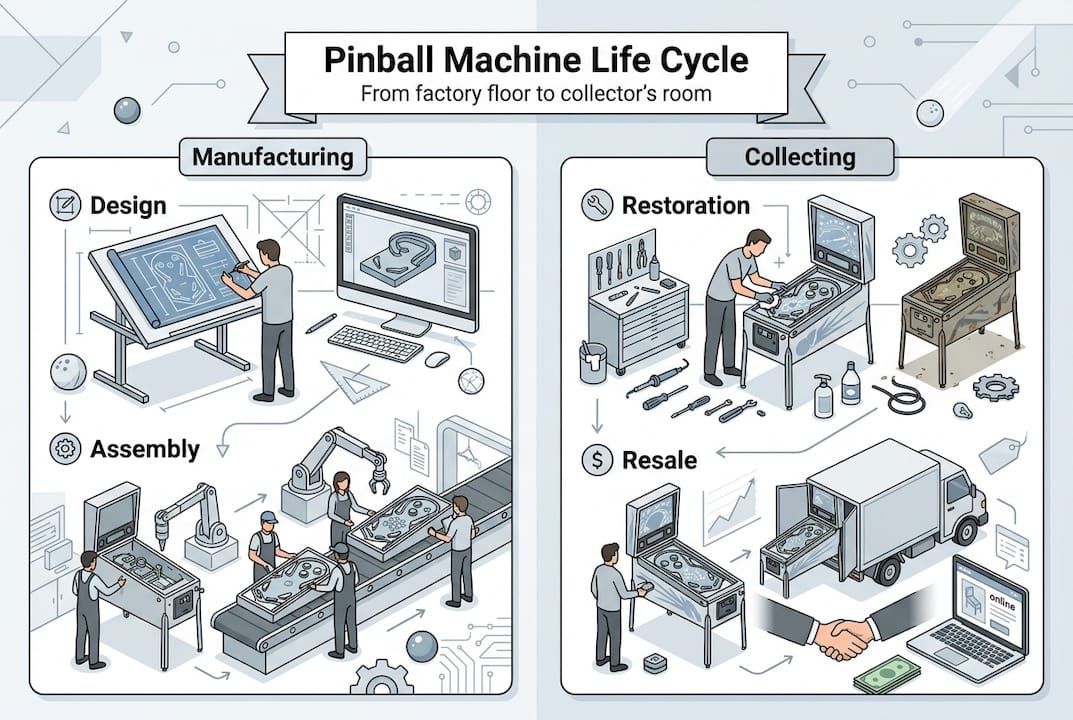
The term “life cycle” in the pinball world refers to the complete arc a machine travels from its initial concept through manufacturing, active use, maintenance, restoration, and ultimately resale or long-term collection. Understanding this arc is what separates a casual player from a true enthusiast or savvy collector. Each phase leaves a mark on the machine’s condition, character, and market value.
As pinball machines follow a lifecycle starting with design and prototyping, moving through manufacturing, assembly, testing, operation, restoration, and resale, every stage shapes what the machine becomes. The phases include:
- Design and prototyping: Concept art, ruleset development, and physical mockups
- Manufacturing and assembly: Hand-built cabinets, silkscreened playfields, and wiring harnesses
- Quality testing: Switch, coil, and mechanical verification before shipping
- Operational play: Arcade or home use, often spanning decades
- Maintenance and repair: Routine upkeep to preserve playability
- Restoration: Major overhauls that return machines to peak condition
- Resale and collecting: The final market phase where provenance drives price
If you want to understand why collect pinball machines resonates so deeply with enthusiasts, the life cycle is the answer. Each machine carries a layered history that no other arcade device can replicate.
From concept to cabinet: Design and manufacturing steps
Building a pinball machine from scratch is one of the most labor-intensive processes in consumer electronics manufacturing. The journey begins with a licensed theme or original concept, followed by months of artwork development, ruleset programming, and physical prototyping. Designers collaborate with engineers to ensure that every ramp, target, and toy integrates seamlessly into the playfield layout.
Here is how the production sequence unfolds:
- Concept and licensing: Theme selection, character rights, and initial artwork briefs
- Playfield design: CAD layouts combined with hand-drawn art elements
- Silkscreen printing: Playfields are hand-screen printed using historic presses that apply multiple color layers with extraordinary precision
- Cabinet construction: Wooden cabinets are cut, routed, and finished by skilled craftspeople
- Wiring and electronics: Nearly half a mile of wiring is routed and soldered by hand
- Mechanical assembly: Flippers, bumpers, solenoids, and ramps are installed and calibrated
- Final testing: Every switch, coil, and mech is verified before the machine leaves the factory
The scale of this effort is remarkable. Understanding [pinball machine parts explained](https://premiumpinballs.com/understanding-pinball machine parts) gives you a deeper appreciation for why authenticity matters so much. Collectors who prize original builds often seek machines produced with traditional methods, including Williams System 9-11 era techniques that defined a golden age of craftsmanship.
| Production metric | Detail |
|---|---|
| Total parts per machine | Approximately 3,500 |
| Assembly labor | 30+ hours per unit |
| Wiring length | Nearly half a mile |
| Playfield printing method | Multi-layer silkscreen |
| Testing scope | All switches, coils, and mechs |
Pro Tip: If you are sourcing a machine for its collector value, prioritize units built with original tooling and unmodified playfields. Authenticity at the manufacturing level is nearly impossible to replicate after the fact.
Life on location: Operational use and typical wear
Once a pinball machine leaves the factory, it enters what is often its most demanding phase. Whether placed in a busy arcade or a private game room, the machine absorbs thousands of impacts, vibrations, and electrical cycles every year. Knowing what wears first helps you evaluate any machine you are considering buying or restoring.
Common wear points include:
- Flippers: The most frequently replaced component, subject to constant solenoid stress
- Playfield rubbers: Degrade with UV exposure and repeated ball contact
- Bumper caps and rings: Crack and discolor under heavy play
- Electronics and connectors: Corrode or loosen over time, especially in humid environments
- Switches and EOS contacts: Misalign or burn out with extended use
The type of machine matters enormously here. Solid state vs EM machines differ significantly in how they fail. Electromechanical (EM) machines rely on greasy mechanical relays that require periodic cleaning and adjustment, while solid-state (SS) machines face battery leakage and capacitor failures that can damage circuit boards if left unaddressed.
Maintenance reality check: Heavy mechanical wear on rubbers, flippers, bumpers, and electronics is universal across all eras. EM machines develop relay drift and contact oxidation, while SS machines suffer from battery corrosion and failed capacitors. Proactive maintenance is always less expensive than reactive repair.
| Failure type | EM machines | SS machines |
|---|---|---|
| Primary wear issue | Relay oxidation, mechanical drift | Battery leakage, capacitor failure |
| Flipper problems | Coil sleeve wear | EOS switch misalignment |
| Electronics risk | Relay contact burning | PCB corrosion from battery acid |
| Maintenance frequency | Higher, more hands-on | Moderate, board-level focus |
For operators considering choosing pinball for arcades, understanding these failure patterns is essential for budgeting maintenance costs and minimizing downtime. And for common failures in pinball machines, the Williams platform offers a well-documented reference point that applies broadly across the industry.
Restoration and preservation: Bringing machines back to life
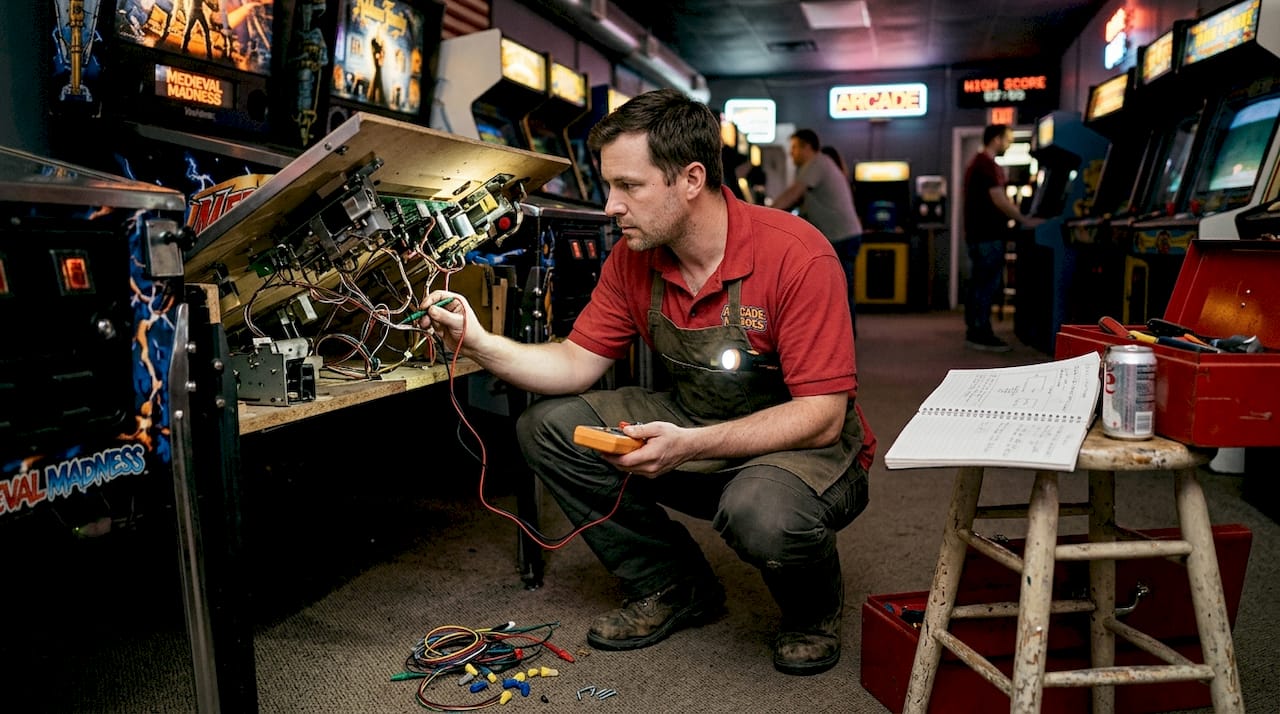
Restoration is where passion meets precision. A well-executed restoration does not just fix what is broken; it returns a machine to a condition that rivals its original factory state, sometimes surpassing it. This phase is also where collector value is most dramatically influenced.
A thorough restoration involves troubleshooting, cleaning, rebuilding, and refinishing the playfield, cabinet, and all mechanical systems. The process typically follows this sequence:
- Full inspection: Document every fault, cosmetic flaw, and missing component before touching anything
- Cleaning: Strip the playfield of all parts, clean surfaces, and treat for wear
- Mechanical rebuilds: Replace flipper mechs, pop bumper assemblies, and worn solenoids
- Playfield restoration: Clear-coat application, touch-up art, or full playfield replacement if needed
- Cabinet refinishing: Strip, repaint, or apply reproduction decals to restore exterior appearance
- Electronics service: Recap boards, replace batteries, clean connectors, and test all circuits
- Final calibration: Adjust pitch, flipper strength, and switch sensitivity to factory specifications
Playfield restoration alone accounts for over 50% of total restoration time on most projects, which explains why skilled restorers command premium rates. The difference between a haphazard fix and a systematic overhaul is enormous, both in playability and long-term value.
Pro Tip: Approach every restoration with a written diagnostic checklist rather than chasing individual symptoms. Systematic troubleshooting catches cascading failures early and produces results that rival new machines in both performance and reliability.
When choosing parts, the OEM versus aftermarket debate matters. Collectors focused on authenticity favor original equipment manufacturer (OEM) components, while operators prioritize modular, readily available replacements. Documenting every part replaced, every board recapped, and every adjustment made creates a provenance record that pays dividends at resale. Review our pinball value guide and explore why enthusiasts invest in vintage pinball as a long-term asset.
Resale, collecting, and the impact of provenance
After restoration, a machine enters the collector and resale market, where its entire history becomes a financial asset. Restoration elevates resale value, especially when supported by documented maintenance records that verify the quality and scope of work performed. Buyers at this level are sophisticated; they ask questions, request photos, and scrutinize originality with a trained eye.
Factors that boost resale value include:
- Complete, documented restoration history
- Original playfield with minimal wear or professional clear-coat
- Unmodified cabinet with original or high-quality reproduction artwork
- OEM parts throughout, especially flippers, plastics, and ramps
- Functional original display (DMD or score reels, depending on era)
Factors that harm resale value include:
- Non-original modifications to electronics or playfield layout
- Missing or replaced plastics with incorrect reproductions
- Undocumented repairs or amateur wiring work
- Cabinet damage, water staining, or faded artwork
For a deeper look at how these variables translate to dollars, our guide on understanding pinball value breaks down pricing by era, title, and condition. The EM restoration guide also provides a technical benchmark for what a properly restored machine should look like.
| Condition category | Typical value range | Key driver |
|---|---|---|
| Unrestored, playable | $800 to $2,500 | Title rarity and era |
| Professionally restored | $2,500 to $8,000+ | Documentation and OEM parts |
| Modified or non-original | $500 to $1,800 | Depends on modification quality |
| Mint, documented collector piece | $8,000 to $20,000+ | Provenance and title prestige |
The collector market rewards patience, knowledge, and meticulous record-keeping. A machine with a clear, verifiable story is always worth more than one with gaps in its history, regardless of how good it looks on the surface.
Find your next pinball machine or restoration project
Now that you understand the full arc of a pinball machine’s life, from the factory floor to the collector’s game room, you are equipped to make smarter, more confident decisions about buying, restoring, and investing. Whether you are searching for a turnkey showpiece or a rewarding restoration challenge, the right machine is out there.
At Premium Pinballs, we curate an inventory that reflects every stage of this life cycle. Explore the advantages of refurbished pinballs if you want a machine that is ready to play from day one, or browse our selection of arcade-ready machines built to perform under serious use. If you are just beginning your journey, our guide on what is a pinball machine is the perfect starting point. Every machine we offer comes with the transparency and expertise that serious collectors and enthusiasts deserve.
Frequently asked questions
How often should a pinball machine be serviced?
Routine maintenance like rubber and flipper replacement is typically needed every one to three years, depending on how frequently the machine is played. Machines in commercial settings may require attention every six to twelve months.
Does restoring a pinball machine increase its value?
Yes, quality restoration paired with clear documentation can significantly raise resale and collector value, sometimes doubling or tripling the unrestored price for desirable titles.
What are the most common pinball machine failures?
Wear-prone components include flippers, playfield rubbers, and switches. Older EM machines develop relay and contact issues, while solid-state machines face battery corrosion and failed capacitors on their circuit boards.
Why do collectors value original parts and provenance?
Original components and a documented history confirm authenticity, which drives desirability and price among serious buyers. OEM parts for authenticity are a non-negotiable standard in the high-end collector market.
Are modern pinball machines easier to maintain than vintage ones?
Modern machines generally offer better parts availability and modular repairs, but modern vs vintage each has its appeal. Many collectors find the hands-on challenge of vintage machines more rewarding, even if the learning curve is steeper.
Recommended
- Pinball Machine Ownership cost – Pinball Machines for Sale – Premium Pinballs LLC
- Why collect pinball machines – Pinball Machines for Sale – Premium Pinballs LLC
- Understanding pinball machine value – Pinball Machines for Sale – Premium Pinballs LLC
- Pinball Machine Appreciation: Complete Guide – Pinball Machines for Sale – Premium Pinballs LLC