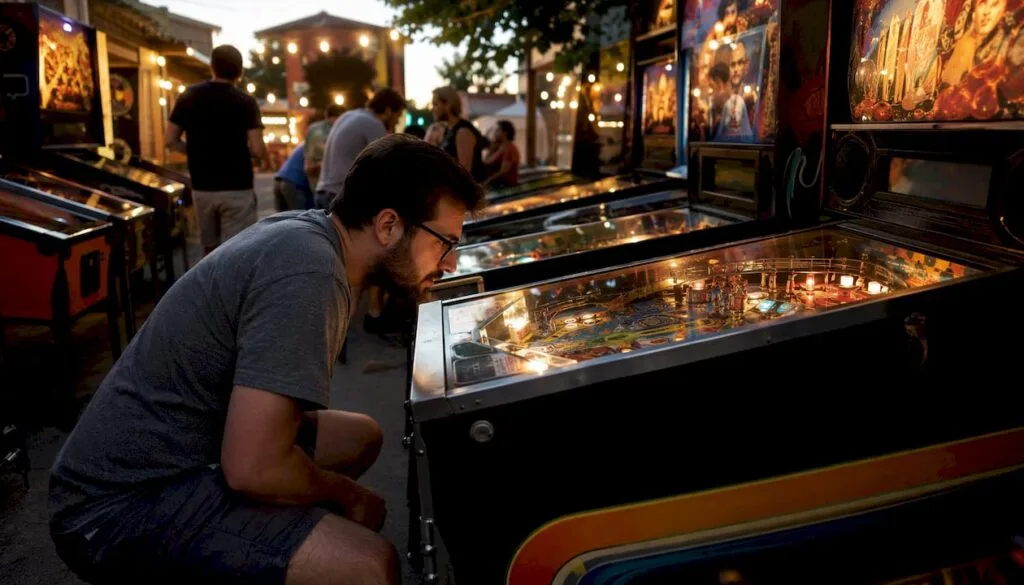
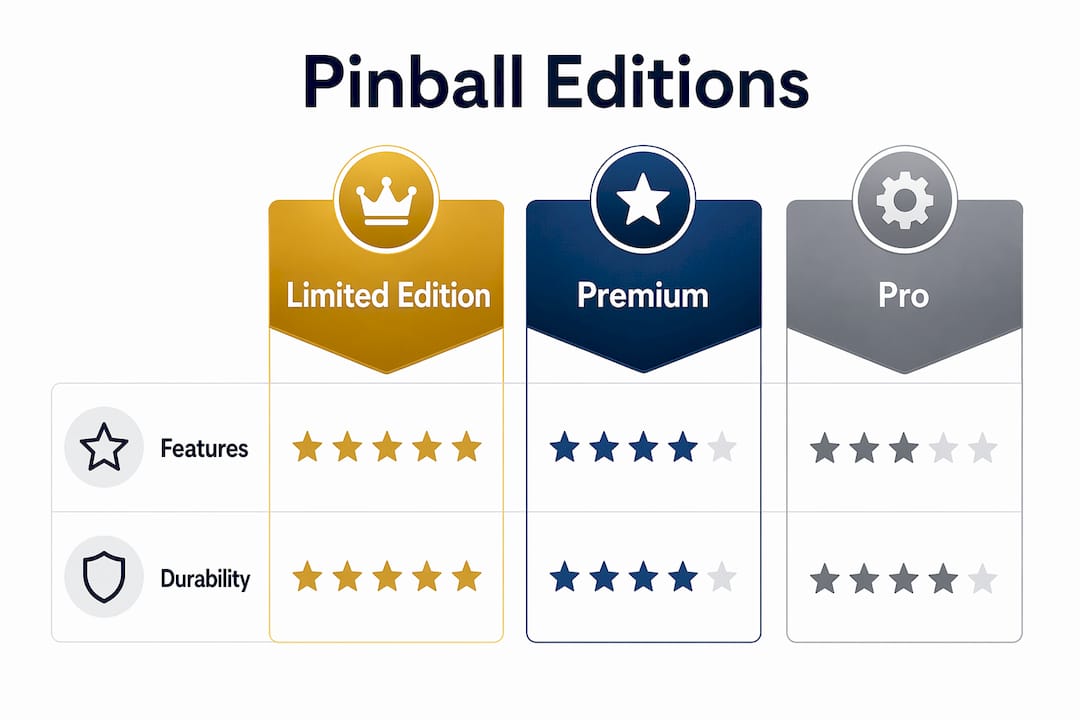
The verdict is straightforward: Pro models are the entry point, built for durability and affordability; Premium models add the full mechanical toy set and LED lighting for a richer home experience; and Limited Editions layer exclusive cosmetics and collector prestige on top of the Premium feature set. If you want the deepest gameplay, Premium is your floor. If you want a numbered, gallery-worthy statement piece, the Limited Edition is your ceiling.
Here is how the three tiers stack up at a glance:
| Edition | Features and Upgrades | Playfield Complexity | Cosmetic Enhancements | Gameplay Impact | Price Range | Rarity / Collectibility |
|---|---|---|---|---|---|---|
| Pro | Simplified toys, incandescent lighting, static mechanisms | Moderate | Standard cabinet art | Good, occasionally limited by missing toys | Lowest | Mass production |
| Premium | Full toy set, LED lighting, motorized mechanisms | High | Upgraded artwork package | Excellent, full design intent realized | Mid-range | Moderate |
| Limited Edition | All Premium features plus shaker motor, anti-reflective glass, numbered plaque | High | Exclusive mirrored backglass, powder-coated armor, art blades | Excellent, identical to Premium gameplay | Highest | Capped production runs |
Quick-reference pros and cons:
- Pro: Lower price, simpler maintenance, great for commercial operators. Trade-off: some titles lose meaningful mechanical depth.
- Premium: Full playfield vision, LED lighting, complete toy set. Trade-off: noticeably higher price than Pro.
- Limited Edition: Collector prestige, exclusive cosmetics, numbered authenticity. Trade-off: premium pricing for largely cosmetic gains over Premium gameplay.
Titles like Godzilla (Stern Pinball), Jaws (Stern Pinball), and the legendary Addams Family (Bally) all illustrate these tier differences vividly, and we will walk through each one in detail below.
How Pro, Premium, and Limited Edition pinball machines actually differ
The feature gap between Pro and Premium is where the real conversation begins. Pro models are engineered for operators: simpler mechanisms, incandescent lighting, and fewer moving toys reduce maintenance calls on location. That is a genuine advantage for an arcade owner running a dozen machines. For a home collector, though, those same omissions can feel like a compromise.
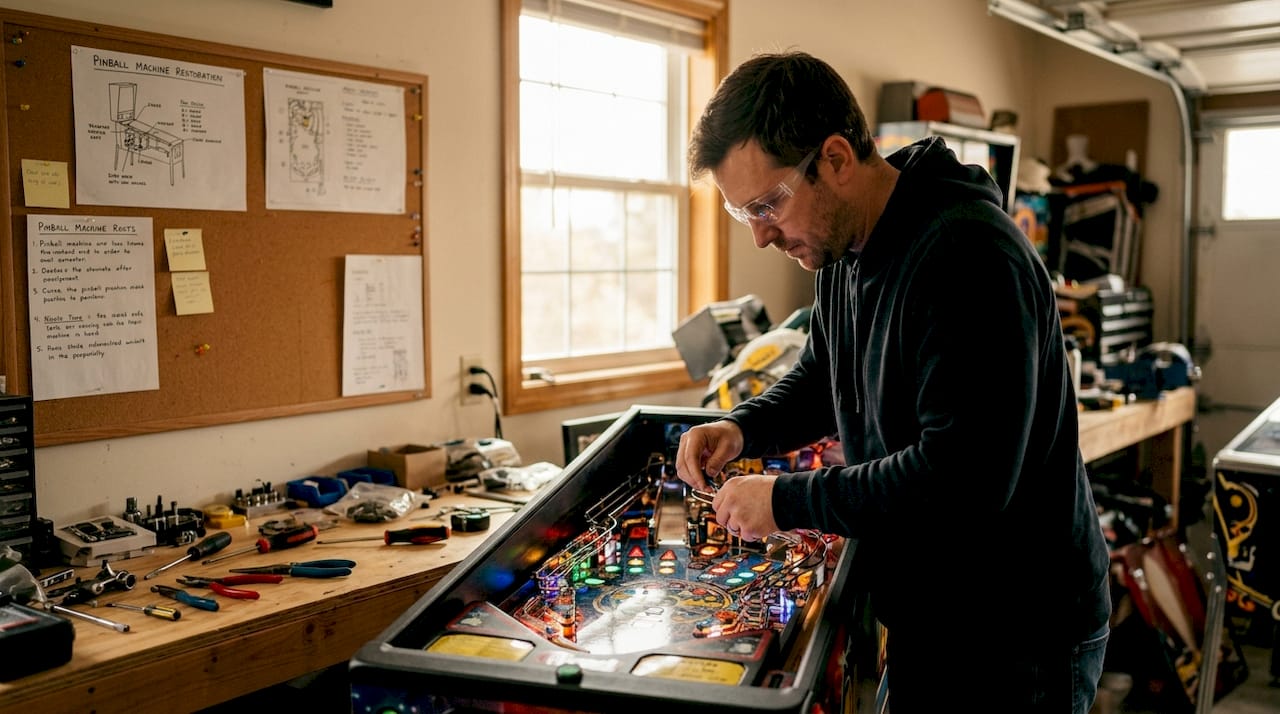
Premium editions restore the full mechanical vision the designer intended. LED lighting replaces incandescent bulbs, motorized toys replace static props, and the artwork package gets a distinct upgrade. The playfield layout is the same as the Pro, but the experience of playing it changes considerably when the toys actually move and react.
The Limited Edition sits above Premium in prestige but not in gameplay. Premium and LE editions share the same rules and playfield, with the LE adding collector-focused cosmetics: a numbered plaque, anti-reflective glass, a shaker motor, exclusive art blades, and powder-coated armor. These are not trivial additions if you care about long-term ownership pride, but they do not change how the ball moves.
Key feature differentiators across the three editions:
- Motorized vs. static toys (Pro uses static; Premium and LE use motorized)
- Incandescent vs. full LED lighting (Pro vs. Premium/LE)
- Standard vs. exclusive artwork packages and backglass treatments
- Shaker motor: LE only on most Stern titles
- Anti-reflective glass: LE only
- Numbered production plaque and Certificate of Authenticity: LE only
- Production volume: LE runs are typically capped, often at 1,000 units
Here is a closer feature comparison using Godzilla as the reference point, since its edition differences are among the most dramatic in modern pinball:
| Feature | Pro | Premium | Limited Edition |
|---|---|---|---|
| Skyscraper toy | Static | Motorized, collapsing | Motorized, collapsing |
| Mechagodzilla | Flat plastic butyrate | Motorized rotating bank targets with jump ramp | Motorized rotating bank targets with jump ramp |
| Bridge ramp | Static | Animated breakaway | Animated breakaway |
| Lighting | Dual-color general illumination | Full RGB LED | Full RGB LED |
| Shaker motor | No | No | Yes |
| Anti-reflective glass | No | No | Yes |
| Numbered plaque | No | No | Yes |
| Backglass | Standard translite | King Ghidorah full-color translite | Mirrored Mechagodzilla backglass |
| Cabinet armor | Black wrinkle powder coat | Black wrinkle powder coat | Custom high-gloss metallic silver powder coat |
The motorized collapsing skyscraper in Godzilla’s Premium and LE versions physically diverts balls through five stories as it collapses, locking three balls on the roof for multiball. The Pro’s static version handles the same shots but without any of that kinetic drama. That single difference reshapes how Godzilla multiball feels to play.
Is upgrading from Pro to Premium or Limited Edition worth it?
The honest answer: it depends entirely on the title. Whether the upgrade is worth it hinges on how much the specific game’s design relies on its mechanical toys for flow and depth. Some Pro models play nearly as well as their Premium counterparts. Others feel noticeably stripped.
Godzilla is the clearest example of a title where the Pro genuinely suffers by comparison. The motorized skyscraper and rotating Mechagodzilla targets are not decorative flourishes; they are central to two of the game’s six multiballs. Removing them changes the strategic texture of every game. By contrast, a title where the Pro omits a single standup target in place of a drop target may feel almost identical in practice.
Price is the other axis. New pinball machines have steadily increased in cost as technology and player expectations have risen, so the gap between Pro and Premium can run $1,500–$2,000 or more depending on the title. The LE premium on top of that is often another $1,000–$1,500 at launch, though secondary market prices can swing dramatically based on demand and scarcity.
On resale value, the picture is nuanced. Top-tier limited editions with capped production runs can hold value better than standard editions, particularly for high-demand themes. However, modern machines as a category rarely appreciate the way vintage DMD-era titles from the 1990s do. Buying a Limited Edition as a financial play is a risky strategy; buying it because you love the theme and want the best version of it is a perfectly sound one.
Factors to weigh before upgrading:
- How central are the missing toys to the game’s core rules and multiball structure?
- Do you plan to play daily, or is this primarily a display piece?
- Is the LE still available at launch pricing, or are you paying secondary market markup?
- Does the title have a strong collector community that sustains LE demand over time?
- Are you comfortable with the higher maintenance complexity of motorized mechanisms?
Durability is worth a candid word here. Pro models, with their simpler mechanisms, tend to require less service over time. Motorized toys in Premium and LE machines add mechanical complexity, and while Stern Pinball builds them to commercial standards, moving parts do eventually need attention. For a home owner who plays a few times a week, this is rarely a problem. For a commercial operator running the machine eight hours a day, the Pro’s serviceability advantage is real.
Pro Tip: Before committing to a Premium or LE, try to play both versions of the same title side by side at a local pinball bar or show. The difference is immediately apparent on some titles and surprisingly subtle on others. Your hands-on impression will tell you more than any spec sheet.
Popular pinball machines available in Pro, Premium, and Limited Editions
The five titles below represent the most discussed and sought-after machines in the edition-comparison conversation. Each one illustrates a different dimension of what the tier system means in practice.
| Machine | Manufacturer | Pro Highlights | Premium Highlights | LE Highlights | Collector Rarity |
|---|---|---|---|---|---|
| Godzilla | Stern Pinball | Static skyscraper, Magna Grab newton ball | Motorized skyscraper, rotating Mechagodzilla, animated bridge ramp | All Premium features, mirrored backglass, shaker motor, 1,000 units | High (LE) |
| Jaws | Stern Pinball | Core shark theme, standard toys | Enhanced mechanical features, full LED | Exclusive cosmetics, numbered edition | High (LE) |
| Addams Family | Bally | Single classic edition, no tier system | N/A (pre-tier era) | Gold edition with cosmetic upgrades | Very High (all) |
| Attack From Mars | Bally | Original single edition | N/A (pre-tier era) | Remake editions with modern features | High |
| Ghostbusters | Stern Pinball | Slimer toy, core modes | Additional toys, full LED, enhanced playfield | Exclusive artwork, premium cosmetics, numbered | High (LE) |

Godzilla (Stern Pinball, 2021) is the gold standard for understanding why the Premium tier exists. The Pro launched at $6,899, the Premium at $8,999, and the LE at $10,499, with only 1,000 LE units produced. The playfield differences between Pro and Premium are substantial enough that the pinball community consistently ranks Godzilla among the titles where the Pro feels most limited. Secondary market Premium units have been listed between $7,500 and $9,999 across the United States in recent months, reflecting strong sustained demand.
Jaws (Stern Pinball) follows a similar structure, with the Premium adding mechanical depth that enriches the shark-hunting theme. The LE brings the full cosmetic treatment: exclusive artwork, a numbered plaque, and the collector-grade materials that make it a display-worthy centerpiece.
Addams Family (Bally, 1992) predates the modern tier system entirely. Widely recognized as the best-selling pinball machine in history, with over 20,000 units manufactured, it came in a single standard edition and a Gold Limited Edition with cosmetic upgrades. Its collector value today comes from its DMD-era pedigree and the depth of its rules, not from a Premium mechanical package.
Attack From Mars (Bally, 1995) is another pre-tier classic that commands serious collector interest. Modern remake editions have introduced tiered features, giving buyers a taste of the Pro/Premium dynamic applied to a beloved vintage design.
Ghostbusters (Stern Pinball) is a title where the Premium genuinely earns its price. The additional toys and full LED treatment deepen the theme integration considerably, and the LE’s exclusive artwork makes it one of the more visually striking machines in any collection.
What enthusiasts consistently say about these titles:
- Godzilla Premium and LE are widely considered the definitive versions of the game
- Addams Family in any condition remains a trophy piece for serious collectors
- Ghostbusters Premium offers a meaningfully richer experience than the Pro
- Attack From Mars remake editions bring modern reliability to a classic design
- Jaws LE units are among the more sought-after recent Limited Editions for theme collectors
How to buy a premium pinball machine in the United States
Pricing in the U.S. market reflects the full range of the tier system. New Pro models from Stern Pinball typically start in the mid-to-upper thousands, while Premium editions add $1,500–$2,000 to that figure and Limited Editions push further still. Used playable machines often represent the best value balance for buyers who want to enjoy a great game without absorbing the immediate depreciation of a new purchase.
Shipping and delivery deserve serious planning. A standard pinball cabinet runs roughly 70 inches tall, 30 inches wide, and 52 inches deep, weighing around 300 pounds. White-glove delivery services that include in-home placement are worth the added cost for most buyers, particularly for Premium and LE machines where the cabinet finish and artwork demand careful handling.
Warranty coverage varies by seller and condition. New machines from authorized dealers carry manufacturer warranties. Refurbished machines from reputable retailers like Premiumpinballs come with their own warranty and return policies, giving buyers confidence that the machine has been inspected and restored to playable standards. The advantages of buying refurbished are real: you get a machine that has already had its first-service issues addressed, often at a price well below new.
Buying tips for premium pinball machines in the U.S.:
- Verify the edition tier before purchasing: Pro, Premium, and LE have distinct feature sets that affect long-term enjoyment
- Request a full playfield inspection report or video for used and refurbished machines
- Factor in delivery costs upfront, especially for white-glove service to upper floors or tight spaces
- Confirm warranty terms and what they cover: parts, labor, and electronics are the three areas that matter most
- For Limited Editions, check production numbers and whether the machine includes its original Certificate of Authenticity and numbered plaque
- Understand pinball pricing before making an offer on any secondary market listing, since many online prices run above fair market value
The collector market for Limited Editions rewards patience and research. High-demand DMD-era machines from the 1990s tend to appreciate more reliably than modern releases, but top-tier Limited Editions with capped production and strong themes can hold value well when maintained in excellent condition. Buying a machine you genuinely love to play is always the soundest strategy, because enjoyment does not depreciate.
Premiumpinballs carries new, used, and refurbished machines across all three edition tiers, with flexible payment options and shipping services across the United States. The team’s expertise spans everything from classic DMD-era titles to the latest Stern Pinball releases, making it a trusted resource whether you are buying your first machine or adding a showpiece LE to an established collection.
Ready to find the edition that fits your game room and your goals? Premiumpinballs offers an expertly curated selection of top-rated arcade machines across Pro, Premium, and Limited Edition tiers, with white-glove delivery, warranty coverage, and a team that knows pinball as well as you do. Browse the full inventory at Premiumpinballs and bring home the machine you have been looking for.
Key Takeaways
Premium editions deliver the full mechanical and gameplay experience a designer intended, making them the recommended choice for most home buyers who want depth without paying the full Limited Edition premium.
| Point | Details |
|---|---|
| Pro suits operators, not collectors | Pro models prioritize serviceability and lower cost, often omitting toys that affect game flow on key titles. |
| Premium is the gameplay sweet spot | Premium editions restore the full toy set and LED lighting, realizing the designer’s complete vision for the playfield. |
| LE adds prestige, not gameplay | Limited Editions share Premium’s rules and playfield; the added value is cosmetic exclusivity and collector rarity. |
| Edition gap varies by title | On Godzilla, the Pro-to-Premium gap is dramatic; on other titles, the difference is far more subtle. |
| Resale favors vintage over modern | Classic DMD-era titles from the 1990s appreciate more reliably than modern Limited Editions as a category. |