

TL;DR:
- Tournament play is organized pinball competition governed by specific formats and overseen by a Tournament Director. Success depends on preparation, understanding rules, and strategic focus on each format’s unique challenges. Regular participation sharpens skills, builds rankings, and enhances overall mastery of the game.
Tournament play is organized, rule-governed competitive pinball where players compete in defined formats — 3-strike knockout, group match play, or qualifying-to-finals — for placement, points, and prizes. Success means understanding the structure before you arrive, not after. Three pillars define every serious pinball tournament in the U.S.: the International Flipper Pinball Association (IFPA), which stewards the sport and crowns the World’s Greatest Pinball Player each calendar year; the World Pinball Player Rankings (WPPR), the global framework that converts tournament results into a ranked player standing; and the machines themselves, which Premiumpinballs supplies to collectors, operators, and venues ready to compete at any level.
Every tournament shares five core elements: a defined format, a Tournament Director (TD) overseeing rules and flow, machine assignments managed through software like MatchPlay, a scoring or points system, and prizes or awards for top finishers.
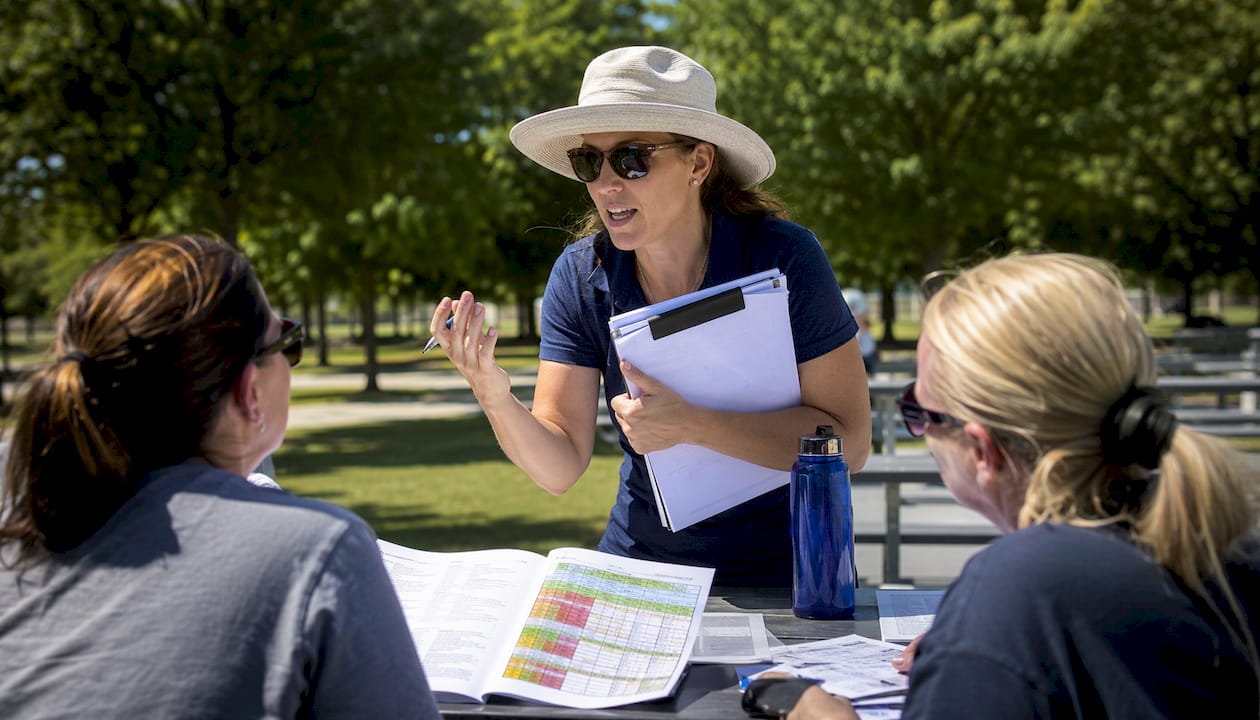
Pro Tip: Create your MatchPlay.events account before the day of the event. Many TDs use it for check-in, bracket management, and machine assignments, and arriving without an account slows the line for everyone.
Table of Contents
- What is tournament play, and which formats will you encounter?
- How are tournaments run on the day of the event?
- How do IFPA and WPPR rankings work?
- How should you prepare for your first tournament?
- Where do you find tournaments and leagues near you?
- What do operators and collectors need to know about hosting?
- How did tournament play evolve across games and sports?
- How does competitive tournament play differ from casual play?
- What prizes and awards are common in tournament play?
- How long does a typical tournament run?
- How does tournament play sharpen your skills?
- Key Takeaways
- Why tournament play matters to us at Premiumpinballs
- Useful sources
- The part most guides won’t tell you
What is tournament play, and which formats will you encounter?
The three most common formats in U.S. competitive pinball each reward different skills.
- 3-strike knockout: Players accumulate strikes by finishing last in a head-to-head group. Typically three or four players compete per machine; the last-place finisher earns a strike. Three strikes and you’re eliminated. This format suits local league nights and smaller regional opens where fast, decisive results matter.
- Group match play: Players rotate through machines in groups, earning points based on finishing position (4 points for first, 2 for second, 1 for third, 0 for last in a four-player group). Rotation balances machine variance across the field, making it the preferred format for larger events where fairness across diverse game titles is a priority.
- Qualifying-to-finals: Players post scores on a card (best-game or herb-style qualifying) during an open window, then the top scorers seed into a bracketed or single-elimination final. The IFPA World Pinball Championship uses this structure: eight qualifying sessions feed into head-to-head single-elimination rounds until one champion remains.
Pro Tip: Preparing for a knockout event? Focus on consistency and avoiding last place rather than chasing the highest score. In qualifying formats, the opposite is true: one exceptional game can carry your card.
How are tournaments run on the day of the event?
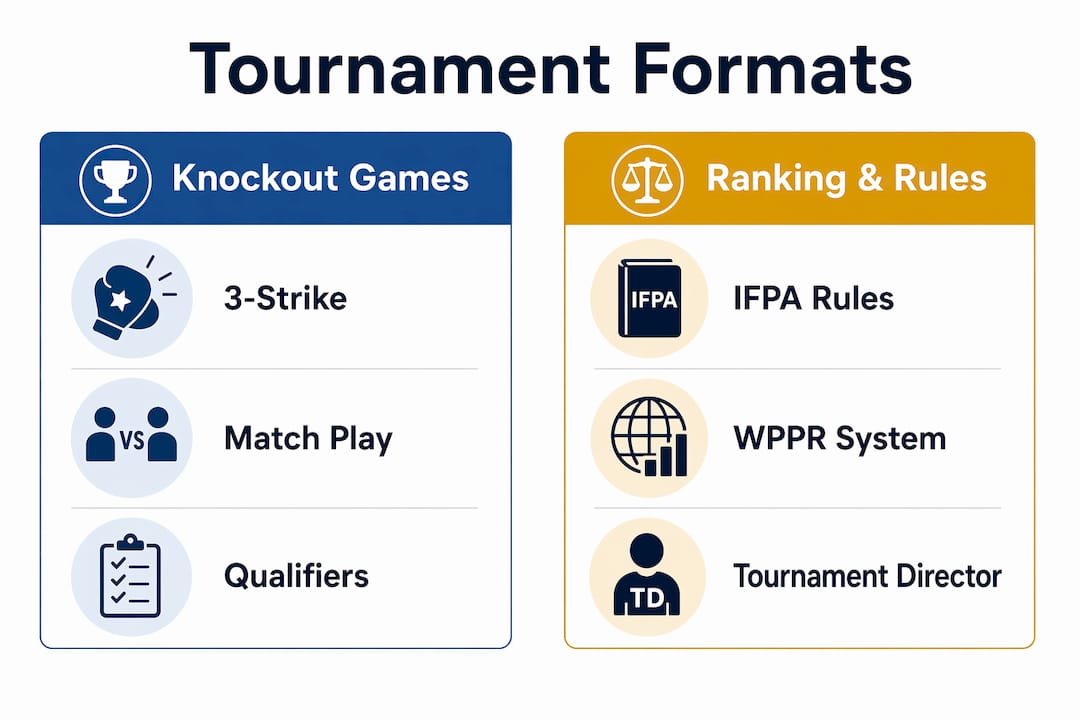
The Tournament Director is the single most important operational factor for a smooth event. TDs enforce rules, manage pace of play, resolve disputes, and submit results to IFPA when applicable. Clear TD communication reduces friction and keeps matches on schedule.
Event day checklist for players and TDs:
- Arrive 10–15 minutes early for check-in and the pre-tournament meeting, where the TD announces tie-break procedures and any machine-specific rulings.
- Confirm your MatchPlay account is active and linked to the event.
- Listen for machine assignments — MatchPlay or similar software handles group draws and rotation automatically.
- After each round, verify your score is recorded correctly before leaving the machine.
- Report malfunctions or disputes to the TD immediately; do not replay a ball or continue play without TD authorization.
On the machine side, tournament mode tightens play by disabling extra balls, adjusting game speed, and reducing luck-based elements. Operators set machines this way to create a level field. Standard tie-breakers include sudden-death replay on a designated machine, highest single-ball score, or a playoff match on a TD-selected title.
How do IFPA and WPPR rankings work?
WPPR is the global ranking framework used to compare competitive players worldwide, and it is tied exclusively to IFPA-endorsed events. Points are awarded based on four variables: strength of field, number of participants, event format, and finishing position. A larger, more competitive field generates more points for every finisher, which is why a top-three finish at a major regional open outweighs winning a small local event.
IFPA endorsement applies only to open-division competitions. Women’s, novice, age-restricted, and team events do not earn WPPR points under current IFPA rules. For players building a ranking, this means prioritizing open events on the IFPA calendar and tracking which local leagues carry endorsement status.
The IFPA has organized championships at State, National, and International levels since its modern founding, creating a structured ladder from neighborhood league nights to the World Pinball Championship.
How should you prepare for your first tournament?
Preparation separates a confident first appearance from a stressful one. Work through this checklist before you walk in the door:
- Look up the game list as soon as it’s posted. Check the event’s MatchPlay page under the “Arenas” tab or the organizer’s website.
- Study rule sheets for unfamiliar titles. Resources like PAPA Pinball Tutorials on YouTube and PinTips offer quick strategy primers for most modern and classic machines.
- Bring cash for the entry fee. Local events typically require an entry fee; public venue events may also require quarters for coin-drop plays.
- Arrive early enough to play a short practice game on every machine in the tournament. Test plunge power, skill shots, and tilt sensitivity — two copies of the same title can play very differently due to unit-specific variables.
- Ask the TD when in doubt. Etiquette matters: respect other players’ turns, avoid unnecessary practice during official rounds, and never touch another player’s machine mid-ball.
Pro Tip: Some machines carry bonuses or modes activated by a prior player that you can inherit or build on. Studying machine-specific rule sheets before the event gives you a genuine competitive edge most casual players overlook.
Where do you find tournaments and leagues near you?
Discovering events is straightforward once you know where to look:
- IFPA calendar: The official listing for endorsed tournaments and leagues across the U.S., searchable by state and date.
- MatchPlay.events: Browse active tournaments, check formats and game lists, and pre-register directly through the platform.
- Local arcade and venue postings: Many bars, barcades, and family entertainment centers host weekly league nights not always listed on national calendars.
- Facebook groups and hobby forums: Regional pinball communities post announcements, results, and machine-specific tips in active groups.
- Conventions and shows: Events like Pinball Expo and Pincinnati feature major tournament tracks alongside the show floor.
When reading an event listing, confirm: entry fee, format, game list, IFPA endorsement status, and whether pre-registration is required. Collectors and operators who want to loan machines to events should contact the organizer directly to discuss logistics, insurance, and setup requirements.
What do operators and collectors need to know about hosting?
Running a tournament well comes down to preparation and clear communication. Work through this checklist before opening registration:
- Test every machine at least 48 hours before the event. Check flippers, rubbers, plunge calibration, and tilt sensitivity.
- Set all machines to tournament or competition mode to disable extra balls and reduce luck variance.
- Assign a dedicated TD who is not competing, or who can be recused from any ruling that affects their own standing.
- Set up MatchPlay in advance: enter the machine list, player count, and format so check-in runs without delays.
- Confirm your coin-drop policy and prepare cash handling for entry fees. Cash is the standard at most U.S. events.
- For IFPA endorsement, list the event on the IFPA calendar at least 30 days before the start date (or 30 days before pre-registration opens). Include date, start time, location, format, and a public-facing website.
- Submit results promptly after the event; including your MatchPlay link speeds IFPA’s approval process.
Pro Tip: If you’re running multiple copies of the same title, calibrate each unit individually. Plunge strength, rubber condition, and flipper response vary between machines even from the same production run, and those differences affect fairness in ways players notice immediately. Operators sourcing tournament-ready machines can consult Premiumpinballs for refurbished and new options built to consistent standards.
How did tournament play evolve across games and sports?
Organized tournament play predates pinball by centuries, rooted in chess competitions and archery contests that formalized ranking and elimination structures. Card games, billiards, and bowling all developed sanctioned tournament circuits in the 19th and early 20th centuries, establishing the model of open registration, defined rules, and ranked prizes that modern pinball adopted. Pinball’s own competitive history traces to the early 1990s, when the original IFPA, supported by the AMOA and machine manufacturers, hosted four world-class competitions and promoted more than 30 leagues before going inactive in 1995. The modern IFPA revived and expanded that framework, building the WPPR system and scaling competition to a global level.
How does competitive tournament play differ from casual play?
Casual pinball is personal: you play at your own pace, choose your machines, and chase your own high score with no consequence for a bad game. Tournament play restructures every one of those variables. Machine choice is assigned, not selected. Time pressure is real, because pace-of-play rules keep rounds moving. And every ball carries weight, because a last-place finish in a group match earns a strike or zero points regardless of your absolute score. The psychological shift is significant. Competitive players learn to manage pressure, adapt to unfamiliar machines quickly, and make strategic decisions under time constraints — skills that casual play rarely demands.
What prizes and awards are common in tournament play?
Prize structures vary widely by event size and sponsorship. Local league nights often award trophies, custom plaques, or modest cash splits among the top three finishers. Regional opens and IFPA-endorsed events frequently offer cash prizes, limited-edition merchandise, and manufacturer-sponsored awards. Major events like Stern Pro Circuit stops carry substantial cash purses and ranking points that affect a player’s national standing. Non-cash awards, including free machine plays, collector items, and event-branded memorabilia, appear at convention tournaments where the experience itself is part of the prize.
How long does a typical tournament run?
A single-day local knockout or match play event typically runs three to five hours, depending on player count and round structure. Qualifying-to-finals formats at regional opens often span a full weekend: qualifying runs Friday evening through Saturday, with finals on Sunday afternoon. Major championship events like the IFPA World Pinball Championship run across multiple days with structured qualifying sessions feeding into elimination rounds. League nights, which run weekly or biweekly, usually last two to three hours per session across a season of eight to twelve weeks.
How does tournament play sharpen your skills?
Competing regularly accelerates improvement in ways that solo practice cannot replicate. Assigned machines force you to learn titles outside your comfort zone. Group pressure sharpens decision-making under stress. Watching skilled players in your group reveals strategies and shot sequences you would not discover independently. The welcoming nature of competitive pinball means veterans frequently share machine-specific tips during events, compressing the learning curve for newcomers. Over a season of league play, most players see measurable gains in consistency, rule knowledge, and mental composure.
Key Takeaways
Tournament play is organized competitive pinball governed by defined formats, TD oversight, and IFPA/WPPR ranking mechanics that reward consistent performance across open-division events.
| Point | Details |
|---|---|
| Three core formats | 3-strike knockout, group match play, and qualifying-to-finals each reward different skills and suit different event sizes. |
| IFPA/WPPR relevance | Only open-division events earn WPPR points; field strength, participant count, and finishing position all affect your ranking. |
| Arrive prepared | Create a MatchPlay account, bring cash ($1–$20 entry fee range), and practice on every listed machine before play begins. |
| Host checklist | Set machines to tournament mode, assign a TD, list the event on the IFPA calendar 30 days early, and submit results with your MatchPlay link. |
| Skill development | Regular tournament play builds rule knowledge, composure under pressure, and strategic range faster than casual play alone. |
Why tournament play matters to us at Premiumpinballs
Competitive pinball is where the craft of the machine meets the discipline of the player, and that intersection is exactly where Premiumpinballs operates. We supply new, refurbished, and used machines to collectors, operators, and venues across the U.S. — machines built and restored to the standards that tournament play demands. Whether you need a single title for a league night or a full lineup for a regional open, our inventory and refurbished machine options are sourced with competitive use in mind. Operators who want guidance on machine selection, delivery logistics, or commercial purchasing can reach our team directly through the site.

Useful sources
- IFPA Frequently Asked Questions — official WPPR point calculation, endorsement eligibility, and open-division rules.
- IFPA League and Tournament Definitions — registration requirements, 30-day listing rule, and format submission standards.
- IFPA21 Rules — the official operating rules for the World Pinball Championship, including qualifying and finals structure.
- Attending Your First Pinball Tournament — Utah Pinball — practical prep guide covering MatchPlay, entry fees, and machine warm-up.
- 5 Things You Need to Know Before Your First Pinball Tournament — Punk Rock Pinball — community tone, rule inheritance, and newcomer advice.
- Pinball Preparedness — Kineticist — game list research, practice strategy, and qualifying format timing.
- Introduction to Competitive Pinball — Fun With Bonus — video primer on formats, leagues, and community entry points.
- Pinball Tournament Rules — Jersey Jack Pinball — machine settings, tournament mode, and rules enforcement basics.
The part most guides won’t tell you
Most tournament guides focus on formats and logistics. What they underplay is the psychological architecture of competitive pinball: the moment you are assigned a machine you have never touched, with three opponents watching, is the moment casual experience stops being useful. The players who improve fastest are not the ones who practiced the most at home. They are the ones who entered events before they felt ready, absorbed losses quickly, and treated every assigned machine as a data point rather than a threat. The community’s welcoming reputation is real, but do not mistake warmth for low stakes. WPPR points accumulate, rankings shift, and the players at the top of your state leaderboard are tracking their calendar with the same precision a golfer tracks handicap. The smartest entry point is a local league night, not a regional open. The format is forgiving, the machines are familiar, and the feedback loop is weekly. That is where the real skill development happens, and it is where most of the sport’s best players started.