
Many pinball enthusiasts find themselves confused when encountering terms like “alley pass,” “stepper unit,” or “action button” during gameplay or maintenance. Understanding these specialized terms is essential for improving your skills and keeping machines in top condition. This guide breaks down the key terminology you need to master pinball gameplay, machine components, and maintenance practices. Whether you’re a beginner collector or experienced player, knowing the right terms will help you troubleshoot issues, execute advanced techniques, and communicate effectively with other enthusiasts in the pinball community.
Table of Contents
- Core Pinball Machine Terminology And Component Overview
- Electromechanical (Em) Vs Solid State (Ss) Vs Modern Digital Machines: Terminology And Impact On Gameplay And Maintenance
- Pinball Gameplay Terminology And Strategic Concepts For Enthusiasts
- Maintenance Terminology And Best Practices For Pinball Collectors
- Discover Great Pinball Machines And Guidance At Premium Pinballs
- FAQ
Key takeaways
| Point | Details |
|---|---|
| Essential terminology impacts gameplay | Knowing terms like multiball and timing helps you execute strategic shots and maximize scores. |
| Machine types use different vocabulary | EM, SS, and modern digital machines each have unique component names affecting maintenance approaches. |
| Proper maintenance extends lifespan | Understanding coils, stepper units, and preventative care reduces costly repairs and keeps machines running smoothly. |
| Strategic concepts improve skills | Mastering alley passes, nudging, and target prioritization separates skilled players from casual ones. |
| Component knowledge aids troubleshooting | Recognizing backglass, backbox, and action button functions helps diagnose and fix common issues quickly. |
Core pinball machine terminology and component overview
Every pinball machine features specific components that define its structure and function. The apron is the metal or plastic panel below the playfield where you’ll find the ball shooter and often the game instructions. This area serves as the player interface and protects internal mechanisms from damage. The backglass is the decorative artwork panel mounted at the top rear of the machine, displaying the game’s title and theme while housing score displays on older models. Modern machines often replace traditional backglass with LED screens showing animated graphics and scoring information.
The backbox contains the electronic components, displays, and speaker systems that bring the game to life. The action button on modern pinball machines, introduced as early as 1992 with Black Rose, serves multiple functions beyond launching the ball. Players use it to activate special modes, select options during gameplay, and trigger bonus features unique to each machine’s ruleset. Understanding these basic components helps you navigate more complex discussions about pinball machine parts overview and identify issues when they arise.
Machine types vary by era, with each generation introducing new terminology. Electromechanical machines from the 1950s through 1970s used purely mechanical systems, while solid state machines added digital processing starting in the late 1970s. Modern digital machines incorporate computer technology, LCD screens, and complex software that changes how we describe gameplay elements. New players often confuse terms like “tilt” with “slam tilt,” or mistake “drain” for any ball loss rather than specifically losing the ball down the center. Familiarizing yourself with key pinball cabinet features builds the foundation for understanding more technical distinctions.
Key components every enthusiast should recognize include:
- Playfield: The angled surface where gameplay occurs, featuring targets, ramps, and obstacles
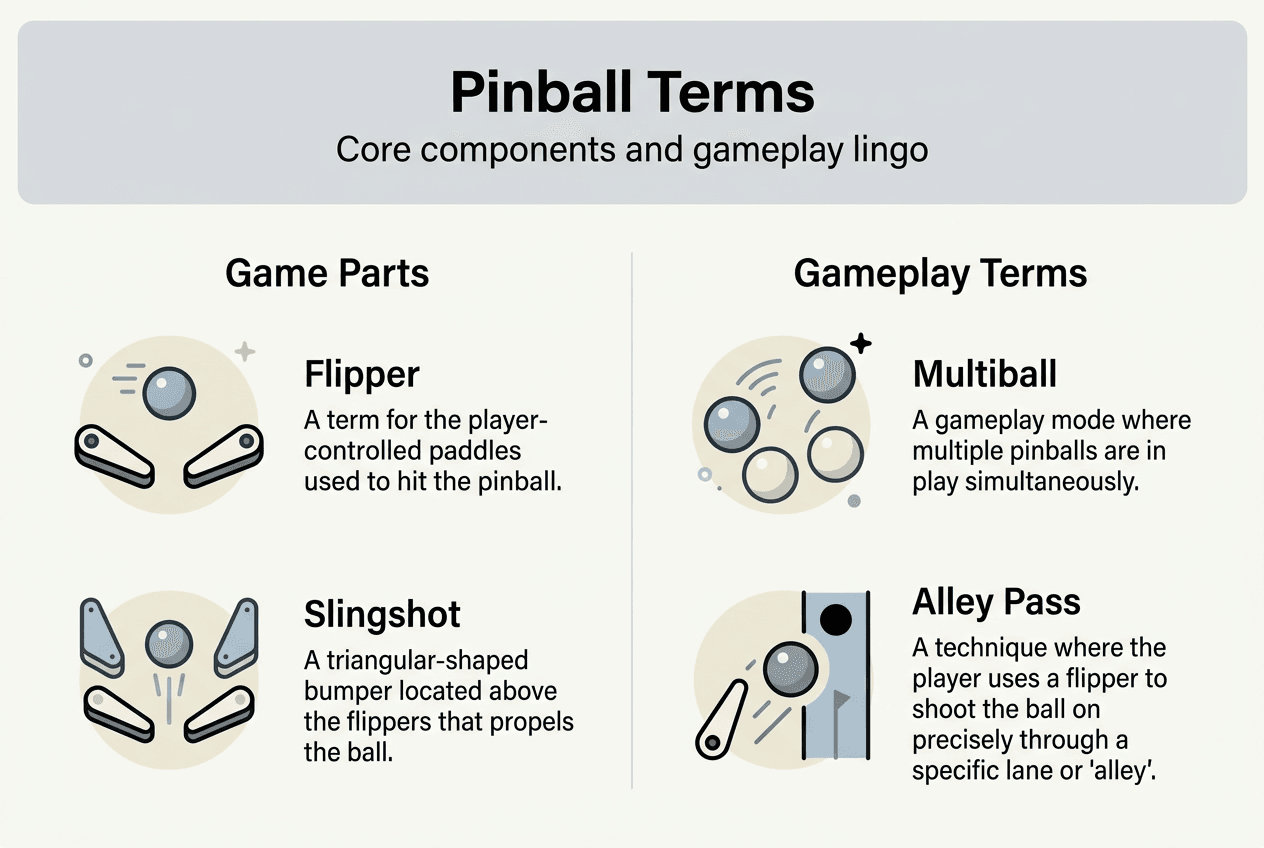
- Flippers: Player controlled arms that strike the ball to keep it in play and aim at targets
- Plunger: The spring loaded mechanism that launches the ball into the playfield
- Slingshots: Triangular bumpers near the flippers that propel the ball at high speed
- Pop bumpers: Circular targets that score points and redirect the ball randomly
Electromechanical (EM) vs solid state (SS) vs modern digital machines: terminology and impact on gameplay and maintenance
Electromechanical machines utilize relays and switches for game logic, contrasting with solid state machines that use CPUs, impacting troubleshooting approaches significantly. EM machines from the 1950s through 1977 relied entirely on mechanical components like stepper units to track scores, relays to control game functions, and chimes for sound effects. These machines require different maintenance terminology because you’ll work with physical mechanisms rather than circuit boards. Understanding relay contacts, coil sleeves, and score reel alignment becomes essential when servicing vintage games.
Solid state machines introduced digital sounds and more complex playfield features uncommon in EM games. Starting in 1977 with games like Gorgar, SS machines used microprocessors to control gameplay, allowing for sophisticated rulesets and electronic displays. The terminology shifted from mechanical parts to electronic components like MPU boards, driver boards, and ROM chips. Collectors working on SS machines need to understand voltage levels, connector pinouts, and diagnostic modes rather than purely mechanical adjustments.
Modern digital machines incorporate LCD screens, complex software, and internet connectivity that previous generations never imagined. Terms like “software update,” “attract mode,” and “callouts” describe features specific to computerized games. These machines use LED lighting instead of incandescent bulbs, requiring different replacement procedures and terminology. The diagnostic systems provide error codes and detailed status reports, making troubleshooting more systematic but requiring knowledge of menu navigation and settings.
| Machine Type | Key Components | Display Technology | Sound System | Maintenance Focus |
|---|---|---|---|---|
| Electromechanical | Relays, stepper units, score reels | Mechanical score reels | Chimes and bells | Cleaning contacts, adjusting mechanisms |
| Solid State | CPU boards, RAM, ROM chips | LED or alphanumeric displays | Electronic sound board | Testing voltages, replacing ICs |
| Modern Digital | Computer system, LCD screen | High resolution LCD | Multi channel audio | Software updates, connector maintenance |
Pro Tip: Never use WD-40 on EM machine parts because it attracts dust and gums up delicate mechanisms. Instead, use proper pinball specific lubricants like Superlube for plastic gears and light machine oil for metal pivots.
Common issues unique to each machine type help collectors recognize problems quickly. EM machines suffer from dirty relay contacts, worn stepper unit pawls, and score reel misalignment. SS machines experience board corrosion, connector failures, and display issues from aging components. Modern machines face software glitches, LCD screen failures, and complex sensor problems requiring diagnostic mode access. Knowing which terminology applies to your mechanical pinball machines versus new pinball technology helps you communicate effectively with repair technicians and fellow collectors.
Pinball gameplay terminology and strategic concepts for enthusiasts
The alley pass technique, also known as a Shatz pass, is used strategically for shot placement and awards collection. This advanced move involves catching the ball on one flipper, then passing it across the playfield to the opposite flipper for a controlled shot. Executing an alley pass gives you time to aim precisely at high value targets rather than reacting to random ball movement. The technique separates skilled players from beginners because it requires understanding ball physics and flipper timing.
Multiball mode occurs when two or more balls are in play simultaneously, creating scoring opportunities and exciting gameplay moments. Most modern machines feature multiball as a central objective, requiring players to complete specific tasks to activate it. During multiball, you’ll juggle multiple balls while aiming for jackpot shots that award massive points. The chaos tests your reflexes and ability to track multiple targets at once. Scoring rules vary dramatically between machines, with some rewarding shot combos while others emphasize mode completion or timed objectives.
Mastering timing and ball control significantly improves player scores. Precise flipper activation determines whether you drain immediately or set up perfect shots. To develop better timing skills:
- Practice catching the ball by raising the flipper just as the ball arrives, creating a dead stop
- Learn the playfield layout to anticipate where the ball will travel after hitting targets
- Observe how different flipper strengths affect shot trajectories on your specific machine
- Develop muscle memory for common shot angles by repeating the same targets
- Study how nudging at different moments influences ball direction without triggering tilt
Nudging involves physically moving the machine to influence ball direction, a legal technique when done within limits. Excessive nudging triggers the tilt mechanism, ending your current ball and forfeiting bonus points. Strategic nudging saves balls heading toward the drain and guides them toward valuable targets. The tilt sensitivity varies between machines, so learning each game’s tolerance helps you maximize this technique safely.
Many players mistakenly believe pinball is purely luck based, but skilled players consistently outperform casual ones through strategic target prioritization and ball control. Understanding which shots advance game modes, build multipliers, or award extra balls transforms random flipper slapping into calculated gameplay. Every machine rewards different strategies, making it essential to learn ruleset specifics rather than applying generic approaches. Studying pinball gameplay features helps you recognize which elements contribute most to high scores.
“The difference between average and expert players lies in their ability to control ball speed and placement. Timing your flipper activation within milliseconds determines whether you execute the perfect ramp shot or watch the ball drain helplessly.”
Common gameplay terms you’ll encounter include:
- Drain: When the ball falls between the flippers and exits the playfield
- Extra ball: An additional ball awarded for achieving specific objectives
- Kickback: A mechanism that saves balls from side drains by launching them back into play
- Wizard mode: The ultimate gameplay achievement requiring completion of all major objectives
- Combo: Hitting multiple targets in rapid succession for bonus points
Maintenance terminology and best practices for pinball collectors
Coils are electromagnetic devices that power flippers, bumpers, and other moving playfield elements. These components convert electrical current into mechanical motion, making them essential to every pinball machine function. Coil power and size directly influence flipper and bumper performance in EM machines. Understanding coil specifications helps you diagnose weak flippers, non functioning bumpers, and other common issues. Each coil has specific resistance and voltage ratings that must match the machine’s design.
Stepper units are mechanical counting devices in EM machines that track scores, ball count, and game progress. These complex assemblies use ratcheting mechanisms to advance one position per activation, similar to an odometer. When stepper units malfunction, you’ll see incorrect scores, skipped players, or games that won’t start properly. Cleaning the contacts and adjusting the pawl tension usually resolves most stepper problems. Score reels are the rotating drums displaying numbers in EM machine backglasses, advancing mechanically as you score points.
| Coil Type | Resistance Range | Voltage | Common Applications |
|---|---|---|---|
| Flipper | 2.5 to 4.5 ohms | 50V | Main flippers, upper flippers |
| Pop Bumper | 3.0 to 5.0 ohms | 50V | Pop bumpers, slingshots |
| Kicker | 10 to 20 ohms | 24V | Ball eject, scoop mechanisms |
| Relay | 150 to 1000 ohms | 24V | Game logic, switching functions |
Preventative maintenance significantly reduces repair costs and extends machine longevity. Regular cleaning prevents dirt buildup that causes ball tracking issues and playfield wear. Waxing the playfield every few months protects the artwork and ensures smooth ball movement. Checking rubber rings for cracks and replacing them prevents damage to underlying playfield surfaces.
Pro Tip: WD-40 is not a lubricant despite popular belief. It’s a water displacement formula that evaporates quickly and attracts dirt. Use synthetic grease specifically designed for pinball mechanisms to avoid creating sticky, contaminated components that fail prematurely.
Essential preventative maintenance tasks include:
- Clean playfield glass weekly to maintain visibility and prevent scratches
- Wax playfield surface every 3 to 6 months depending on usage frequency
- Replace worn rubber rings annually to protect playfield and maintain proper ball response
- Inspect and clean flipper mechanisms every 6 months for optimal performance
- Check all bulbs and replace burned out ones to maintain proper lighting
- Clean ball with microfiber cloth regularly to prevent dirt transfer to playfield
- Tighten loose screws and bolts during quarterly inspections
Environmental factors significantly impact machine function and longevity. High humidity causes corrosion on metal parts and warping of wooden cabinets. Extreme temperature fluctuations affect electronic components and can crack playfield plastics. Keeping machines in climate controlled spaces between 65 and 75 degrees Fahrenheit with 40 to 50 percent humidity prevents most environmental damage. Direct sunlight fades backglass artwork and playfield colors, so position machines away from windows.
Understanding pinball machine parts and maintenance terminology helps you communicate effectively with repair services and order correct replacement components. Using precise terms when describing problems ensures technicians understand the issue without requiring lengthy explanations. This knowledge also helps you evaluate whether a used machine needs extensive work or just minor adjustments before purchase.
Discover great pinball machines and guidance at Premium Pinballs
Now that you understand essential pinball terminology, you’re ready to explore machines with confidence and knowledge. Premium Pinballs offers a carefully curated selection of arcade quality and home pinball machines perfect for enthusiasts at every level. Whether you’re searching for classic titles or modern releases, our inventory includes iconic games like Addams Family, Attack From Mars, and Ghostbusters.
Our refurbished pinball machines provide exceptional value without compromising quality. Each machine undergoes thorough inspection and restoration by experienced technicians who understand the terminology and components we’ve discussed. You’ll find detailed product listings with transparent pricing, availability status, and convenient purchasing options. Explore our guides on best pinball machines for arcades to discover which models suit your space and preferences. Deepen your knowledge with our comprehensive resources on pinball machine parts explained, helping you maintain and enjoy your investment for years to come.
FAQ
What is the difference between EM and solid state pinball machines?
EM machines use relays, switches, and mechanical components for all game logic and scoring functions. Solid state machines employ microprocessors, electronic displays, and digital sound systems for more complex gameplay. Maintenance approaches differ significantly because EM machines require mechanical adjustments while SS machines need electronic troubleshooting skills. The playing experience also varies, with EM games offering simpler rules and SS games providing deeper strategy and varied objectives.
How can understanding pinball terminology improve gameplay?
Knowing terms like alley pass, timing, and multiball helps you execute advanced techniques that maximize scoring potential. Terminology awareness encourages strategic thinking about shot selection, risk management, and mode progression rather than random flipper activation. Understanding ruleset vocabulary allows you to follow in game instructions and communicate strategies with other players effectively. This knowledge transforms casual play into skilled performance that consistently produces higher scores.
What are the best practices for maintaining a vintage pinball machine?
Regular playfield cleaning and waxing protects original artwork while ensuring smooth ball movement across the surface. Use proper lubricants designed for pinball mechanisms and avoid WD-40, which attracts dust and creates sticky residue. Perform comprehensive preventative maintenance every 3 to 6 months, including rubber replacement, contact cleaning, and mechanism inspection. Monitor environmental conditions to prevent humidity damage, temperature related component failure, and sunlight fading of artwork.
Why is timing so important in pinball gameplay?
Precise flipper timing allows you to execute accurate shots toward high value targets instead of randomly batting the ball around. Proper timing enables catching techniques that give you control over ball placement and shot selection. Balanced nudging at the right moments influences ball trajectory without triggering tilt penalties that end your turn. Developing timing skills through practice separates players who consistently achieve high scores from those who rely on luck and hope.
What components should I check first when troubleshooting a pinball machine?
Start by inspecting flipper mechanisms for worn bushings, weak coils, or dirty contacts that prevent proper operation. Check all fuses and connectors for corrosion or loose connections that interrupt power flow. Examine playfield switches for proper adjustment and clean contacts that may prevent target registration. Test pop bumpers and slingshots to ensure coils fire correctly and springs provide appropriate tension. Review the backbox for loose wires, burned components, or display issues that indicate deeper electronic problems requiring professional attention.
Recommended
- understanding pinball machine parts – Pinball Machines for Sale – Premium Pinballs LLC
- Explore pinball machine features for enthusiasts
- A Guide to Key Pinball Cabinet Features – Pinball Machines for Sale – Premium Pinballs LLC
- understanding pinball pricing – Pinball Machines for Sale – Premium Pinballs LLC
- Furniture Making Terminology: Key Concepts for DIY Success