

Solid state pinball machines transformed the industry overnight in the mid-1970s, replacing hundreds of mechanical relays with a single microprocessor chip. This shift unlocked digital scoring, complex rule sets, and rich sound capabilities that were impossible with electromechanical technology. Understanding solid state technology helps collectors identify valuable machines, anticipate maintenance needs, and appreciate the gameplay depth that defined pinball’s golden era. Whether you’re evaluating a vintage Williams System 11 machine or exploring modern WPC platforms, knowing how solid state systems work reveals why these machines remain highly collectible in 2026.
Table of Contents
- The Evolution From Electromechanical To Solid State Pinball
- Core Technology And Mechanics Of Solid State Pinball Machines
- Key Solid State Pinball Systems And Their Impact On Gameplay
- Nuances In Reliability And Collector Perspectives On Solid State Vs Electromechanical
- Explore And Acquire Solid State Pinball Machines
- Frequently Asked Questions
Key takeaways
| Point | Details |
|---|---|
| Microprocessor control | Solid state machines use integrated circuits instead of mechanical relays for game logic and scoring |
| Mid-1970s revolution | Digital technology enabled complex rules, electronic displays, and sophisticated sound systems |
| Major platforms | Williams System 11 and WPC systems dominated the 1980s and 1990s with advanced gameplay |
| Mechanical components | Solenoids, dual-wind coils, and EOS switches work with computer timing for precise flipper control |
| Collector considerations | Balance electronic reliability against mechanical wear when evaluating vintage solid state machines |
The evolution from electromechanical to solid state pinball
Electromechanical pinball machines relied entirely on physical relays, stepping units, and mechanical switches to control gameplay. Every point scored triggered a series of relay clicks and motor movements that advanced score reels and activated features. These machines created distinctive sounds and tactile feedback that purists still cherish today.
The transition to solid state technology in the mid-1970s replaced this relay logic with microprocessors and integrated circuits. Instead of hundreds of mechanical parts managing game rules, a single computer chip could track scores, control lights, and execute complex sequences. Digital displays replaced mechanical score reels, opening new possibilities for million-point scoring and bonus calculations.
Solid state technology brought several transformative advantages:
- Complex multi-ball modes and timed sequences became programmable rather than mechanically limited
- Electronic sound boards delivered music, speech, and effects impossible with chimes and bells
- Digital displays showed alphanumeric messages, animations, and instructions to players
- Reduced mechanical wear on relay components that required frequent adjustment and replacement
- Lower power consumption compared to banks of energized relays holding game state
The tactile experience changed fundamentally with this shift. Mechanical pinball machines produced audible relay clicks and motor hums during gameplay, while solid state versions introduced electronic beeps and synthesized sounds. Some collectors prefer the organic feel of electromechanical operation, while others embrace the gameplay depth that microprocessors enabled.
This technological inflection point matters enormously to collectors today. Understanding whether a machine uses relay logic or solid state control affects maintenance requirements, parts availability, and restoration approaches. The divide between EM and SS eras represents distinct collecting categories with different appeal and investment considerations.
Core technology and mechanics of solid state pinball machines
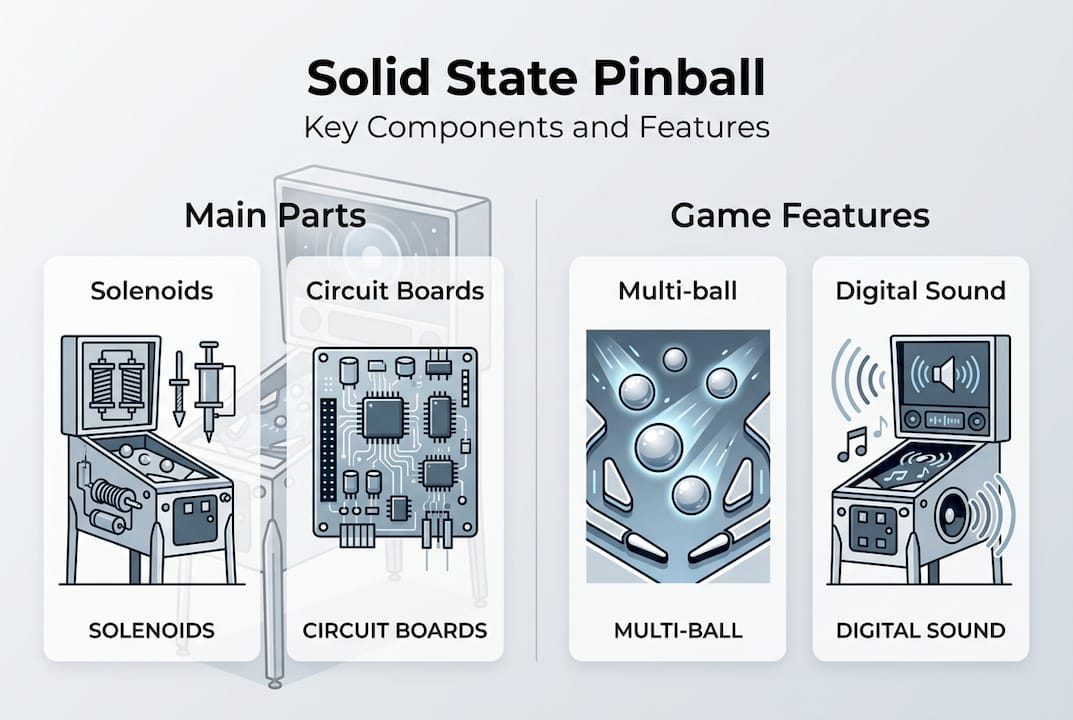
Solid state pinball machines combine electronic control systems with electromechanical components to create responsive gameplay. The microprocessor serves as the brain, but physical solenoids and switches execute the action on the playfield.
Solenoids power every major playfield movement. These electromagnetic coils activate flippers, pop bumpers, slingshots, and kickers by converting electrical pulses into mechanical force. Dual-wind coils use separate power and hold windings to deliver strong initial strikes followed by sustained holding current. This design prevents overheating while maintaining flipper position during extended ball trapping.
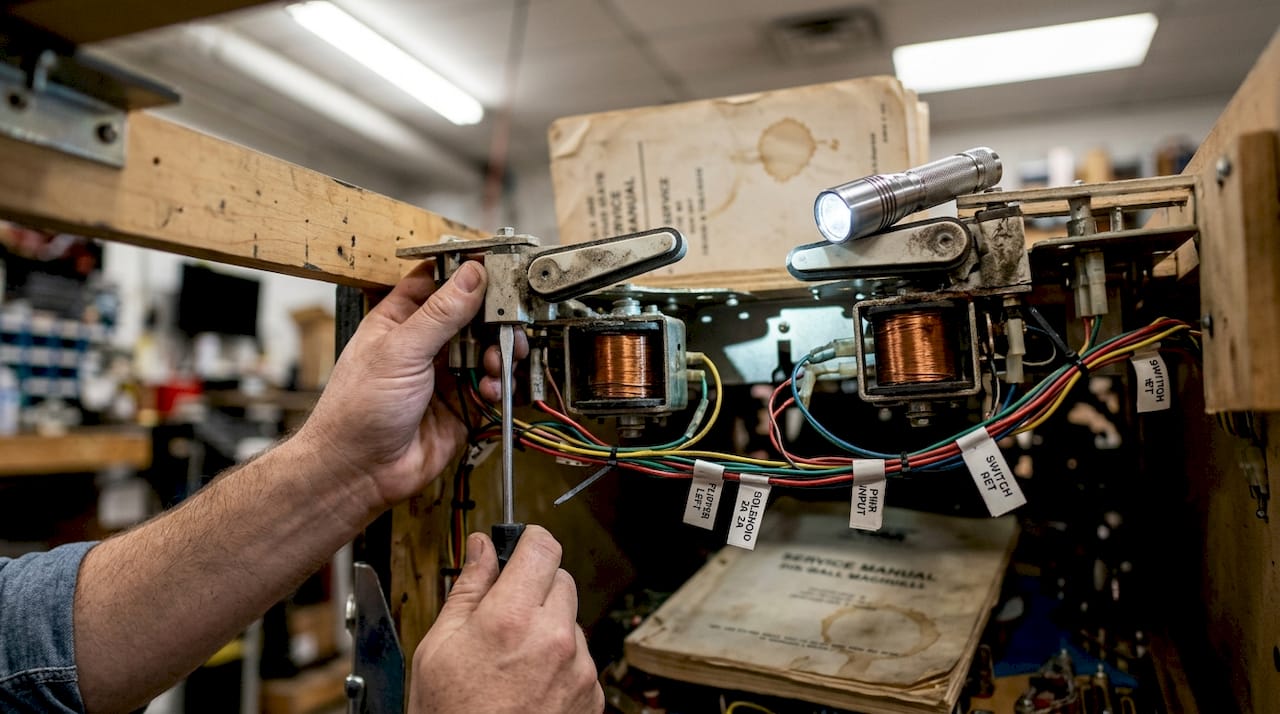
End-Of-Stroke switches and computer timing control flipper power delivery precisely. When you press a flipper button, the system applies full voltage (typically 50V) for approximately 40 milliseconds to snap the flipper up quickly. The EOS switch then triggers, reducing power to a lower holding voltage that keeps the flipper raised without burning out the coil. This timing happens in milliseconds, creating the responsive feel players expect.
Fliptronics technology refined this approach further. Williams introduced low-power flipper switches using gold-plated contacts that eliminated arcing damage common in earlier designs. The system reduced flipper button current from several amps to milliamps, dramatically improving switch longevity and player safety. Fliptronics became standard on WPC machines from the early 1990s onward.
Typical solid state systems use processors like the Motorola 6809 running at 2MHz with 8KB of RAM. This modest computing power proves sufficient for tracking game state, managing display updates, controlling sound boards, and executing rule sequences. ROM chips store the game program permanently, while battery-backed RAM preserves high scores and settings.
Common failure points require attention:
- Transistors controlling solenoids blow when protection diodes fail or coils short circuit
- EOS switches require periodic adjustment to maintain proper timing and prevent ball trapping
- Flipper mechanisms need rebuilding every few years as bushings wear and return springs weaken
- Connector pins corrode over decades, causing intermittent electrical problems
- Capacitors on power supply boards deteriorate and need replacement in vintage machines
Pro Tip: Test EOS switch timing by holding flippers up and listening for buzzing sounds. Properly adjusted switches should engage cleanly without audible coil vibration, indicating correct power transfer from initial strike to hold phase.
Understanding these pinball machine parts helps collectors diagnose issues and plan maintenance budgets. Solid state technology reduced some failure modes compared to relay systems, but introduced new electronic vulnerabilities requiring different expertise.
Key solid state pinball systems and their impact on gameplay
Several major platform generations defined solid state pinball evolution. Williams dominated this era with successive system architectures that pushed gameplay boundaries and established collecting benchmarks.
Williams System 11 launched in 1986 with machines like High Speed and introduced alphanumeric displays and digital sound. This platform used an 8088 processor and supported complex scoring modes impossible on earlier solid state hardware. System 11 games featured distinctive callouts, timed modes, and multi-level objectives that rewarded skilled play.
The Williams Pinball Controller platform succeeded System 11 in 1990 and ran until 1999, producing legendary titles across multiple hardware revisions. WPC machines used a Motorola 6809 CPU running at 2MHz with 8KB of RAM, later expanded in WPC-95 models. This architecture supported dot matrix displays, CD-quality sound, and intricate rule sets with dozens of modes and objectives.
| System | Years | Processor | Display | Notable Features |
|---|---|---|---|---|
| System 11 | 1986-1990 | 8088 | Alphanumeric | Digital sound, complex scoring |
| WPC | 1990-1994 | 6809 2MHz | Dot matrix | Rich audio, deep rules |
| WPC-95 | 1995-1999 | 6809 2MHz | Dot matrix | Enhanced security, fliptronic standard |
These platforms enabled revolutionary gameplay elements:
- Multi-ball modes with up to six balls in play simultaneously
- Wizard modes requiring completion of multiple objectives across extended gameplay
- Video mode mini-games displayed on dot matrix screens
- Licensed themes with actor voices and movie sound effects
- Progressive jackpots and stacking bonus multipliers
Funhouse exemplified WPC capabilities with its talking ventriloquist dummy head, mirror ball multi-ball, and step-advancing modes. The game tracked progress across multiple objectives, rewarding players who mastered shot sequences and timing. This depth transformed pinball from simple point accumulation into strategic gameplay with defined goals and progression systems.
Collectors prize top solid state pinball machines from these eras for their gameplay richness and technological significance. System 11 and WPC titles represent the peak of pre-digital pinball design, combining mechanical precision with electronic sophistication. Values reflect both playability and historical importance, with certain titles commanding premium prices based on production numbers and cultural impact.
The technological generations created natural collecting categories. Some enthusiasts focus on System 11 simplicity and distinctive aesthetics, while others prefer WPC complexity and theme integration. Understanding platform differences helps collectors make informed acquisition decisions based on gameplay preferences and maintenance capabilities.
Nuances in reliability and collector perspectives on solid state vs electromechanical
Reliability debates between solid state and electromechanical machines generate passionate discussion among collectors. Each technology presents distinct maintenance challenges and failure modes that affect long-term ownership experience.
Solid state reliability advantages include fewer mechanical adjustments and reduced relay maintenance. Microprocessors don’t drift out of alignment like stepping units, and electronic scoring eliminates motor-driven score reel failures. Games boot consistently and track complex state without mechanical memory systems requiring periodic servicing.
However, electronic components introduce new vulnerabilities. Integrated circuits fail catastrophically rather than degrading gradually like mechanical parts. A blown transistor stops a feature instantly, while a worn relay might work intermittently before complete failure. Board-level repairs require electronics knowledge and specialized tools compared to mechanical adjustments anyone can learn.
Tactile and audio differences shape collector preferences profoundly:
- Electromechanical machines produce organic relay clicks, motor hums, and bell chimes during gameplay
- Solid state versions offer synthesized sounds, speech samples, and musical scores
- EM flipper action feels slightly different due to direct relay control versus computer timing
- Digital displays provide information clarity that mechanical score reels cannot match
Common solid state failures require specific attention. Failed diodes blow driver transistors by allowing voltage spikes when coils de-energize. Misadjusted EOS switches cause flipper coils to overheat or create weak flipper response. Fliptronics gold switches last significantly longer than traditional contacts but still need periodic cleaning and mechanical rebuilding as bushings wear.
Battery leakage on CPU boards destroys traces and components if left unchecked. Collectors must replace batteries regularly and inspect boards for corrosion. This maintenance differs entirely from electromechanical upkeep focused on cleaning contacts and adjusting mechanisms.
Pro Tip: Inspect solid state machines for board modifications and repairs before purchasing. Original factory boards with minimal alterations indicate careful ownership, while heavily modified electronics may hide recurring problems or amateur repair attempts that compromise reliability.
“Purists argue electromechanical buzz and mechanical precision offer authentic pinball experience, while solid state advocates counter that gameplay depth and feature variety outweigh tactile trade-offs. Neither position invalidates the other; collector preferences reflect individual priorities regarding authenticity versus complexity.”
Understanding these pinball collecting insights helps buyers align purchases with maintenance capabilities and aesthetic preferences. Solid state machines require electronics knowledge or professional service relationships, while electromechanical versions demand mechanical aptitude and patience for adjustment work. Both technologies reward dedicated ownership with reliable gameplay when properly maintained.
Explore and acquire solid state pinball machines
Whether you’re drawn to System 11 simplicity or WPC complexity, finding the right solid state machine requires access to quality inventory and expert guidance. Premium Pinballs specializes in curated selections of refurbished, used, and new machines that meet collector standards for condition and playability.

Explore best pinball machines for arcades to discover top-rated solid state titles currently available. Our detailed listings include condition assessments, gameplay videos, and technical specifications that help you evaluate each machine’s features and restoration quality. From iconic Williams WPC games to rare System 11 finds, the selection represents solid state pinball’s finest examples.
Deepen your knowledge with pinball collecting insights covering valuation factors, maintenance planning, and investment considerations. Understanding what drives collectibility helps you build a collection aligned with your gameplay preferences and budget. Learn pinball machine basics to master terminology and technology fundamentals before making acquisition decisions.
Frequently asked questions
What is the main difference between solid state and electromechanical pinball machines?
Solid state machines use microprocessors and integrated circuits for game control, while electromechanical versions rely on physical relays and stepping units. This fundamental distinction affects scoring capabilities, sound systems, and maintenance requirements. Solid state technology enables complex rules and digital displays impossible with purely mechanical systems.
What are common maintenance issues for solid state pinball machines?
Transistor failures from blown protection diodes top the list, followed by misadjusted EOS switches causing flipper problems. Battery leakage corrodes CPU boards if not replaced regularly. Connector corrosion creates intermittent electrical issues over decades. Flipper mechanisms still require periodic rebuilding despite electronic control, as bushings wear and springs weaken with use.
Why do collectors favor solid state machines for complex gameplay?
Microprocessor control enables multi-ball modes, wizard objectives, progressive scoring, and timed sequences impossible with relay logic. Digital displays show instructions and animations that guide players through intricate rule sets. Sound boards deliver speech, music, and effects that enhance theme integration. This gameplay depth rewards skill development and strategic shot planning beyond simple point accumulation.
Are vintage solid state pinball machines still available and relevant in 2026?
Vintage solid state machines from the 1980s and 1990s remain highly sought by collectors and command strong prices for desirable titles. These games offer proven gameplay depth and represent pinball’s golden era before digital integration. Parts availability through specialty suppliers and active collector communities support ongoing restoration and maintenance. Many consider WPC-era machines the peak of electromechanical pinball design.
How does collecting solid state pinball differ from collecting mechanical machines?
Solid state collecting requires electronics knowledge or professional service relationships for board repairs and troubleshooting. Mechanical collecting emphasizes adjustment skills and patience for relay timing work. Solid state machines generally offer deeper gameplay but introduce component obsolescence concerns. Mechanical versions provide tactile authenticity but limit rule complexity. Budget considerations differ as electronic parts replacement costs vary from mechanical rebuild expenses.