
TL;DR:
- Implementing cashless systems in arcades increases guest spending and streamlines transactions.
- A complete setup includes self-service kiosks, machine card readers, and a central management dashboard.
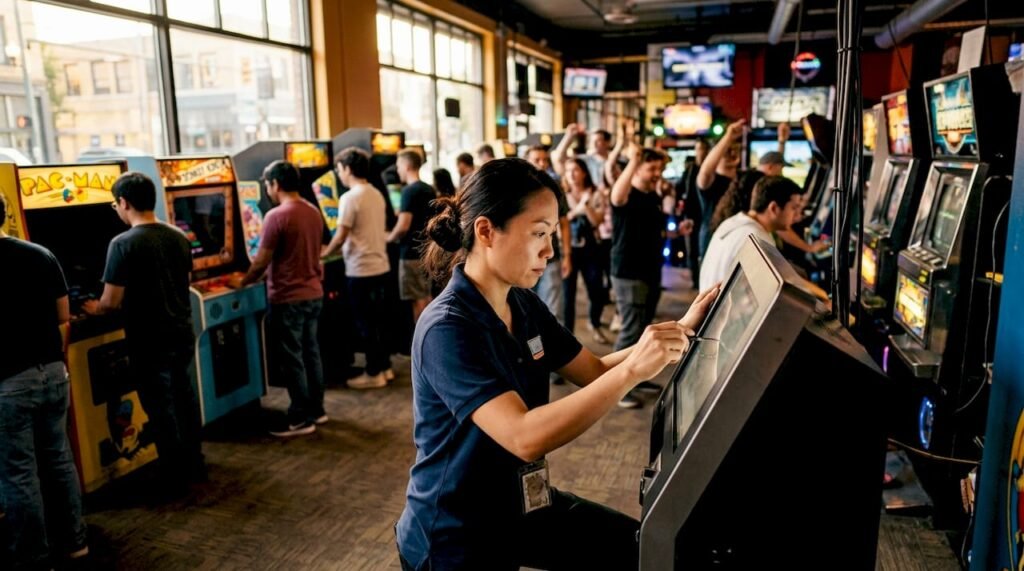
Payment setup for arcades is the process of implementing cashless systems, card readers, and centralized management dashboards to replace coins and speed up guest transactions. Arcade operators who make this shift see dramatic results. Cashless readers deliver a ticket size 645% larger on average compared to cash-only machines. That single figure tells you everything about the revenue opportunity sitting inside your venue right now. Modern arcade payment solutions also unify gaming, food and beverage, redemption, and ticketing revenue under one RFID card or wristband, giving you a complete picture of every dollar your guests spend.
What does a payment setup for arcades actually include?
A complete arcade payment setup has three core components: self-service kiosks, card readers installed on each machine, and a centralized management dashboard. Each layer plays a distinct role, and removing any one of them creates gaps that cost you money.
Self-service kiosks are the guest-facing command center. They accept cash and electronic payments, load credits onto RFID cards or wristbands, and let guests check balances without asking a staff member. Kiosks enable unattended credit management, which means your team can focus on hospitality instead of handling cash. For operators running a busy Saturday night, that difference is enormous.
Card readers attach directly to each machine and accept NFC tap, swipe, or RFID card contact. The reader communicates with the kiosk hub to confirm credit availability and log every transaction. Standard arcade payment setups in 2026 treat these three components as a single integrated system rather than separate purchases.
Management dashboards give you real-time analytics: which machines earn the most, which sit idle, and where guests stop spending. Remote monitoring means you can spot a malfunctioning reader from your phone before a guest even notices.
| Component | Primary function | Key benefit |
|---|---|---|
| Self-service kiosk | Credit loading, cash and card intake | Reduces staff workload |
| Machine card reader | NFC, swipe, and RFID payment acceptance | Speeds up each transaction |
| Management dashboard | Real-time analytics and remote monitoring | Drives data-informed decisions |
Pro Tip: Connect up to 50 card readers to a single kiosk hub using Bluetooth or wired protocols. Connecting multiple readers to one hub cuts per-reader service fees significantly, which adds up fast in a venue with 30 or more machines.
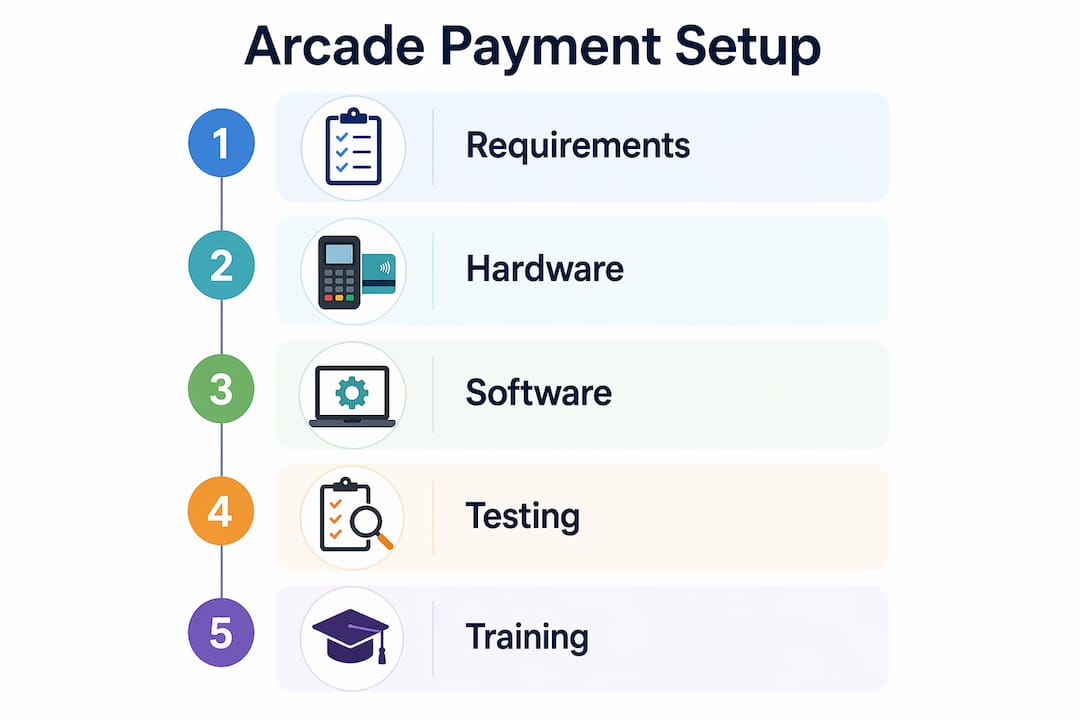
How to set up arcade payments step by step
Getting your cashless arcade system live requires a clear sequence. Skipping steps, especially in the testing phase, creates problems that frustrate guests on opening day.
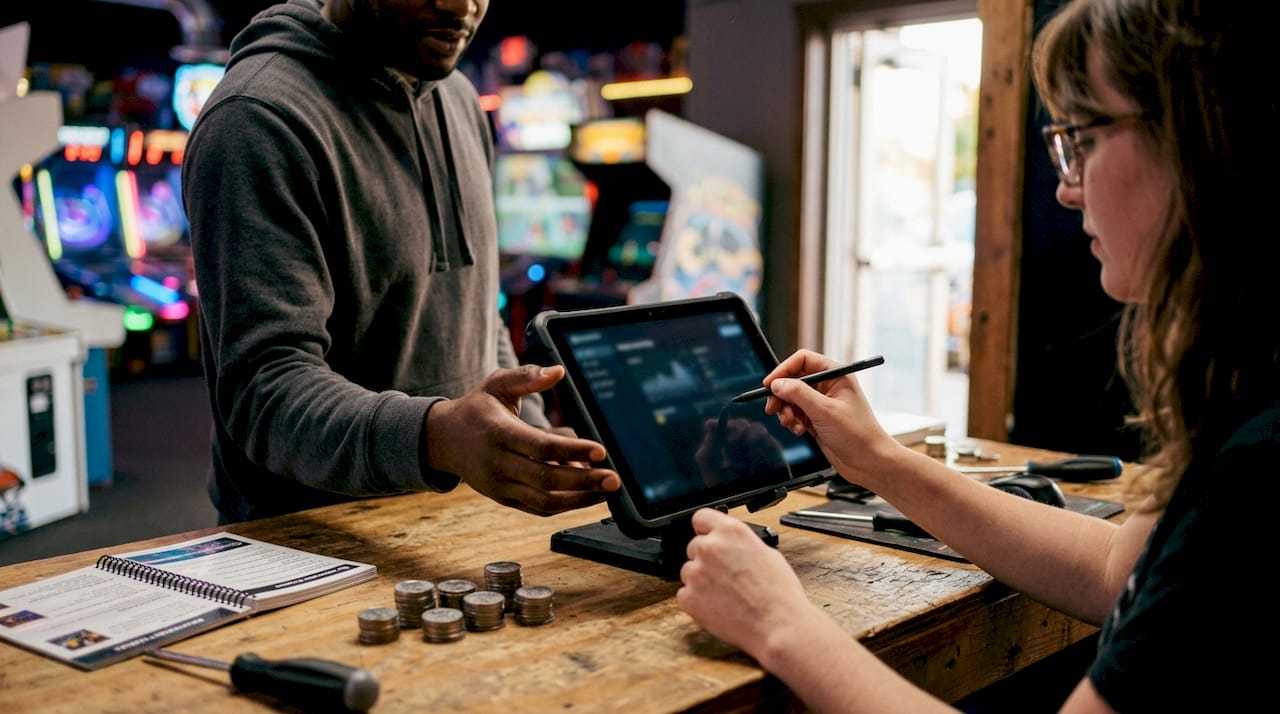
Step 1: Requirements gathering
Start by inventorying every machine in your venue. Note each machine’s age, connectivity options (USB, Bluetooth, wired), and current payment method. Then assess your location: Wi-Fi coverage, power outlet placement, and foot traffic patterns all affect kiosk placement. Operators who skip this step often install kiosks in low-traffic corners where guests never find them.
Step 2: Hardware installation
Place kiosks near venue entrances and high-traffic areas. Guests should see a kiosk within 30 seconds of walking in. Mount card readers on each machine at eye level, following the manufacturer’s wiring guide. For arcade machine relocation or new installations, plan cable routing before machines are in their final positions.
Step 3: Software configuration
Log into your management dashboard and register each reader by its unique device ID. Assign machines to zones (for example, “Redemption Zone” or “Classic Games”) so your analytics reflect real guest behavior. Connect your kiosks to the dashboard and set your credit pricing tiers.
Step 4: Testing
Run a full transaction on every machine before opening. Test NFC tap, swipe, and RFID card contact separately. Check that the dashboard logs each event in real time. Common issues at this stage include Bluetooth pairing failures and incorrect credit conversion rates.
Step 5: Staff training
Your team needs to know how to reset a reader, issue a guest refund through the dashboard, and troubleshoot a kiosk that goes offline. A 30-minute training session before launch prevents the majority of day-one problems.
Pro Tip: Enable transaction batching from day one. Batching groups multiple machine taps into single merchant transactions, which substantially reduces the processing fees that would otherwise accumulate across hundreds of individual plays per hour.
- Confirm Wi-Fi signal strength at every kiosk location before mounting hardware.
- Set credit expiration policies in the dashboard to encourage return visits.
- Schedule a soft-launch day with staff present at every kiosk to assist guests.
How do cashless systems improve customer experience and revenue?
Cashless arcade systems remove the two biggest friction points in a traditional venue: coin jams and slow transactions. Going cashless eliminates coin jams and speeds transactions, freeing staff to focus on guest service rather than machine maintenance. That shift in staff focus directly improves the guest experience, because players get help faster and machines stay in service longer.
Faster transactions also mean more plays per hour. When a guest taps a card instead of fumbling for quarters, the time between plays drops from 30 seconds to under 5 seconds. More plays per hour means more revenue per guest, without adding a single machine to your floor.
Digital loyalty programs integrate directly with cashless payment systems. Guests accumulate points on every tap, and operators can push bonus credit offers through the dashboard in real time. That combination of instant rewards and personalized offers keeps guests playing longer and returning more often.
Dynamic pricing and bonus packages let you adjust play costs and offer promotions through the backend without touching a single machine. Run a happy-hour discount on Tuesday afternoons or add bonus credits for guests who load $20 or more. Traditional coin systems make this kind of flexibility impossible.
Arcade systems that unify revenue streams under a single RFID card or wristband also capture food and beverage spending alongside gaming credits. A guest who loads $30 onto a wristband and uses it at the snack bar, the claw machine, and the redemption counter generates data across every touchpoint. That data tells you exactly where to invest next.
Can cashless systems scale across multiple arcade locations?
Multi-location operators gain the most from a well-built cashless arcade system. Centralized dashboards provide real-time revenue and machine status monitoring across every location simultaneously. You can see which venue is underperforming and which machine needs service without leaving your office.
Route-based operators benefit from remote price adjustments. Change credit pricing across all locations from a single dashboard login, with no need to visit each site. That capability alone justifies the investment for operators managing five or more venues.
Unified RFID cards and wristbands work across locations, which encourages guests to visit multiple venues in your network. A guest who loads credits at your downtown location can use the same card at your suburban venue. That cross-location convenience builds loyalty and increases total spend per guest.
Arcade management systems reduce manual reconciliation by consolidating payment events into batched transactions. Fewer processing events mean cleaner financial records and less time spent on end-of-day accounting. For operators running three or more locations, that time saving is substantial.
- Centralized dashboards eliminate the need for on-site managers to generate daily revenue reports manually.
- Remote machine monitoring catches hardware failures before they become lost-revenue events.
- Unified pricing across locations prevents guest confusion and simplifies promotional campaigns.
When you are ready to add new machines to a growing network, understanding pinball machine pricing helps you budget accurately alongside your payment system investment.
Key Takeaways
A cashless payment setup for arcades is the single most effective way to increase per-guest spending, reduce operational costs, and build a scalable, data-driven venue.
| Point | Details |
|---|---|
| Cashless readers boost revenue | Arcade machines with cashless readers average a ticket size 645% larger than cash-only machines. |
| Three components are non-negotiable | Every effective setup requires a self-service kiosk, machine card readers, and a management dashboard. |
| Transaction batching cuts fees | Grouping multiple taps into single merchant transactions reduces processing costs across high-volume venues. |
| Dynamic pricing drives growth | Backend pricing adjustments and bonus packages generate revenue that coin systems cannot replicate. |
| Centralized control scales operations | A single dashboard manages pricing, analytics, and machine status across multiple locations in real time. |
Why I think most arcade owners underestimate the setup phase
The operators I see struggle most with cashless systems are not the ones who chose the wrong hardware. They are the ones who rushed the setup phase and skipped requirements gathering. They placed kiosks in the wrong spots, configured credit tiers without testing them, and then blamed the technology when guests complained.
The setup phase is where the real decisions happen. Choosing a system that supports transaction batching from day one is not a minor technical detail. It is a cost management decision that compounds over thousands of transactions per week. Operators who ignore it pay meaningfully more in processing fees every month.
I also think the industry undersells the value of the management dashboard. Most operators treat it as a reporting tool. The best operators treat it as a pricing engine. They watch machine-level data, identify underperforming titles, and use dynamic pricing to test whether a lower credit cost increases total plays. That is a fundamentally different way of running a venue, and it produces better results.
The hardware cost conversation also deserves more honesty. Connecting up to 50 readers to a single kiosk hub is not just a convenience feature. It is a direct reduction in per-reader service fees that changes the economics of a large venue. Operators who understand this from the start choose their kiosk architecture differently, and they save money every month as a result.
If you are evaluating machines to add to your venue alongside a new payment system, the best pinball machines for arcades deserve a close look. Pairing high-quality titles with a modern payment setup maximizes both guest engagement and revenue per square foot.
— Jim
Premiumpinballs and the machines worth paying for
Upgrading your payment system is only half the equation. The machines on your floor determine whether guests load credits and keep playing or walk out after one round.
Premiumpinballs offers a curated selection of premium pinball machines, including iconic titles like Addams Family, Attack From Mars, and Ghostbusters, available in new, refurbished, and used condition. These are the titles that hold guest attention, generate repeat plays, and justify every dollar you invest in a cashless payment setup. Pairing a high-quality machine with a modern arcade payment processing system creates a revenue combination that coin-operated setups simply cannot match. Visit Premiumpinballs to browse the full inventory of top arcade pinball machines and find the titles that will perform best in your venue.
FAQ
What is the best payment method for arcades in 2026?
The best payment method for arcades combines RFID wristbands or cards with NFC-enabled card readers and a self-service kiosk. This setup supports the fastest transactions and integrates with loyalty programs and real-time analytics.
How do I reduce processing fees in my arcade payment setup?
Enable transaction batching in your management dashboard. Batching groups multiple machine taps into single merchant transactions, which substantially reduces the per-play processing fees that accumulate in high-volume venues.
Can one kiosk support all the card readers in my arcade?
A single central kiosk can connect up to 50 individual machine card readers using Bluetooth or wired protocols. This architecture reduces per-reader service fees and simplifies your overall payment infrastructure.
How does a cashless arcade system improve guest experience?
Cashless systems eliminate coin jams and reduce transaction time from roughly 30 seconds to under 5 seconds per play. Guests spend more time playing and less time searching for change or waiting for staff assistance.
Do cashless arcade payment systems work across multiple locations?
Modern cashless systems support centralized control across multiple venues, with unified pricing, real-time machine monitoring, and RFID cards that work at every location in your network.
Recommended
- How to choose pinball for arcades – Pinball Machines for Sale – Premium Pinballs LLC
- How To Move Arcade Machines – Pinball Machines for Sale – Premium Pinballs LLC
- How to handle your pinball purchase checklist – Pinball Machines for Sale – Premium Pinballs LLC
- Why invest in arcade machines: business and collector ROI