
Discounts on pinball machines are real, but their size and availability depend almost entirely on whether you’re buying new-in-box (NIB) or used. On NIB machines, expect modest savings of $100–$300 through wire payment or self-pickup rather than a large straight price cut. On the used market, a modest reduction from asking price is a reasonable starting point, provided you anchor your offer in completed-sales data rather than wishful thinking.
The role of discounts in pinball sales is more nuanced than a simple “ask and receive.” Manufacturer pricing controls keep NIB margins tight, while the used market rewards buyers who do their homework. Your best leverage isn’t always a lower number — it’s speed, certainty, and a well-documented case.
Key Takeaways
Discounts on pinball machines are real and worth pursuing, but the used market offers far more negotiating room than NIB purchases, where structural pricing controls keep cash savings modest.
| Point | Details |
|---|---|
| NIB savings are modest | Wire payment and self-pickup typically save $100–$500; straight price cuts are rare due to MAP policies. |
| Used market offers 10–20% room | Anchor offers in completed sales from eBay, PinballPrices, and Pinside — not asking prices. |
| Landed cost changes the math | Add freight, tax, setup, and repair estimates before comparing any two quoted prices. |
| Lightly used beats NIB on resale | A documented, lightly used machine often has a lower cost basis and narrower resale loss than NIB. |
| Premiumpinballs simplifies the process | Transparent pricing, documented condition, warranty, and flexible delivery remove open-market uncertainty. |
Table of Contents
- Why new-in-box pricing rarely moves much
- How discounts work in the used market
- Where do the real savings come from?
- Do discounts change your resale and appreciation outlook?
- Your practical negotiation playbook
- How to calculate the true buy price
- How Premiumpinballs approaches pricing and discounts
- The real tradeoff between hunting discounts and buying with confidence
- Premiumpinballs makes the buying decision straightforward
- Where to verify prices and finalize your comps
- Sources
Why new-in-box pricing rarely moves much
Structural economics, not seller stubbornness, explain why NIB pinball prices stay close to MSRP. Distributors operate on thin margins, and manufacturers like Stern Pinball have historically enforced minimum advertised pricing (MAP) or minimum resale policies that restrict how aggressively a dealer can cut the sticker price. Community discussions on Pinside confirm that dealers often prefer offering non-monetary value — free accessories, store credit, or a topper — rather than a straight cash discount that would erode their margin and risk their distributor relationship.
That said, small savings do exist if you know where to look:
- Wire transfer or cash payment: Dealers avoid credit card processing fees (typically 2–3%), and some pass a portion of that saving to you — buyers on Pinside report saving $100–$300 per machine this way.
- Self-pickup: Freight on a pinball machine can add a few hundred dollars or more depending on distance. Arranging your own pickup or using a local dealer eliminates that cost entirely, often yielding more than any negotiated price reduction.
- Open-box or demo units: Machines used at trade shows or as showroom demos sometimes carry a modest price reduction alongside minor cosmetic wear.
- Buying multiple machines: Operators and collectors purchasing two or more NIB units occasionally unlock slightly better pricing, though the discount rarely scales linearly.
- Slow-moving titles: When manufacturer pricing restrictions relax, distributors sometimes run selective discounts on titles with slower sell-through, particularly near year-end or when new models are announced.
A small wire discount on a higher-priced machine is modest on paper, but can cover a set of accessories or a partial repair fund. On a $6,500 machine, saving $400 on freight by driving two hours to pick it up yourself is a more meaningful win than haggling over the sticker price.
Pro Tip: If a dealer won’t budge on price, ask specifically what accessories they can include — a premium topper, a shaker motor kit, or a custom shooter rod. Distributors often have more flexibility on add-ons than on the machine price itself, and those extras carry real retail value.
How discounts work in the used market
The used pinball market is where pricing tactics genuinely pay off. Private sellers expect negotiation, and a 10–20% reduction from asking price is widely cited as a standard starting range — but only when your offer is grounded in real data, not gut feeling.
Pulling completed-sales comps
Asking prices are aspirational. Completed sales are the truth. Pull comps from three sources before making any offer:
- eBay sold listings: Filter by “Sold Items” to see what buyers actually paid, not what sellers hoped to receive.
- Pinballprices: Aggregates historical sale data by title, giving you a defensible price range for specific models.
- Pinside sold threads: The Pinside marketplace and its sold-listing history reflect the enthusiast community’s actual transaction prices, often more accurate than general marketplaces for collector-grade machines.
The gap between asking and sold prices can be substantial on older or project machines. A seller listing a 1992 machine at $3,500 may find that comparable completed sales cluster around $2,800 — and that’s your opening anchor.
Translating condition into dollars
Condition issues aren’t just cosmetic concerns; they’re dollar adjustments. A cracked playfield insert, a worn ramp, or a failing display board each carries an estimated repair cost you can document and present. Turn subjective observations into objective line items:
That framing is polite, data-backed, and hard to dismiss. It signals you’ve done the work, not that you’re fishing for a bargain.
Pro Tip: Same-day pickup with cash or a wire transfer is often the single most powerful lever with private sellers. It removes their logistics uncertainty entirely. A slightly lower offer with guaranteed same-day removal frequently beats a higher offer from a buyer who needs two weeks to arrange a truck.
Where do the real savings come from?
Savings on pinball machines don’t always arrive as a line-item price cut. Understanding the actual sources of discount, by channel, helps you target your effort where it pays best.
- Manufacturer/distributor channel (NIB): Wire/cash payment savings, self-pickup freight elimination, demo or open-box pricing, and accessory bundles are common; straight MSRP cuts are rare; non-monetary value-adds are the norm.
- Dealer channel (NIB and refurbished): Dealers with established relationships occasionally offer loyalty pricing or package deals on multiple machines. Refurbished inventory often carries a lower entry price than NIB with a warranty still attached.
- Private seller channel (used): The widest negotiating room, especially when the seller is motivated by space, a move, or a machine that has sat unsold for weeks. Timing matters here — a listing that’s been active for 30+ days signals a seller who may be ready to move.
- Show and auction sales: Pinball expos and arcade auctions can surface machines at below-market prices, particularly for titles with lower collector demand. The tradeoff is limited inspection time and no return policy.
- Clearance and market corrections: Pinflation analysis from Kineticist documented significant used-price increases in recent years, but also showed that supply events and production changes create temporary windows where prices soften. Watching the market during those windows is a legitimate discount strategy.
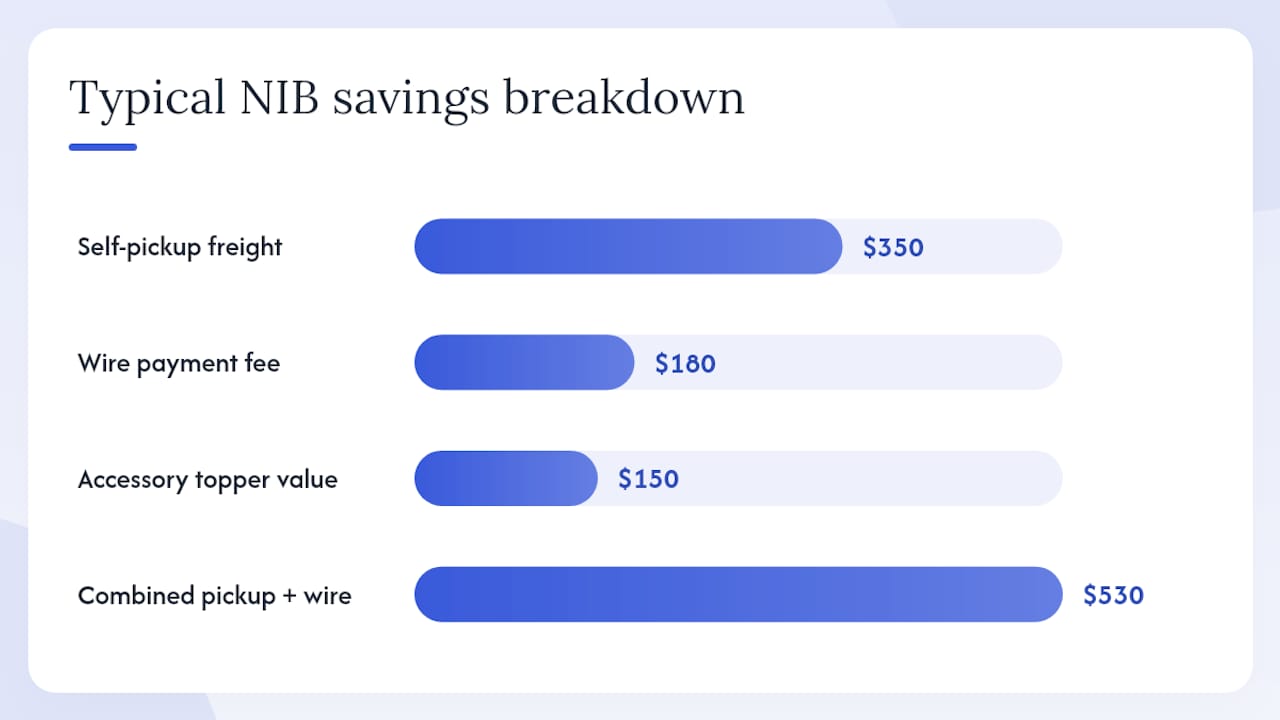
When buying NIB locally, the math often looks like this: a $9,000 machine with $350 in freight costs $9,350 landed. Driving to pick it up yourself saves that $350 outright. Paying by wire instead of card saves another $180 at a 2% processing fee. Combined, you’ve saved $530 without the dealer moving a dollar on the sticker price. That’s a more realistic picture of NIB discount strategies for pinball machines than expecting a 10% cash reduction.
For accessories versus cash discounts: if a dealer offers a $150 topper or $150 off the price, the topper may be the better deal if you were going to buy it anyway, since the dealer’s cost for that accessory is lower than its retail value to you.
Do discounts change your resale and appreciation outlook?
How you buy affects how you sell. Lightly used machines often offer the best balance of purchase price and resale retention, while NIB buyers frequently absorb an immediate value hit once freight, sales tax, and setup are factored into their true cost basis.
Consider a simplified scenario:
The lightly used path, bought at a fair price with documented condition, narrows the resale gap considerably. A machine with a known history, original parts, and no modifications holds its value better than a NIB machine whose cost basis was inflated by freight and tax.
Title demand matters as much as condition. Player ratings and game reputation drive liquidity — a highly rated title in excellent condition will always find a buyer faster than a rare but unpopular machine at any price. When you’re evaluating a discount on a less-desirable title, factor in the longer hold time and potentially softer resale price.
The Kineticist pinflation data also illustrates that market-wide price trends affect resale outcomes more than any single purchase discount. Buying during a soft market and selling during a strong one outperforms any negotiated savings on a single transaction.
Your practical negotiation playbook
A respectful, well-prepared approach closes deals. A low-ball tone or an undocumented offer wastes everyone’s time and can permanently close the door with a seller who had room to move.
Preparation checklist
- Pull three to five completed sales for the exact title and edition from eBay sold, PinballPrices, and Pinside sold threads.
- Inspect the machine in person or request a detailed video covering the playfield, backglass, cabinet sides, and a full game play-through.
- Use a pinball machine grading guide to assign a condition grade and document every defect with an estimated repair cost.
- Calculate your maximum bid: fair market value minus documented repair costs minus a reasonable negotiating buffer.
- Decide your walk-away price before the conversation starts.
Sample offer scripts
For a private seller:
For a dealer or distributor:
Do and don’t list
- Do present comps before your number — anchoring with data makes your offer feel fair, not aggressive. Research from Harvard’s Program on Negotiation confirms that opening anchors shape counteroffers and perceived fairness.
- Do ask for accessories or store credit if a price cut is refused — dealers have more flexibility there.
- Don’t open with a number more than 20% below a fairly priced listing without documented justification. Pinside community guidance is clear: a ~10% reduction is often reasonable on a fairly priced used machine, but low-ball offers without reasoning offend sellers and end negotiations.
- Don’t negotiate over text or email for a large purchase without a prior phone or in-person conversation — tone gets lost, and trust matters.
- Don’t ignore shipping insurance on a remote purchase. A modest insurance premium on a high-value machine is advisable.
Pro Tip: Read the listing’s age and the seller’s communication style before deciding how hard to push. A seller who responds within minutes and has relisted the machine twice is motivated. A seller who took three days to reply and just listed it yesterday is not. Adjust your opening offer accordingly.
How to calculate the true buy price
The sticker price is the starting point, not the finish line. Your true landed cost determines whether a deal is genuinely attractive or just looks good on the surface.
Landed-cost components
- Machine price: The negotiated purchase price.
- Freight: White-glove delivery for a pinball machine typically runs $200–$500 for regional shipping; long-haul or cross-country can exceed that. Self-pickup eliminates this line entirely.
- Sales tax: Varies by state. On a $9,000 machine in a state with 8% sales tax, that’s $720 — a figure many buyers overlook when comparing quoted prices.
- Setup and tipping: Professional delivery crews expect a tip; budget $50–$100. If the machine needs leveling, a new set of legs, or a location modification, add that cost.
- Immediate repairs: Document any known issues before purchase and price them out. A worn flipper rebuild kit runs $30–$60; a new display board can run $150–$400 depending on the title.
- Shipping insurance: For remote purchases, insure the machine for its full replacement value.
Worked example
A NIB machine quoted at $8,800 with $350 freight, $704 sales tax (8%), $75 setup, and $0 immediate repairs lands at $9,929 total. A lightly used machine at $7,500 with $300 freight, $600 tax, $75 setup, and a few hundred dollars in documented repairs lands at $8,675 total. The used machine’s $1,300 lower sticker price translates to a $1,254 lower landed cost — a meaningful difference when you’re evaluating resale prospects.
Understanding how alternative payment methods and self-delivery influence final price can shift that math further in your favor.
Pro Tip: Before finalizing any remote purchase, fold your estimated repair allowance directly into your maximum bid. If a machine needs $300 in parts, your ceiling drops by $300 — not as a negotiating tactic, but as a financial reality. Sellers who understand the market will respect that math.
Verification checklist
- Request photos of the serial number plate and confirm it matches the listing description.
- Ask explicitly about delivery terms: curbside vs. in-home placement, stair fees, and whether the machine will be blanket-wrapped.
- Confirm whether the quoted price includes or excludes sales tax.
- For remote purchases, verify the seller’s return or dispute policy before sending payment.
How Premiumpinballs approaches pricing and discounts
Premiumpinballs carries new, refurbished, and used pinball machines — including iconic titles like The Addams Family, Attack From Mars, and Ghostbusters — with transparent pricing, documented condition photos, and clearly stated warranty terms. For buyers who’ve spent time navigating the open market’s variables, that transparency is itself a form of value.
The platform’s pricing reflects current market conditions, and promotional discounts appear on select inventory. For bulk or wholesale purchases, operators and dealers are encouraged to contact the sales team directly for pricing that reflects volume. The trust signals that matter most to serious buyers are all present:
- Detailed product listings with condition descriptions and photos
- Warranty and return policy clearly stated before purchase
- Multiple contact options for pre-sale questions and post-sale support
- Flexible payment methods including options that can reduce processing costs
- Shipping, delivery, and in-store pickup with transparent freight terms
For a collector who wants a specific title in documented condition without the back-and-forth of private-seller negotiation, Premiumpinballs offers the fastest path from decision to delivery. Browse the refurbished and used inventory to see current availability and pricing.
The real tradeoff between hunting discounts and buying with confidence
There’s a version of pinball buying where you spend six weeks monitoring Pinside, lowballing three sellers, and driving four hours to inspect a machine that turns out to need $600 in work. And there’s a version where you pay a fair, documented price for a machine you know is ready to play the day it arrives.
Neither approach is wrong. The hobby rewards patience and research, and there’s genuine satisfaction in finding a well-priced machine through careful negotiation. But the discount you’re hunting needs to be weighed against the time, risk, and opportunity cost of the search.
What I’d caution against is treating every purchase as a negotiation to win. The pinball community is small and interconnected. Sellers remember low-ball offers made in bad faith, and a reputation for respectful dealing opens doors that aggressive tactics close permanently. The best buyers I’ve observed approach negotiation as a collaborative problem: “Here’s what the data shows, here’s what I can offer, let’s find a number that works for both of us.” That posture closes more deals, at better prices, than any script.
Premiumpinballs makes the buying decision straightforward
Searching for the right pinball machine at the right price shouldn’t feel like a second job. Premiumpinballs offers a curated inventory of new, refurbished, and used machines with pricing that reflects real market conditions, documented condition photos, and warranty coverage that protects your investment from day one.
Whether you’re a first-time buyer looking for a statement piece for your home game room or an operator sourcing machines for a commercial venue, Premiumpinballs provides the transparency and support that makes a confident purchase possible. Promotional discounts appear on select inventory, and the team is available to discuss options for bulk or wholesale orders. Browse the best pinball machines available now and contact the sales team to discuss your specific needs, budget, and delivery requirements.
Where to verify prices and finalize your comps
Before you make any offer, your comp research needs to be airtight. Three sources cover the vast majority of the US market:
- Pinballprices: The most focused tool for historical pinball sale data by title. Search a specific model and see the distribution of completed sale prices over time — invaluable for setting a defensible ceiling.
- eBay sold listings: Filter by “Sold Items” on any title search. eBay’s breadth means you’ll find recent transactions across condition grades, giving you a realistic range rather than a single data point.
- Pinside sold threads and marketplace: The enthusiast community’s own transaction history. Pinside listings often include detailed condition notes and photos, making them particularly useful for grading-adjusted comparisons.
When you find comps that support your offer, screenshot them immediately. Listings disappear, and having a saved record of three completed sales with dates, prices, and condition notes gives you a credible, time-stamped foundation for any negotiation. Save the listing ID or URL alongside each screenshot so you can reference it precisely.
For deeper market context, the Kineticist pinflation analysis provides useful historical perspective on how used prices have moved over time. Pairing that macro view with current completed-sale data gives you both the trend and the specific transaction evidence you need to negotiate with authority.
A few additional resources worth bookmarking: the Premiumpinballs valuation guide for a step-by-step approach to assessing fair value, and the pinball machine value guide for understanding the condition and demand factors that move prices most. Together, these tools give you the research foundation to walk into any negotiation — with a private seller, a dealer, or a distributor — knowing exactly what a fair price looks like and why.
Sources
- Pinside
- Guide To Buying A Used Pinball Machine — Gaming Weekender
- Pinside
- Do pinball machines hold their value? — RetroOnly
- Pinflation 2022: Slower rising prices — Kineticist
- Pinside
- Pinside
Recommended
- understanding pinball pricing – Pinball Machines for Sale – Premium Pinballs LLC
- Understanding pinball machine value – Pinball Machines for Sale – Premium Pinballs LLC
- Pinball Machine Ownership cost – Pinball Machines for Sale – Premium Pinballs LLC
- Pinball machine value guide: assess premium machines 2026