

Most people assume a pinball cabinet is just a decorative box holding the playfield, but that’s a costly misconception. The cabinet is the engineered foundation that determines gameplay quality, resale value, and customization potential. From the precise slope angle that controls ball speed to the material choices that affect longevity, every cabinet detail shapes your playing experience and collector appeal. This guide explores the anatomy, construction standards, manufacturer variations, and modification pathways that transform a simple wooden structure into the heart of a premium pinball machine.
Table of Contents
- Defining the pinball cabinet: Foundation of the machine
- Dimensions and construction: What makes a cabinet unique
- Cabinet variations: Manufacturer styles and collector appeal
- Cabinet materials: Benefits, drawbacks, and longevity
- Customization and modification: Making a cabinet your own
- Elevate your game with premium cabinets
- Frequently asked questions
Key Takeaways
| Point | Details |
|---|---|
| Cabinet is the core | The pinball cabinet houses and supports all vital game components. |
| Design impacts value | Collector appeal and playability depend on cabinet dimensions, materials, and brand. |
| Customization options | Pinball cabinet mods range from art upgrades to advanced technical improvements. |
| Material matters | Solid wood construction ensures lasting value and performance for enthusiasts. |
Defining the pinball cabinet: Foundation of the machine
Now that we’ve challenged the default assumption, let’s define what a pinball cabinet really is. A pinball cabinet is the main structural body, typically a wooden coffin-shaped box that houses the playfield, electronics, and components, elevated by four legs with a sloped design for optimal play. This foundation supports everything from flipper mechanisms to scoring displays, making it far more than cosmetic packaging.
The sloped design isn’t arbitrary. It creates the gravity-assisted ball movement that defines pinball gameplay, while the elevated stance on four legs provides access to underside components for maintenance and repairs. Collectors refer to this classic shape as coffin-shaped because of its tapered profile, wider at the player end and narrower toward the backbox.
Core cabinet components include:
- Side panels that provide structural integrity and mounting points
- Bottom panel supporting playfield weight and electronics
- Playfield supports maintaining precise angle and stability
- Four legs with adjustable levelers for uneven floors
- Head cabinet housing backglass and scoring electronics
“The cabinet serves as the machine’s body, the structural skeleton that everything else depends on. Without proper cabinet construction, even the best playfield becomes unplayable.”
Understanding these key cabinet features helps you evaluate quality when purchasing or restoring machines. The cabinet determines whether your investment holds value or becomes a maintenance headache. This foundation directly impacts what makes a pinball machine function properly, from ball trajectory to electronic reliability.
Dimensions and construction: What makes a cabinet unique
Understanding the cabinet structure leads naturally to looking closer at how they’re built and what sets different cabinets apart. Standard dimensions approximate 27-28 inches wide and 51-52 inches long for the cabinet body, with total height reaching 76-78 inches when legs are attached. However, no universal industry standard exists, leading to manufacturer variations that affect parts compatibility and collector preferences.
| Cabinet Type | Width | Length | Height (with legs) | Primary Material |
|---|---|---|---|---|
| Williams Standard | 27" | 51.5" | 76" | 3/4" plywood sides |
| Stern Modern | 27.5" | 52" | 77" | 3/4" plywood sides |
| Widebody | 30-31" | 52" | 76-78" | 3/4" plywood sides |
Typical materials include:
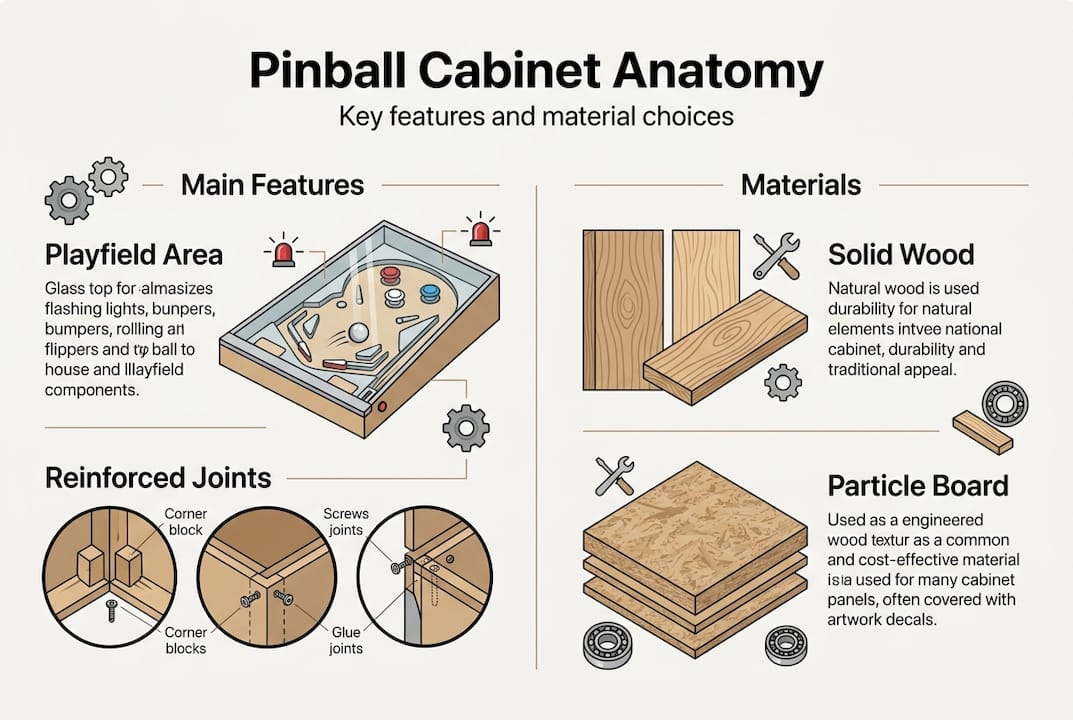
- 3/4-inch plywood for side panels, providing strength without excessive weight
- 1/2-inch plywood for bottom panels, adequate for supporting playfield and components
- Solid wood for premium builds, offering superior longevity and collector appeal
- Particle board in budget machines, prone to warping and moisture damage
- Plastic and metal upgrades for hardware, hinges, and reinforcement points
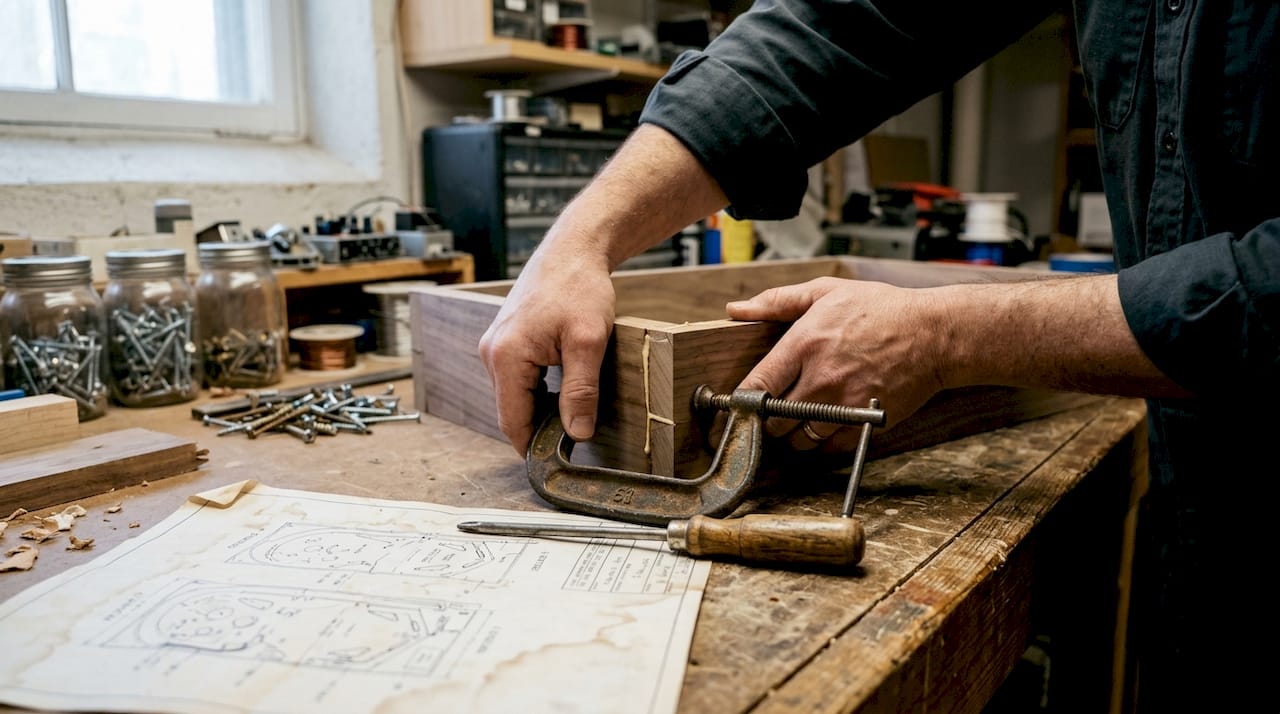
Key construction elements determine cabinet quality. Corner joints must be precisely cut and reinforced, typically using wood glue and screws rather than nails. Hardware mounting points require accurate placement, as even small misalignments prevent proper door closure or playfield installation. The finish, whether laminate or paint, protects wood from moisture while providing the canvas for artwork.
The sloped design maintains a playfield angle between 6.5 and 7 degrees, carefully calculated to balance ball speed with player control. Too steep and the game becomes unplayable; too shallow and balls move sluggishly. This angle affects everything from flipper timing to drain frequency.
Pro Tip: Always measure for replacement or custom playfield fit before ordering parts. Test-fit all hardware before final assembly, as even manufacturer-spec components sometimes require minor adjustments due to wood expansion or production tolerances.
These construction standards directly impact the pinball machine parts you can install and how easily you can source replacements. Variations in popular cabinet sizes mean that a playfield designed for a Williams cabinet won’t fit a widebody without modification.
Cabinet variations: Manufacturer styles and collector appeal
Once the basics of dimensions and construction are clear, collectors and enthusiasts often ask: what truly sets cabinet designs apart, and which matter most? Manufacturer choices in cabinet design create distinct playing experiences and dramatically affect resale value, with some styles commanding premium prices decades after production.
| Feature | Williams 90s | Stern Modern | Widebody |
|---|---|---|---|
| Parts Availability | Excellent | Good | Limited |
| Build Quality | Premium wood | Standard plywood | Varies |
| Playfield Size | Standard | Standard | 20% larger |
| Hardware Access | Tool-free doors | Keyed locks | Mixed |
| Collector Premium | 15-25% higher | Market baseline | 10-30% higher |
Williams 90s cabinets remain collector favorites due to parts availability, with test-fit hardware dictating precise cuts that ensure reliable assembly. These machines used superior joinery and thicker wood in critical stress points, resulting in cabinets that survive decades of commercial use without structural failure.
Collector criteria for evaluating cabinet quality:
- Build quality: Joint strength, wood thickness, and reinforcement placement
- Hardware access: Tool-free door removal and hinged playfield designs
- Playfield size: Standard versus widebody affects game library compatibility
- Part sourcing: Availability of replacement panels, legs, and trim pieces
- Modification potential: Space for cooling mods and electronic upgrades
The rise of commercial CNC manufacturing has democratized custom cabinet production, allowing enthusiasts to order precision-cut panels that match original specifications. However, DIY builds require advanced woodworking skills and specialized tools, making commercial options more cost-effective for most collectors.
Custom cooling modifications have become standard in unique builds, with convection airflow mods addressing heat from LED upgrades and modern electronics. These modifications involve cutting ventilation channels in strategic locations, maintaining structural integrity while improving component longevity.
When comparing cabinet model variations, consider how manufacturer choices affect your specific needs. A Williams cabinet offers easier restoration, while a widebody provides more dramatic gameplay but limits your game selection. For novice cabinet buyers, starting with a standard-width cabinet from a major manufacturer ensures the widest parts availability and community support.
Cabinet materials: Benefits, drawbacks, and longevity
With an understanding of style and construction, it’s important to look at material choices that make or break cabinet quality. The materials used in cabinet construction determine not only immediate durability but also long-term value retention and restoration feasibility, making this decision critical for serious collectors.
Solid wood provides the gold standard for cabinet construction:
- Superior dimensional stability across temperature and humidity changes
- Accepts refinishing and repairs without structural compromise
- Holds hardware securely through repeated disassembly
- Commands 20-30% premium in resale markets
- Weighs 15-20% more than plywood alternatives
Plywood offers the industry standard balance:
- Adequate strength for typical use with proper thickness
- Lighter weight simplifies moving and setup
- Lower cost enables wider market accessibility
- Vulnerable to edge damage and moisture penetration
- Requires edge banding or trim for finished appearance
Particle board appears in budget machines:
- Lowest material cost reduces entry price
- Prone to warping in humid environments
- Hardware pulls out after repeated stress
- Difficult to repair once damaged
- Significantly reduces collector value
Plastic and metal components enhance specific areas:
- Corner protectors prevent shipping damage
- Metal hinges outlast wood-mounted alternatives
- Plastic trim pieces resist moisture better than wood
- Premium appearance appeals to high-end collectors
- Higher cost limits use to critical stress points
“Material choice drives long-term value and restoration potential. A solid wood cabinet maintains structural integrity through decades of play, while particle board machines often become unrepairable after 15-20 years of use.”
Solid wood proves superior to particle board for longevity, but plastic and metal upgrades enhance high-end collector appeal by addressing specific failure points. The best cabinets combine materials strategically, using solid wood or premium plywood for structure while incorporating metal reinforcements at stress points.
Pro Tip: For custom builds using particle board, reinforce all corner joints with metal brackets and apply multiple coats of sealant to edges. This prevents the moisture absorption and warping that typically destroys particle board cabinets within a decade.
When upgrading pinball cabinets, material quality determines which modifications remain feasible. Solid wood accepts new hardware mounting points anywhere, while particle board limits you to original locations or requires extensive reinforcement.
Customization and modification: Making a cabinet your own
Collectors who understand the essentials often continue by personalizing or enhancing their cabinets. Let’s explore ways this is done, with expert advice for best results. Test-fit hardware and precise cuts prove essential, while convection airflow modifications address cooling needs in custom builds with modern electronics.
Most common cabinet customizations, ranked by popularity:
Custom artwork and decals: Vinyl wraps or painted designs transform appearance without structural changes. Fully reversible if you preserve original finish underneath. Cost ranges from $200 for DIY vinyl to $2,000 for professional airbrushing.
Upgraded legs and hardware: Powder-coated legs, chrome trim, and premium hinges enhance both appearance and durability. Reversible with original parts saved. Budget $150-500 depending on finish quality.
LED lighting systems: Undercabinet lighting and interior illumination create dramatic visual effects. Requires drilling for wire routing but mounting holes easily filled. Investment of $100-400 depending on complexity.
Cooling modifications: Strategic ventilation cuts prevent heat buildup from LED upgrades and modern electronics. Permanent modification requiring careful planning. Cost primarily labor, under $100 in materials.
Playfield glass upgrades: Anti-glare or tempered glass improves visibility and safety. Completely reversible, no cabinet modification required. Price range $80-200 per sheet.
Reversible modifications preserve resale value and allow you to return machines to original condition if desired. Permanent changes like ventilation cuts or custom hardware mounting should be planned carefully, as they affect collector appeal. Some modifications actually increase value when executed professionally, particularly period-correct restorations or tasteful upgrades using premium materials.
Precise measurement proves critical for all modifications. Cabinet wood expands and contracts with humidity, so measure multiple times and in different seasons if possible. Hardware designed for one manufacturer rarely fits another without adjustment, even when specifications appear identical.
Pro Tip: Create template jigs from scrap wood for any modification requiring multiple identical cuts or holes. This ensures repeat accuracy and makes hardware swaps simple if you later change components. Store templates with your machine documentation for future reference.
When you enhance your pinball cabinet through modifications, start with reversible changes to build experience before attempting permanent alterations. The customizable cabinet features available today allow personalization without compromising structural integrity or collector value when approached thoughtfully.
Elevate your game with premium cabinets
Understanding cabinet anatomy, materials, and customization options transforms how you evaluate and enjoy pinball machines. Whether you’re considering your first purchase or planning your next restoration project, cabinet quality determines both playing experience and long-term value. The foundation matters more than flashy playfield features when building a collection that appreciates over time.
At Premium Pinballs, we specialize in machines with exceptional cabinet quality, from meticulously restored Williams classics to pristine modern Stern releases. Our inventory showcases cabinets built to last, with detailed condition reports highlighting structural integrity, material quality, and modification potential. Every machine undergoes thorough inspection, ensuring you invest in a foundation worthy of your game room. Browse our curated selection to find cabinets that combine collector appeal with playing excellence, or contact our team for personalized guidance matching your specific requirements and space considerations.
Frequently asked questions
What is the difference between a pinball cabinet and a pinball machine?
A pinball cabinet is the main structural body, while the pinball machine includes all components: cabinet, playfield, electronics, and backbox. The cabinet provides the foundation, but a complete machine requires all integrated systems.
Why do pinball cabinets have a sloped design?
Pinball cabinets are elevated with a sloped design for optimal play, typically maintaining a 6.5 to 7 degree angle. This slope creates the gravity-assisted ball movement and fast-paced gameplay that defines the pinball experience.
Can you build a pinball cabinet yourself, or is it better to buy one?
Building is possible with advanced woodworking skills, but commercial CNC cabinets prove cheaper than full DIY for novices. Most collectors find commercial options more cost-effective and reliable unless they possess specialized equipment and expertise.
What materials last longest in a pinball cabinet?
Solid wood proves superior to particle board for longevity, maintaining structural integrity through decades of use. Premium plywood offers a good balance of durability and cost, while particle board should be avoided for serious collections.
How do widebody cabinets differ from standard pinball cabinets?
Widebody cabinets measure 30-31 inches wide compared to standard 27-28 inches, providing 20% more playfield space. This creates more dramatic gameplay but limits game selection, as fewer titles were produced in widebody format.