
TL;DR:
- A playfield protector is a removable PET-G sheet that shields a pinball machine’s artwork from wear without permanent alteration. Proper installation, including complete teardown and precise fitting, ensures effective preservation and minimal gameplay impact. Regular cleaning and early application maximize the protector’s benefits for long-term machine value and appearance.
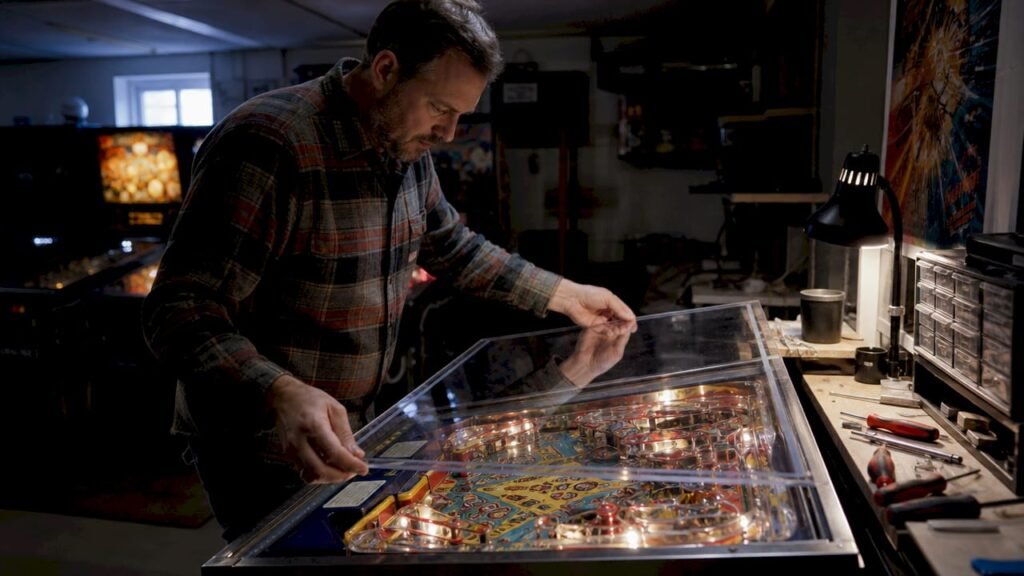
A playfield protector is defined as a precision-cut PET-G sheet that sits directly on top of a pinball machine’s playfield to absorb ball impact and friction, shielding the original artwork and clearcoat from wear. Unlike clearcoating, which permanently alters the surface, a protector is fully removable and leaves the original playfield untouched. For collectors and enthusiasts who treat their machines as both prized possessions and long-term investments, this distinction is everything. Understanding what a playfield protector does, how it installs, and how it affects play separates casual owners from those who truly protect their machines’ prestige and resale value.
What is a playfield protector and why does it matter?
A playfield protector’s core purpose is preservation without permanence. The PET-G material acts as a sacrificial layer between the steel ball and the painted wood beneath, absorbing the constant friction and micro-impacts that degrade artwork over thousands of plays. When the protector eventually wears, you replace the sheet, not the playfield.
The benefits for collectors are direct and measurable:
- Artwork preservation. The original paint and clearcoat stay untouched beneath the protector, maintaining the visual integrity that drives collector appeal and resale value.
- Reduced maintenance costs. A worn protector costs a fraction of a professional playfield restoration or clearcoat job.
- Reversibility. You can remove the protector at any time without modifying the machine. This matters enormously for vintage titles like The Addams Family or Attack From Mars, where original condition commands a premium.
- Improved aesthetics over time. A protected playfield looks showroom-fresh years longer than an unprotected one.
Clearcoating, by contrast, is a permanent restoration method. It fixes existing damage but bonds chemically to the surface and cannot be undone. Collectors view protectors as the smarter choice for machines in good condition because they preserve rather than modify. If your playfield already shows significant wear, clearcoating addresses past damage. If your playfield is clean, a protector keeps it that way indefinitely.
Pro Tip: Apply a protector to a freshly cleaned, undamaged playfield. Once wear sets in, a protector locks in the damage rather than reversing it.
What types of playfield protectors are available?
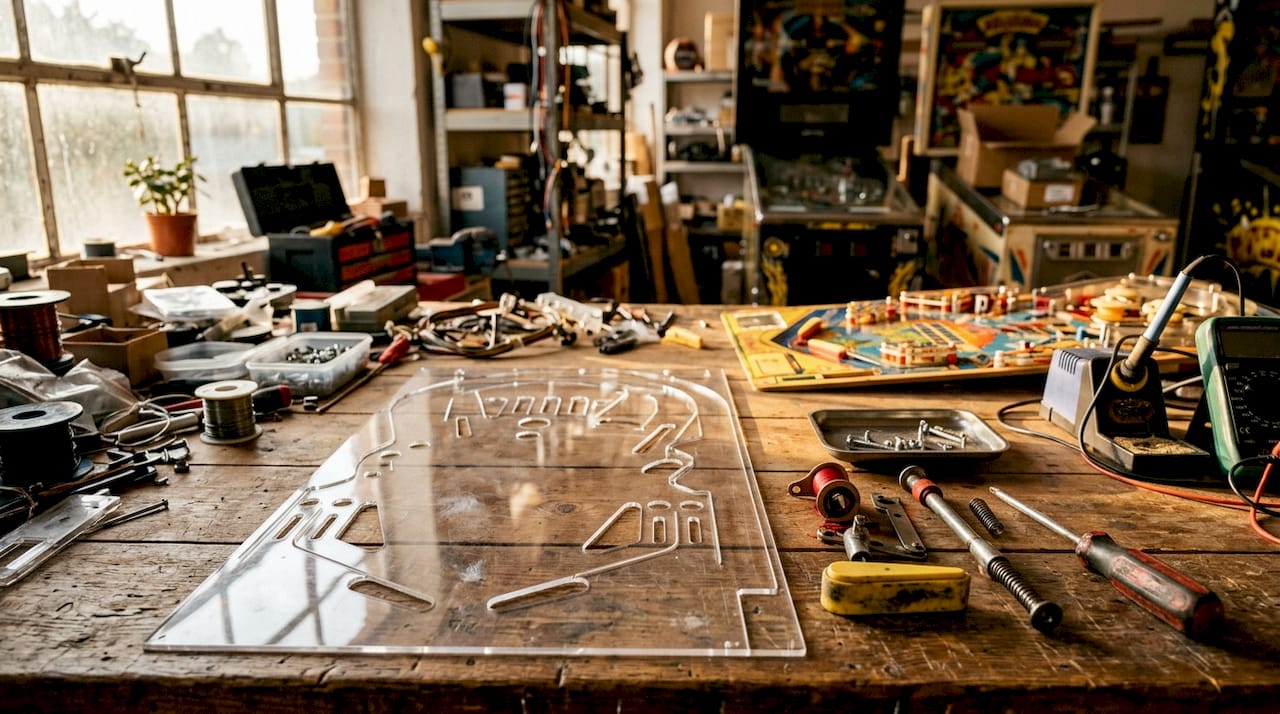
PET-G is the industry standard material for playfield protectors. It offers the right balance of optical clarity, flexibility, and durability for pinball use. Traditional mylar, which older collectors may remember, is thicker, yellows over time, and can lift at the edges, trapping debris underneath. PET-G sits flatter, ages more clearly, and conforms better to the playfield surface.
The table below compares the two primary material options:
| Feature | PET-G protectors | Mylar protectors |
|---|---|---|
| Optical clarity | High, stays clear over time | Yellows with age |
| Edge adhesion | Flat, minimal lifting | Prone to edge lift |
| Thickness | Thin, under 1mm | Thicker profile |
| Removability | Clean removal | Can pull clearcoat on removal |
| Custom fit | Precision-cut per machine model | Often generic sizing |
Custom precision-cut designs are the gold standard. A protector cut specifically for a Ghostbusters or Attack From Mars playfield includes exact cutouts for every post hole, ramp entry, and mechanism opening. Generic sheets require trimming and rarely achieve the same fit. A poor fit creates gaps where debris collects and edges that interfere with ball travel. When you invest in a machine worth thousands of dollars, a precision-cut protector is the only logical choice.
How do you install a playfield protector correctly?
Proper installation is the single factor that separates a protector that works beautifully from one that causes problems. The process demands patience and a complete hardware teardown. Rushing this step is the most common mistake collectors make.
Follow these steps for a clean, reliable installation:
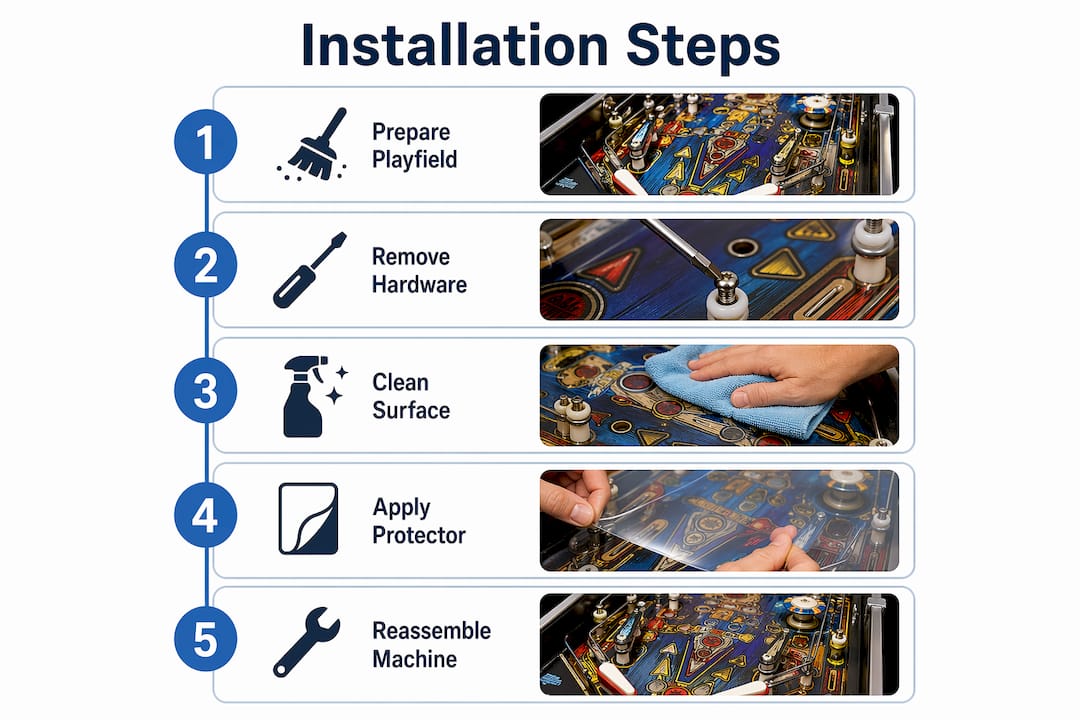
- Clean the playfield thoroughly. Remove all dust, wax residue, and debris before the protector goes down. Any particle trapped underneath will create a visible bump and a stress point under ball impact.
- Remove all hardware. Flipper bats, ramp flaps, guides, posts, and any removable mechanism must come off. Complete teardown is not optional. A partially disassembled playfield guarantees a poor fit.
- Lay the protector flat with cutouts aligned. Start from one end and work slowly toward the other, pressing out any air pockets as you go. Alignment errors at this stage are difficult to correct without lifting the sheet entirely.
- Reinstall ramp flaps on top of the protector. This is a critical detail. Ramp flaps trapped underneath the protector create a ledge that causes ball hops and can crack the sheet over time.
- Re-level drop targets, spinning disks, and active mechanisms. The protector adds a small amount of height to the surface. Active mechanisms must be adjusted to match the new surface level, or you will experience switch misfires and unreliable triggers.
- Switch to silicone rubber rings. Silicone rings abrade less than standard rubber and keep the protector surface cleaner over time. This is a small upgrade with a meaningful impact on longevity.
- Re-level the machine and run a full test. Check every switch, target, and ramp for proper function before closing the playfield.
Pro Tip: Photograph every hardware position before teardown. Pinball machines have dozens of small parts, and a reference photo saves significant time during reassembly.
Understanding pinball machine parts in detail before you start makes the teardown process far less intimidating.
How does a playfield protector affect gameplay?
A protector changes gameplay in subtle but noticeable ways. The PET-G surface has lower friction than aged clearcoat, so the ball rolls slightly faster and feels glassier. Most players adapt within a few games and stop noticing the difference.
Key gameplay effects to expect:
- Faster ball speed. Reduced friction means the ball carries more momentum across the playfield. Shots that previously died short may now reach their targets more reliably.
- Height increase under 1mm. The added thickness is minimal, but it does affect how tightly fitted mechanisms interact with the surface.
- Changed ball sound. The ball rolls on plastic rather than wood, producing a slightly different acoustic quality. Some players notice this immediately; others never do.
- Switch sensitivity. Rollover switches and targets may need minor adjustment to register reliably at the new surface height.
- Brief adaptation period. Most players find the change unremarkable after a short session. Adjusting machine switches can restore the prior feel if the faster ball speed feels off.
The gameplay impact is genuinely minor for the vast majority of machines and players. Edge cases exist on machines with very tight mechanism tolerances, but proper installation and post-install adjustment resolve most issues.
How do you maintain and care for a playfield protector?
A protector requires regular attention to stay effective and clear. PET-G attracts static electricity, which draws dust to the surface faster than bare clearcoat would. This is a known characteristic of the material, and regular cleaning manages it without difficulty.
Practical maintenance habits for protector owners:
- Clean the surface every few weeks with a soft microfiber cloth and a plastic-safe cleaner. Avoid ammonia-based products, which can cloud PET-G over time.
- Inspect edges monthly for lifting or debris accumulation. A lifted edge lets dust and ball residue work underneath, which defeats the protector’s purpose.
- Watch for surface scratching. Light scratches are normal and indicate the protector is doing its job. Deep scratches or crazing signal it is time for a replacement sheet.
- Replace the protector when worn. A worn protector can be replaced cleanly, and the playfield underneath remains in original condition. This is the entire value proposition of the system.
- Pair with Cliffy protectors on drain areas and shooter lanes. Cliffy protectors are stainless steel inserts that guard high-wear points the sheet cannot cover, giving you complete playfield protection.
Pro Tip: Do not wax over a PET-G protector. Wax fills micro-scratches on clearcoat but creates a hazy buildup on plastic. Use a dedicated plastic polish instead.
Key Takeaways
A playfield protector is the most effective reversible method for preserving a pinball machine’s original artwork and collector value over the long term.
| Point | Details |
|---|---|
| PET-G is the standard material | PET-G outperforms mylar in clarity, fit, and clean removability. |
| Reversibility protects value | Protectors preserve original condition without permanent surface modification. |
| Full teardown is required | Complete hardware removal before installation prevents fit problems and ball interference. |
| Mechanisms need re-leveling | Drop targets and active parts must be adjusted to match the protector’s added height. |
| Regular cleaning is non-negotiable | Static and dust accumulate faster on PET-G; a monthly cleaning routine keeps the surface clear. |
Why I think most collectors wait too long to protect their playfields
I have seen this pattern more times than I can count. A collector acquires a beautiful machine, plays it for a year without a protector, and then installs one after the first signs of wear appear. By that point, the protector is locking in the damage rather than preventing it.
The reversible nature of a PET-G protector is its greatest strength, but only if you use it before the playfield needs restoration. A machine in pristine condition with a protector installed on day one will look that way a decade later. The same machine played unprotected for two years will need clearcoating or a full restoration to recover that appearance, and neither option is reversible.
The installation complexity surprises most first-timers. People assume it is like applying a screen protector to a phone. It is not. A proper install on a machine like Ghostbusters or Attack From Mars takes several hours and requires genuine familiarity with the machine’s hardware. If you have never done a full teardown, read up on vintage pinball care before you start.
The gameplay change concern is almost always overblown. I have installed protectors on dozens of machines and never had a player refuse to keep one after a session. The faster ball feel becomes the new normal within minutes.
Protect early, install carefully, and clean regularly. That is the entire formula.
— Jim
Premiumpinballs has the machines worth protecting
If you are serious about preservation, it starts with owning a machine worth preserving. Premiumpinballs carries a curated selection of refurbished, used, and new pinball machines, including iconic titles that collectors actively seek out.
Every machine in the Premiumpinballs inventory is selected for quality, and many arrive in condition where a playfield protector is the ideal first upgrade. Whether you are building a home game room or expanding a serious collection, the advantages of refurbished pinballs make them an especially compelling starting point for protector-based preservation. Browse the full selection of pinball machines for sale and find the title that deserves a protector from day one.
FAQ
What is a playfield protector made of?
A playfield protector is made from PET-G, a clear thermoplastic sheet precision-cut to fit a specific pinball machine model. PET-G replaced mylar as the industry standard because it stays optically clear, sits flat, and removes cleanly without damaging the underlying clearcoat.
Does a playfield protector affect ball speed?
Yes, slightly. PET-G has lower surface friction than aged clearcoat, so the ball rolls a bit faster and feels glassier. Most players adapt quickly and find the change minor after a brief adjustment period.
Can I install a playfield protector without removing all the hardware?
No. A complete teardown, including flipper bats, ramp flaps, and guides, is required for the protector to lay flat and function correctly. Partial installation leads to poor fit, trapped debris, and ball interference.
How often should I replace a playfield protector?
Replace the protector when you see deep scratching, crazing, or significant surface wear. Light surface marks are normal and show the protector is absorbing damage that would otherwise reach the original artwork.
Is a playfield protector better than clearcoating?
For machines in good condition, yes. A protector is reversible and preserves the original surface without modification. Clearcoating is a permanent process best suited for playfields that already show significant wear and need restoration rather than prevention.