
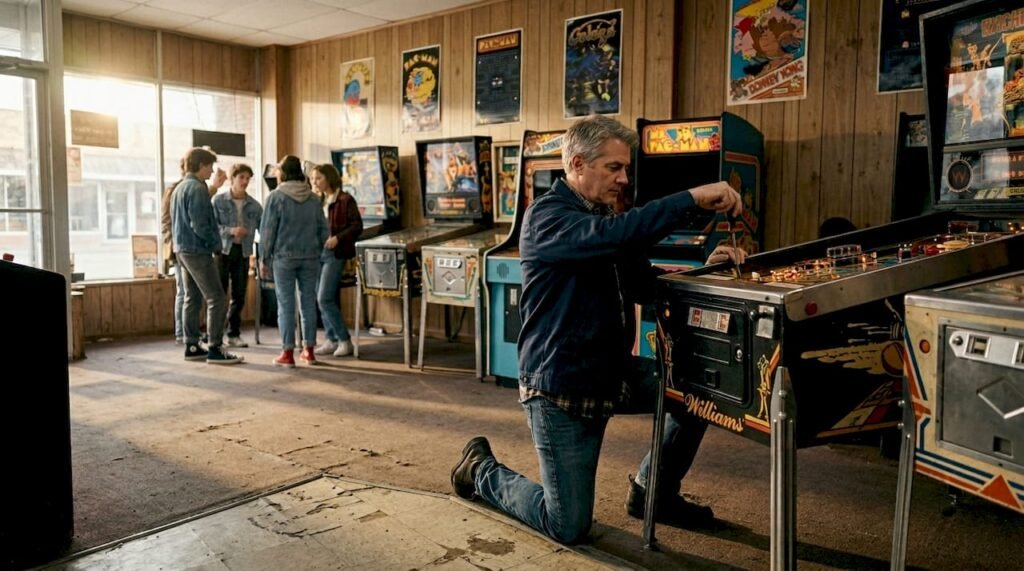
Commercial pinball machines represent a distinct category of arcade equipment designed specifically for high-traffic public venues like arcades, bars, and entertainment centers. Unlike home models built for occasional family play, these robust machines withstand thousands of games weekly while generating revenue through coin operation. This guide explores the historical evolution of commercial pinball, explains the intricate mechanics that keep these machines running, profiles the manufacturers and models that define the industry, and provides practical collecting advice for enthusiasts seeking to understand or acquire these iconic entertainment pieces.
Table of Contents
- Key takeaways
- A brief history of commercial pinball machines
- How commercial pinball machines work: mechanics and technology
- Popular manufacturers and models in commercial pinball
- Tips for collectors: buying, maintaining, and valuing commercial pinball machines
- Explore premium commercial pinball machines
- FAQ
Key Takeaways
| Point | Details |
|---|---|
| Commercial pinball defined | Commercial machines are built for high traffic venues to generate revenue through coin operation and endure continuous use. |
| Historical evolution | From early bagatelle style games in the 1930s and 1940s to electromechanical and solid state systems, commercial pinball grew with arcades and legalized markets. |
| Core mechanics | Understanding the playfield ball interactions coin credits and scoring triggers explains why these machines require regular servicing. |
| Collector value drivers | Retired arcade units command premium prices for enthusiasts who value historical significance and engineering quality. |
A brief history of commercial pinball machines
Commercial pinball machines originated in early entertainment venues during the 1930s and 1940s, transforming from simple bagatelle-style games into complex electromechanical marvels. These machines became fixtures in penny arcades, taverns, and amusement halls where operators could generate steady income from public play. The commercial aspect distinguished them from home entertainment, as manufacturers engineered every component for continuous operation under demanding conditions.
The golden era of commercial pinball spanned the 1970s through 1990s, when technological breakthroughs revolutionized gameplay. Solid-state electronics replaced electromechanical relays, enabling complex scoring systems and interactive features. Manufacturers introduced multiball modes, ramps, and themed playfields that attracted players willing to feed quarters for extended sessions. This period established pinball as serious business for arcade operators who carefully tracked machine earnings and placement strategies.
Regulatory challenges shaped commercial pinball’s trajectory significantly. Many jurisdictions initially banned pinball machines, classifying them as gambling devices rather than skill-based games. The 1976 legalization in New York City marked a turning point, as industry advocates successfully demonstrated that flipper control required player skill. This legal victory opened markets nationwide, spurring manufacturers to produce machines specifically optimized for commercial deployment with coin mechanisms, robust cabinets, and tamper-resistant designs.
“The commercial pinball industry thrived by balancing operator profitability with player engagement, creating machines that could withstand punishment while delivering addictive gameplay experiences.”
Modern commercial pinball continues evolving with digital displays, licensed entertainment properties, and connectivity features. Manufacturers now design machines anticipating 10-15 year commercial lifespans, incorporating modular components for easier servicing. Key developments include:
- Integration of LCD screens replacing traditional dot matrix displays
- Network connectivity enabling remote diagnostics and earnings tracking
- Hybrid playfields combining physical elements with projected digital content
- Enhanced audio systems with licensed soundtracks and voice acting
The history of pinball collecting reveals how commercial machines transitioned from purely operational assets to collectible artifacts. Retired arcade units now command premium prices among enthusiasts who appreciate their historical significance and engineering excellence.
How commercial pinball machines work: mechanics and technology
Understanding the components and systems that power commercial pinball machines reveals why these entertainment devices command respect among collectors and operators. The playfield forms the heart of every machine, featuring a sloped surface where steel balls travel across targets, ramps, and obstacles. Commercial playfields use tempered glass protecting hand-drawn artwork and precisely positioned mechanical elements that trigger scoring events.
A typical game round follows this sequence:
- Player inserts coins activating the credit system and ball release mechanism
- Plunger launches the ball onto the playfield at controlled velocity
- Flippers under player control redirect the ball toward scoring targets
- Bumpers, slingshots, and kickers propel the ball using solenoid-powered mechanisms
- Sensors detect ball position triggering lights, sounds, and score updates
- Ball drains through outlanes or center drain ending the current ball in play
- Additional balls launch until the game concludes and high scores display
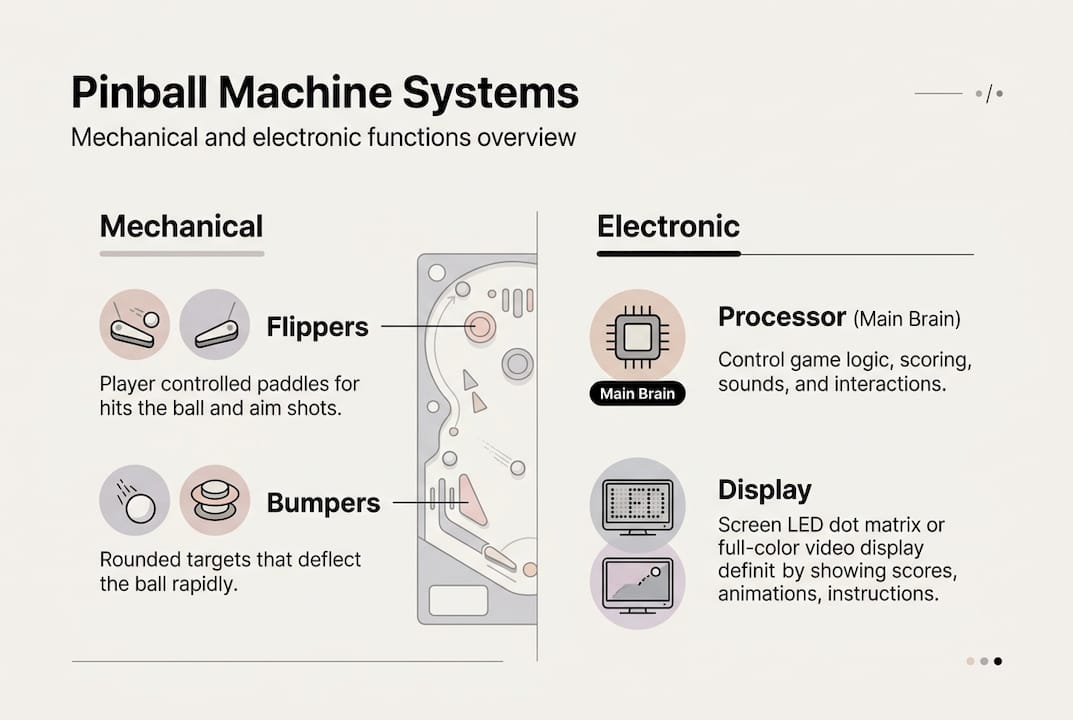
The distinction between mechanical and electronic components affects maintenance requirements and gameplay characteristics:
| Component Type | Mechanical Systems | Electronic Systems |
|---|---|---|
| Scoring | Physical reels and chimes | Digital displays and processors |
| Ball detection | Physical switches and contacts | Optical sensors and solid-state switches |
| Sound | Bells and mechanical chimes | Synthesized audio and samplers |
| Reliability | Requires frequent adjustment | More stable but complex diagnostics |
| Repair difficulty | Straightforward mechanical fixes | Requires electronic troubleshooting skills |
Flippers represent the most critical player interface, using electromagnetic coils to swing bat-shaped paddles that strike ascending balls. Commercial machines employ heavy-duty flipper assemblies withstanding millions of actuations. The coil receives high-voltage pulses when players press buttons, creating magnetic fields that rapidly rotate the flipper mechanism. Dual-wound coils use strong initial pulses for quick flipper response, then switch to lower holding current preventing overheating during extended button presses.
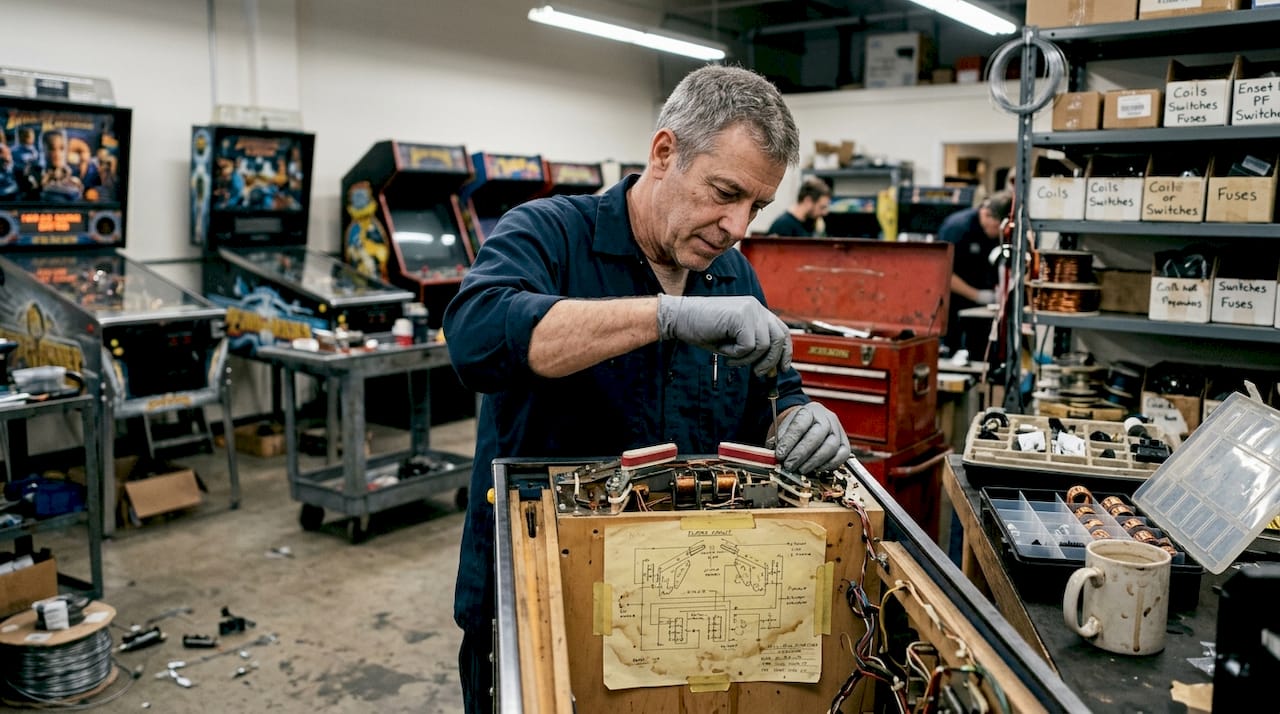
Bumpers and slingshots add unpredictability and excitement through spring-loaded mechanisms. When balls contact rubber rings surrounding these features, switches close and trigger solenoid coils that forcefully eject balls at high velocity. Modern pinball technology has refined these mechanisms for consistent performance across thousands of daily activations in commercial settings.
Pro Tip: Inspect flipper rubber sleeves and bumper caps monthly in commercial environments. Worn rubber reduces ball control and player satisfaction, while degraded bumper rings cause weak responses that diminish gameplay excitement. Replacing these inexpensive components prevents more serious mechanical wear.
The electronic control system orchestrates all machine functions through a central processor board. This computer monitors dozens of switches, controls lighting effects, manages audio playback, tracks scores, and implements game rules. Commercial machines use industrial-grade components rated for continuous operation in challenging environments with temperature fluctuations and electrical noise. Backup batteries preserve high score memory and audit data tracking total plays and earnings.
Popular manufacturers and models in commercial pinball
Stern Pinball dominates contemporary commercial pinball manufacturing as the industry’s sole major producer since 2000. The company releases 4-6 new titles annually featuring licensed properties from movies, music, and television. Stern machines incorporate proven designs optimized for arcade deployment, with robust construction and readily available replacement parts. Their Pro, Premium, and Limited Edition tiers offer operators choices balancing initial cost against feature richness.
Bally and Williams represent the golden age manufacturers whose machines remain highly sought after. These companies produced legendary titles between 1970 and 1999 before Williams exited the pinball business. Bally machines like Eight Ball Deluxe and Williams classics such as Medieval Madness established gameplay conventions still influential today. The companies’ commercial focus meant every design prioritized operator revenue potential alongside player appeal.
| Model | Manufacturer | Release Year | Key Features | Commercial Appeal |
|---|---|---|---|---|
| The Addams Family | Bally | 1992 | Mansion playfield, Thing hand | Best-selling pinball ever, 20,000+ units |
| Medieval Madness | Williams | 1997 | Castle destruction, humor | Exceptional earnings, cult following |
| Attack From Mars | Bally | 1995 | Alien invasion theme, multiball | Reliable revenue generator |
| Iron Maiden | Stern | 2018 | Band integration, modern tech | Strong location earnings |
| Godzilla | Stern | 2021 | Three playfield levels, innovation | Premium commercial performer |
Collectors favor different attributes than commercial operators. Enthusiasts prioritize gameplay depth, theme integration, and historical significance, while arcade owners focus on earning potential, reliability, and mainstream appeal. Machines with broad demographic appeal perform better commercially, whereas niche themes attract dedicated player bases willing to travel specifically to play rare titles.
When selecting machines for commercial placement, operators evaluate several factors:
- Initial purchase cost versus projected monthly earnings
- Availability and cost of replacement parts for ongoing maintenance
- Theme recognition and appeal to the venue’s customer demographics
- Physical footprint and weight affecting placement flexibility
- Power consumption and electrical requirements
- Complexity of rule sets balancing accessibility with depth
Data General and Chicago Coin represent earlier manufacturers whose electromechanical machines appeal to collectors seeking vintage commercial equipment. These pre-solid-state machines used intricate relay logic and mechanical scoring, requiring specialized knowledge for restoration and maintenance. Their commercial pedigree means surviving examples often show heavy wear from decades of public play.
Jersey Jack Pinball emerged in 2011 as a boutique manufacturer emphasizing quality over volume. Their limited production runs and premium pricing target serious collectors and high-end commercial venues. Models like The Wizard of Oz incorporate cutting-edge technology with meticulous craftsmanship, commanding premium prices in both new and used markets.
Tips for collectors: buying, maintaining, and valuing commercial pinball machines
Successful commercial pinball acquisition requires systematic evaluation beyond superficial appearance. Inspect the playfield for wear patterns indicating heavy commercial use, particularly around high-traffic areas like flippers and center drains. Examine artwork for fading, scratches, or touch-up paint suggesting restoration attempts. Test every mechanical feature during gameplay, noting any weak flippers, non-responsive bumpers, or intermittent switches that signal deferred maintenance.
Authenticity verification protects against misrepresented machines. Check serial numbers against manufacturer databases confirming production dates and original configurations. Examine circuit boards for aftermarket replacements or modifications that may affect value. Original backglasses and translites command premiums, while reproductions significantly reduce collectibility despite identical appearance. Documentation including original manuals, schematics, and service logs adds value by establishing provenance and maintenance history.
Maintenance practices directly impact long-term enjoyment and value preservation. Commercial machines require more frequent service than home-use equipment due to their heavy-duty operational history:
- Clean playfields monthly using approved cleaners that won’t damage artwork or plastics
- Lubricate mechanical assemblies quarterly with appropriate synthetic lubricants
- Inspect and tension rubber components preventing premature wear and breakage
- Test and clean electrical connections addressing corrosion before failures occur
- Replace worn playfield posts and guides maintaining proper ball trajectory
- Update firmware on electronic machines accessing bug fixes and feature improvements
Pro Tip: Purchase machines from retiring commercial operators rather than individual collectors when possible. Arcade owners typically maintained detailed service records and performed preventive maintenance to protect their investment. These machines often need cosmetic restoration but have solid mechanical foundations, whereas collector-owned machines may have hidden issues from amateur repairs.
Understanding ownership costs helps collectors budget appropriately for acquisition and ongoing expenses. Factor in electricity consumption, replacement parts, and periodic professional servicing when evaluating total investment. Commercial machines built for continuous operation generally prove more economical long-term than consumer-grade equipment requiring frequent component replacement.
Valuation depends on multiple intersecting factors. Condition ranks paramount, with fully functional machines in excellent cosmetic state commanding 2-3 times prices of project machines needing restoration. Rarity influences value significantly, as limited production runs or machines from defunct manufacturers become increasingly scarce. Manufacturer reputation matters, with Bally and Williams titles generally appreciating while less-known brands stagnate. Market demand fluctuates based on nostalgia cycles and media exposure, as movies or television featuring specific titles temporarily boost interest.
Refurbished commercial machines offer compelling value propositions for collectors seeking reliability without new machine pricing. Professional refurbishment addresses mechanical wear, replaces consumable components, and restores cosmetic appearance while preserving original character. Verify refurbishment scope and quality, as thorough rebuilds justify premium pricing while superficial cleaning does not. Reputable refurbishers provide warranties and documentation detailing work performed, offering peace of mind unavailable with private party purchases.
Storage environment significantly affects long-term condition. Climate-controlled spaces prevent humidity damage to electronics and wooden cabinets. Avoid basements prone to flooding or extreme temperature swings that accelerate component degradation. Cover machines during extended storage periods protecting against dust accumulation, but ensure adequate ventilation preventing moisture buildup. Periodic operation even during storage keeps mechanical components exercised and prevents lubricant hardening.
Explore premium commercial pinball machines
Now that you understand commercial pinball’s rich history, complex mechanics, and collecting considerations, you’re ready to explore machines that bring this knowledge to life. Premium Pinballs offers an expertly curated selection of commercial-grade pinball machines suitable for both serious collectors and entertainment venues. Our inventory spans classic titles from the golden era through cutting-edge modern releases incorporating the latest pinball technology advancements.
Every machine in our collection undergoes thorough evaluation and preparation, with professionally refurbished options providing exceptional value for enthusiasts seeking reliable performance without compromising authenticity. Our team’s deep industry knowledge ensures you receive accurate information about each machine’s history, condition, and commercial pedigree. Whether you’re acquiring your first collector piece or expanding an established arcade, we provide the expertise and support that transforms pinball ownership from challenging to rewarding.
FAQ
What is the difference between commercial and home pinball machines?
Commercial pinball machines are engineered for durability and continuous operation in public venues, featuring robust construction, coin mechanisms, and components rated for thousands of daily plays. Home machines prioritize aesthetics and occasional use, with lighter-duty parts and simplified maintenance requirements. Commercial units typically include tamper-resistant features and reinforced cabinets protecting against the wear and abuse inherent in public environments.
How do I determine the value of a commercial pinball machine?
Value assessment requires evaluating condition, model rarity, manufacturer reputation, and documented maintenance history as primary factors. Market demand fluctuates based on nostalgia trends and media exposure, while refurbishment quality significantly impacts pricing for restored machines. Understanding these value factors helps collectors make informed acquisition decisions and avoid overpaying for machines with hidden issues or incomplete restorations.
Are refurbished commercial pinball machines reliable?
Professionally refurbished commercial machines offer excellent reliability when restoration addresses both mechanical and electronic systems comprehensively. Quality refurbishment replaces worn components, updates problematic subsystems, and restores cosmetic appearance while preserving original character. Verify refurbishment scope through detailed documentation and warranties, as thorough rebuilds provide dependability rivaling new machines at substantially lower cost.
What maintenance is required to keep commercial pinball machines in top condition?
Regular cleaning, mechanical lubrication, and electrical system inspection form the maintenance foundation for commercial pinball longevity. Monthly playfield cleaning prevents dirt accumulation affecting ball movement, while quarterly mechanical service addresses wear before failures occur. Proper maintenance practices including rubber replacement, switch adjustment, and firmware updates ensure consistent performance and protect your investment’s long-term value through preventive care rather than reactive repairs.