
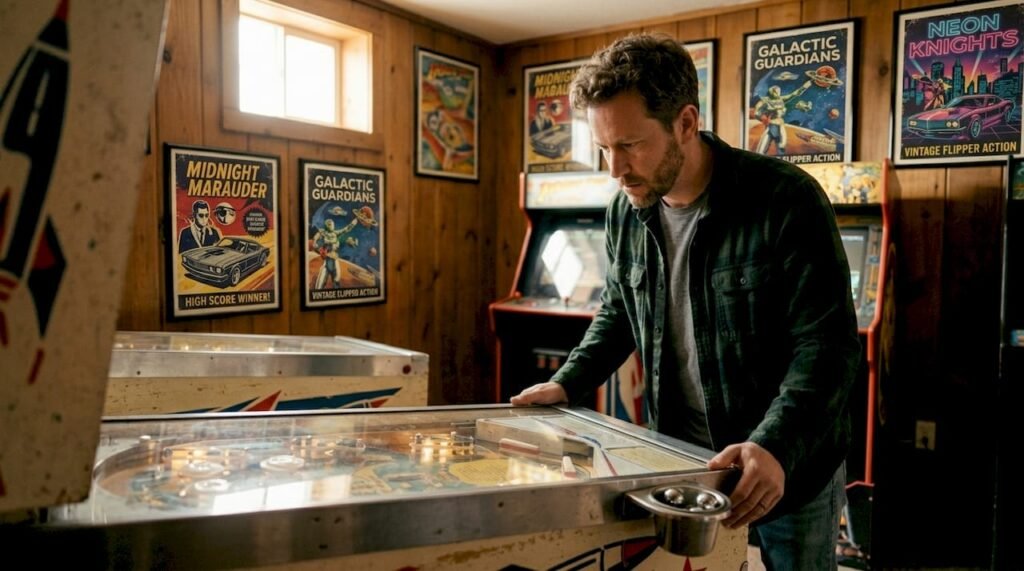
Most people assume pinball is a glorified game of chance. It isn’t. The steel ball bouncing around a playfield follows predictable physics, and the best players exploit every angle, every bounce, and every mechanical quirk to rack up massive scores. Whether you own a classic machine or are building a serious collection, core pinball gameplay relies as much on player skill as on physical machine design. This article breaks down the mechanics, physics, and techniques that separate casual players from true enthusiasts, and shows how that knowledge directly improves how you maintain and enjoy your machines.
Table of Contents
- The anatomy of a pinball game
- Playfield features and their impact
- The physics behind pinball gameplay
- Advanced player techniques for control and scoring
- Nuances, edge cases, and maintenance tips
- Enhance your collection and playing experience
- Frequently asked questions
Key Takeaways
| Point | Details |
|---|---|
| Skill trumps luck | Control techniques and understanding physics offer far more advantage than random flipper mashing. |
| Playfield variety matters | Different features like bumpers and ramps shape scoring chances and strategic play. |
| Maintenance affects gameplay | Routine upkeep ensures authentic physics, play consistency, and long-term machine value. |
| Expert techniques boost scores | Moves like cradling, dead flips, and controlled passing turn good games into great ones. |
| Nuances reward mastery | Edge cases such as ball saves and skill shots set skilled players and well-tuned machines apart. |
The anatomy of a pinball game
Every game of pinball begins with a single decision: how hard do you pull the plunger? That choice sets the ball’s initial speed and trajectory before it ever touches a flipper. The playfield is typically sloped at 6 to 7 degrees, using gravity to pull the ball toward the drain while you fight to keep it alive. Understanding this layout from the start changes how you approach every single shot.
The core pinball machine parts each serve a specific mechanical purpose. Here’s a quick reference:
| Component | Primary function |
|---|---|
| Plunger / launch button | Launches ball onto playfield with variable force |
| Flippers | Redirect ball toward targets and ramps |
| Pop bumpers | Rapid-fire ball deflection, passive scoring |
| Slingshots | Angled kickers that accelerate ball unpredictably |
| Drain / outlanes | End ball or penalize poor positioning |
| Ramps | High-speed paths to upper playfield areas |
| Inlanes | Feed ball back to flippers for continued play |
Your most critical actions during any game come down to a short list:
- Aim your plunge: A full plunge versus a short plunge can activate skill shot bonuses.
- Time your flips: Hitting the ball at the flipper’s tip versus its base changes shot power dramatically.
- React to deflections: Pop bumpers and slingshots send the ball in unexpected directions, requiring fast adjustments.
- Protect the drain: Keeping the ball away from outlanes is the single biggest factor in extending your game.
The playfield features you interact with aren’t random. Designers place every element to create specific risk and reward scenarios. Your early choices, especially the initial plunge, can unlock bonus multipliers or start modes that dramatically increase your scoring potential for the rest of the ball.
Playfield features and their impact
Now that you understand the core architecture of play, it’s time to see how individual features create opportunities for skill and score. Each element on the playfield has a mechanical identity and a strategic role. Knowing both is what separates reactive players from deliberate ones.
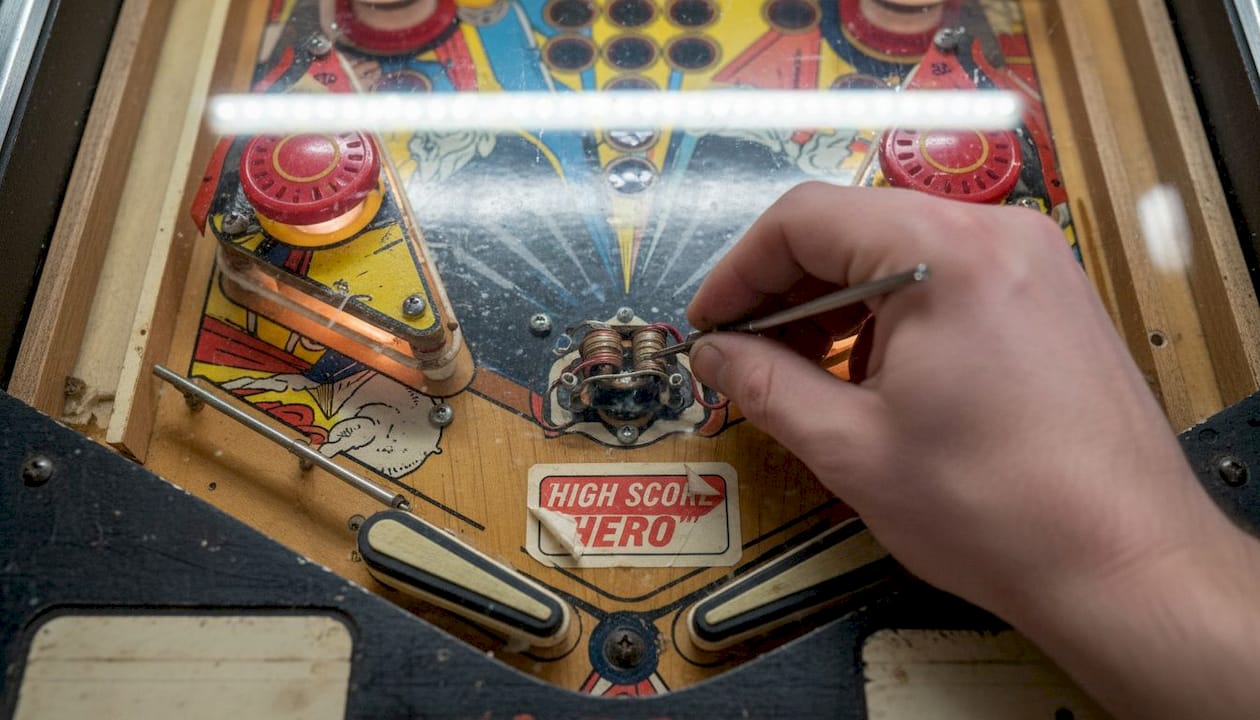
According to playfield anatomy breakdowns, the key components work like this: pop bumpers use spring-loaded solenoids to kick the ball on contact, slingshots are angled kickers positioned near the flippers, drop and standup targets advance bonuses and modes, ramps and loops create high-speed paths, and inlanes versus outlanes define the risk/reward boundary of every return shot.
Here’s how the major machine features compare in terms of risk and reward:
| Feature | Ball control | Scoring potential | Risk level |
|---|---|---|---|
| Pop bumpers | Low (passive) | Medium | Low |
| Slingshots | Low (reactive) | Low to medium | Medium |
| Standup targets | Medium | Medium | Low |
| Drop targets | Medium | High (mode start) | Low |
| Ramps | High (aimed) | High | Medium |
| Outlanes | None | None | Very high |
Some shots are “safe” and some are high-risk, high-reward. Ramps reward precision with big points and often feed the ball cleanly back to a flipper. Outlanes punish poor positioning with an immediate drain. The cabinet features that house these elements also affect gameplay, since cabinet angle and glass condition influence how the ball behaves.
“A well-designed playfield creates constant tension between safe shots and risky ones. The best machines make you want to take the risk every time.”
This tension is exactly what makes certain machines legendary. The variety of features isn’t just for visual appeal. It’s an engineered system of choices that rewards players who understand what each element does.
The physics behind pinball gameplay
Recognizing the playfield’s design leads naturally to an understanding of the forces in motion every time you play. Pinball physics aren’t complicated once you break them down into their components. Here’s how the forces stack up during a typical game:
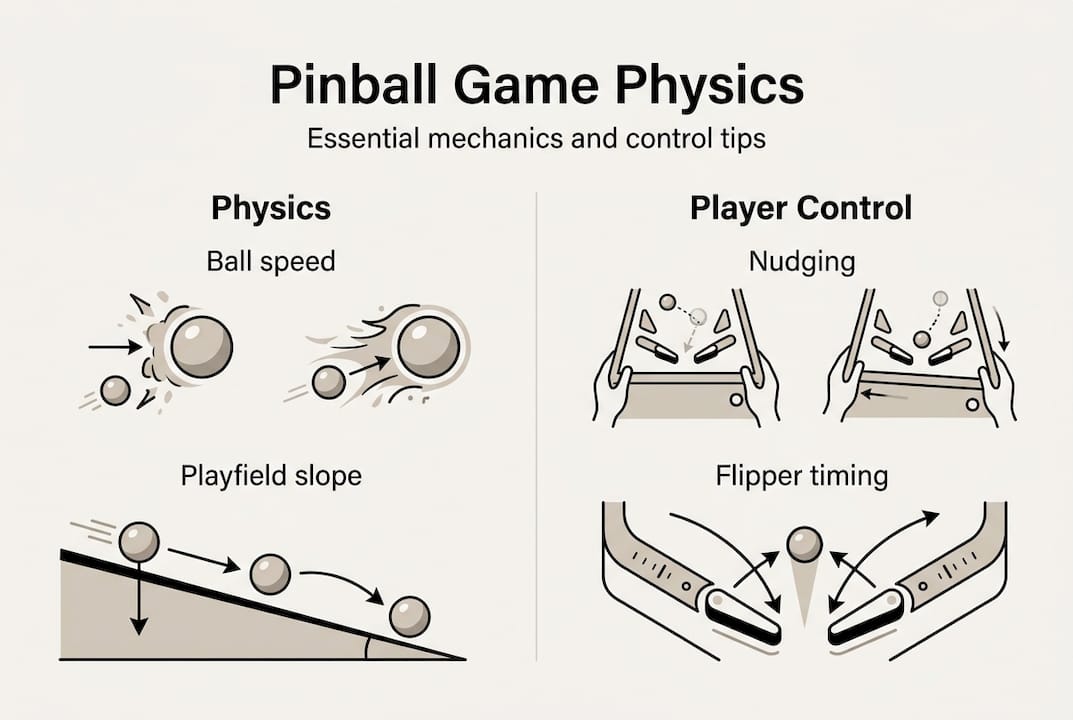
- Gravity and slope: The 6 to 7 degree playfield tilt creates constant downward pull. Every shot you make fights this force.
- Flipper acceleration: When you hit the flipper button, a solenoid fires and the flipper arm accelerates rapidly. The ball’s exit speed depends on where it contacts the flipper and how fast the arm is moving at impact.
- Momentum and spin: Gravity, momentum, and spin all interact during every bounce. A ball hitting a bumper at an angle exits with spin that affects its next trajectory.
- Elastic collisions: Bumpers and slingshots conserve most of the ball’s energy on impact, which is why the ball can accelerate unpredictably after hitting them.
- Friction: The playfield surface, the rubber rings on posts, and the condition of the ball all affect how much speed is lost between contacts.
Nudging is one of the most misunderstood tools in a player’s kit. A controlled nudge shifts the machine slightly to redirect the ball away from a drain. Too much force triggers the tilt sensor and ends your turn immediately. Skilled players develop a feel for how much nudge their specific machine tolerates.
Pro Tip: Check your machine’s playfield slope with a digital level. A slope outside the 6 to 6.5 degree range changes how the ball behaves and can make the game feel sluggish or too fast. If something feels off during play, slope and rubber condition are the first things to check. Our pinball troubleshooting guide walks through these adjustments in detail.
Advanced player techniques for control and scoring
Understanding motion and force opens the door to high-level playing. Here’s how experts channel physics into high scores. The biggest leap from beginner to advanced isn’t speed or reflexes. It’s ball control.
Random flipping burns through balls fast and leaves scoring to chance. Deliberate control turns every return into a planned shot. These are the key techniques that expert players rely on:
- Cradle: Hold the flipper up to trap the ball at its base. This gives you a full stop to plan your next shot without pressure.
- Dead flip: Leave the flipper stationary and let the ball bounce off it. This slows a fast ball and can redirect it to a safer position.
- Live catch: Time the flipper button to meet a fast-moving ball and absorb its momentum, trapping it cleanly.
- Drop catch: Lower the flipper just as the ball arrives so it lands softly instead of bouncing away.
- Post pass: Hold one flipper up so the ball rolls across the post to the other flipper, giving you a better angle for a specific shot.
- Rolling pass: Let the ball roll across a raised flipper to the other side without flipping.
- Bounce pass: Flip one flipper to send the ball across to the opposite flipper for repositioning.
Each of these moves has a specific use case. The cradle is your reset button when the game gets chaotic. The dead flip is your best friend when a fast ball comes screaming back from the bumpers. Passes let you set up shots that would be impossible from your current flipper position.
Pro Tip: Ball control isn’t just about scoring. Frantic flipping puts unnecessary stress on flipper solenoids and coils. Deliberate play extends the life of your machine’s most-used components. When choosing pinball machines for an arcade or home setup, look for models with must-have features that reward controlled play over button mashing.
The jump from beginner to expert isn’t about playing faster. It’s about playing smarter. Pinball mastery is built on patience, positioning, and knowing when to take the risk.
Nuances, edge cases, and maintenance tips
With the basics and advanced skills in hand, real mastery comes from knowing the little things often overlooked, even by seasoned players. These details affect both your score and the long-term health of your machine.
Here are the edge cases and special rules every serious player and collector should know:
- Ball save: Most modern machines offer a brief ball save window after the plunge. If the ball drains immediately, it returns without penalty. Knowing this window exists lets you take riskier first shots.
- Skill shot: A precisely controlled plunge can activate a skill shot, awarding bonus points or starting a mode. Each machine has its own skill shot mechanic, so learning it pays off fast.
- Multiball: When multiple balls are in play simultaneously, chaos increases sharply. During multiball, prioritize controlling one ball and targeting jackpot shots rather than trying to manage everything at once.
- Avoid dual-flip: Pressing both flippers simultaneously creates a gap between them that the ball can fall straight through. It’s one of the most common beginner mistakes and one of the easiest to fix.
- Maintenance impact on play: A machine with worn rubbers, misaligned flippers, or an incorrect slope plays completely differently than one in proper condition. Inspect solenoids and end-of-stroke switches regularly, and use rebuild kits to restore flipper torque when response feels weak.
For collectors, these details matter beyond gameplay. A well-maintained machine holds its value and plays the way the designer intended. Our troubleshooting guide covers the most common mechanical issues and how to address them before they affect play.
“A machine set to 6.5 degrees with fresh rubbers and properly aligned flippers doesn’t just play better. It reveals the designer’s original intent, and that’s the game worth mastering.”
Regular maintenance isn’t optional for collectors who care about authenticity. Flipper maintenance including solenoid inspection and rubber replacement keeps the machine responding the way it should. A machine that plays consistently is also a machine that retains resale value, which matters when you’re building a serious collection.
Enhance your collection and playing experience
Now that you understand how the mechanics work and why the details matter, the next exciting step is putting that knowledge to work in your own collection.

At Premium Pinballs, we stock refurbished pinball machines that have been inspected and restored to play authentically, so you get the real experience from day one. If you’re building out a home game room or a commercial arcade, our guide to popular arcade machines helps you match the right machine to your space and skill level. New to ownership? Start with our pinball machine basics resource to understand exactly what you’re buying and what to expect. We offer flexible payment options, shipping, and in-store pickup so getting your machine is as smooth as a clean ramp shot.
Frequently asked questions
What does nudge mean in pinball gameplay?
A nudge is a controlled bump to the machine that shifts the ball’s path, used to avoid drains or set up better shots. Excessive nudging triggers the tilt sensor and ends your turn immediately.
Why is flipper alignment important?
Misaligned flippers change shot angles and reduce power consistency, which affects both your scoring ability and the machine’s long-term health. Proper alignment and maintenance restore authentic mechanics and protect resale value.
How does multiball affect gameplay strategy?
Multiball floods the playfield with chaos, making ball control nearly impossible across all balls at once. Focus on one ball and aim for jackpot shots to maximize scoring during the mode.
What regular maintenance keeps a pinball machine playing authentically?
Clean the playfield surface, replace worn rubber rings, inspect flipper solenoids and end-of-stroke switches, and verify the playfield slope stays near 6.5 degrees. Rebuild kits restore flipper action when response starts to feel sluggish.