
TL;DR:
- A repro playfield is a factory-quality reproduction of a pinball machine’s original surface, used for restoring worn or damaged playfields. These handcrafted parts closely match original artwork and structure but are costly and require extensive installation effort, making quick purchase essential due to limited production in 2026. Proper documentation and thorough hardware cleaning are crucial steps for a successful upgrade, especially given the small batch sizes and rising costs.
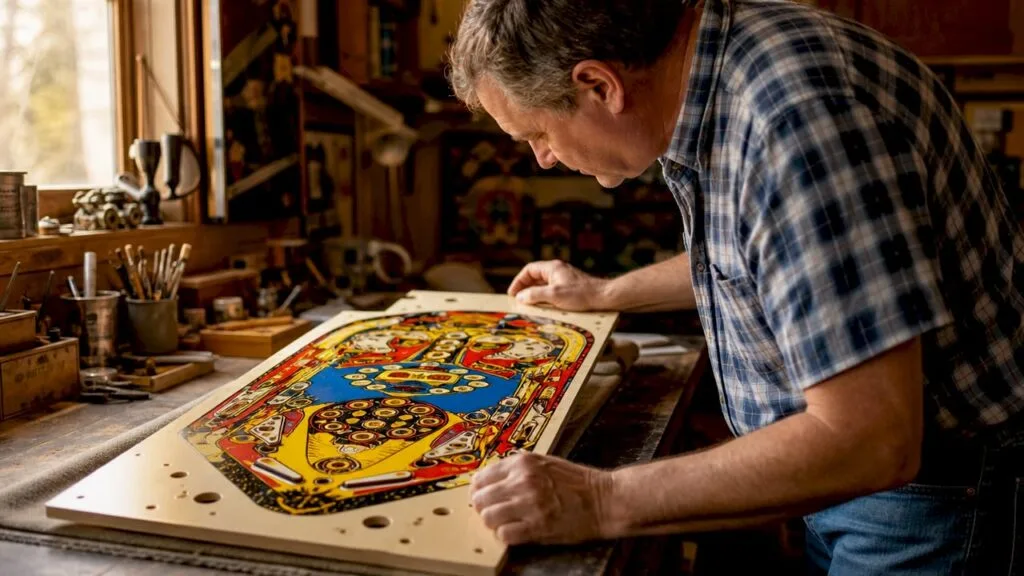
A repro playfield is defined as a factory-quality reproduction of a pinball machine’s original playing surface, built to replace worn, damaged, or faded originals during restoration. The industry term is “reproduction playfield,” and restorers use “repro” as shorthand across the hobby. These are not cheap knockoffs. They replicate the original artwork, insert layout, and wood structure with a level of craftsmanship that makes them the gold standard for serious restoration work. Whether you’re reviving a classic like The Addams Family or rescuing a worn Attack From Mars, understanding what a repro playfield is and how it works will shape every decision you make during the project.
What is a repro playfield, exactly?
A reproduction playfield is a newly manufactured replacement for the original playing surface of a pinball machine. The original playfield is the inclined wooden board inside the cabinet where the ball travels, featuring painted artwork, drilled holes for posts and targets, and embedded plastic inserts that light up during play. Over decades of use, these surfaces suffer from wear, chipping, fading, and insert cracking that no amount of polishing can fix. A repro playfield replicates all of that original structure on fresh materials, giving a restored machine a surface that looks and plays like it just left the factory.
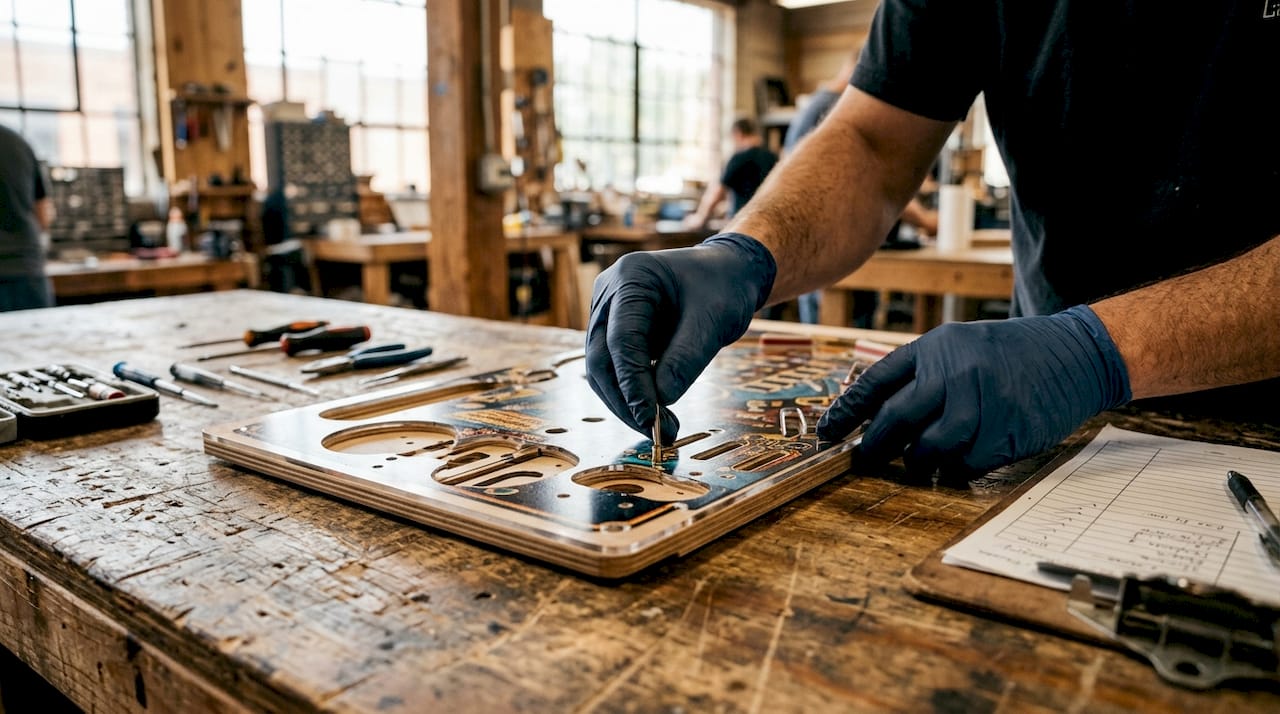
The pinball machine parts that matter most to a machine’s visual identity are the playfield artwork and inserts. Repro manufacturers study original factory samples, scan or photograph the artwork, and recreate it with precision. The result is a playing surface that preserves the machine’s collector appeal while providing a durable foundation for decades more play.
How are repro playfields made?
The manufacturing process behind a reproduction playfield combines traditional woodworking with modern printing technology. Each stage demands precision, and shortcuts at any step produce a playfield that collectors will notice immediately.
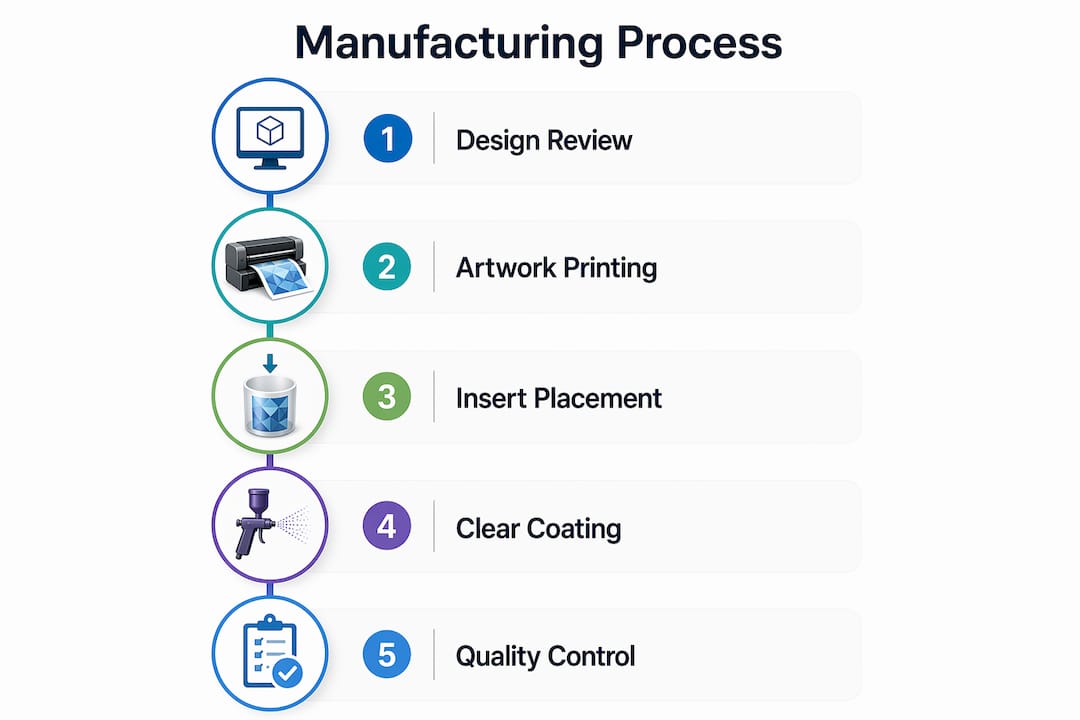
The process follows this sequence:
- Wood blank preparation: A Baltic birch or equivalent plywood blank is machined to match the original playfield’s exact dimensions and thickness.
- Insert gluing and leveling: Plastic inserts are hand-glued into pre-routed pockets, then sanded level with the wood surface. This step is labor-intensive and directly affects how the ball rolls across the playfield.
- Artwork printing: Manufacturers use either traditional silk-screen printing or modern digital printing. Silk-screen produces vivid, layered colors that closely match original factory output. Digital printing offers faster turnaround and is more practical for small runs.
- Clear coat sealing: A protective clear coat is applied over the finished artwork. High-end producers use ceramic clear coats that mimic the factory durability of original playfields and resist ball wear for years.
- Drilling and dimpling: Most modern repro playfields arrive pre-drilled and pre-dimpled, meaning the holes for posts, screws, and assemblies are already cut to factory specifications.
Pro Tip: Request a sample photo of the clear coat finish before purchasing. The sheen level varies between manufacturers and affects both appearance and ball speed on the finished machine.
The manufacturing process shifted significantly by 2025 and 2026, moving from production runs of hundreds of units down to batches of just 10–20 units. That shift reflects a maturing market, not a decline in quality. Smaller runs mean manufacturers take on only the most viable titles, and each playfield receives more individual attention during production.
Even original factory playfields had minor defects. Repro manufacturers operate in low-volume markets facing real economic pressure, and collectors should expect subtle variances rather than pixel-perfect perfection. That expectation is not a criticism. It is an honest reflection of what handcrafted, small-batch production looks like at its best.
What are the benefits and limitations of a repro playfield?
Repro playfields solve a problem that no other restoration method can fully address: a playing surface so worn that the artwork is gone and the inserts are cracked or sunken. For machines in that condition, a repro playfield is the only path to a genuine restoration.
The core benefits include:
- Near-original visual appeal: A quality repro restores the machine’s artwork to a condition that rivals factory output, preserving collector appeal and display value.
- Improved durability: Modern clear coats outperform the original factory finishes on many classic machines, meaning the restored playfield may outlast what it replaced.
- Availability for rare titles: For machines where original playfields are impossible to find in usable condition, a repro is the only viable option.
- Consistent insert quality: Pre-leveled inserts eliminate the sunken or raised insert problem that plagues heavily used originals.
The real limitations are just as significant:
- Cost and labor intensity: Reproduction playfields cost upwards of $1,000 and require over 40 hours of labor for installation. That investment only makes financial sense for machines whose restored value supports it.
- Slight variances: Drilling tolerances and insert placement can differ subtly from the original. These variances rarely affect gameplay but require test-fitting during assembly.
- Scarcity of specific titles: Not every machine has a repro available. The market covers popular titles well, but obscure machines may have no repro option at all.
Restorers should avoid machines requiring playfield replacement unless the machine’s value clearly supports the high costs involved. For common machines with modest resale value, the math rarely works in the restorer’s favor.
What does it cost and how much effort does installation require?
Installation is where many restorers underestimate the project. The playfield itself is only part of the investment. The labor required to strip the original playfield, transfer every component, and rebuild the machine on the new surface is substantial.
A realistic cost and effort breakdown looks like this:
- Repro playfield purchase: Expect to pay $1,000 or more for a quality reproduction, depending on the title and production run size.
- Labor hours: A full playfield swap typically surpasses 40 hours of hands-on work. Full restorations including electrical and mechanical work can exceed 100 hours total.
- Rotisserie setup: A rotisserie tool allows you to rotate the playfield freely during assembly, giving access to both the top and underside without awkward repositioning. This tool is not optional for a clean installation.
- Component transfer: Every switch, lamp, post, target, ramp, and wire harness must be removed from the original playfield and reinstalled on the repro. Each part should be inspected and cleaned before reinstallation.
- Documentation before disassembly: Failing to document wiring and layout before dismantling is the top cause of reassembly failure. Photograph every connector, label every wire, and record the position of every assembly before removing a single screw.
- Test-fitting: Test-fit mechanical assemblies on the repro before committing to final installation. Slight variances in drilling can cause misalignment that is far easier to address before everything is bolted down.
Pro Tip: Clean all original metal parts in an ultrasonic bath before reinstalling them on the new playfield. Grease and dirt transferred from old hardware can contaminate the fresh clear coat and accelerate wear in the first year of play.
Understanding pinball machine ownership costs before starting a repro project prevents the most common financial surprise in the hobby: discovering mid-project that the total investment exceeds the machine’s restored market value.
How does the 2026 repro market affect availability?
The reproduction playfield market entered what industry observers call a legacy phase in 2026. Demand has dropped sharply compared to prior decades, and production runs reflect that reality. Some first-time repro playfields now debut with only 10 copies sold, compared to 100–300 units a decade earlier. That is a fundamental shift in the economics of repro production.
| Market Factor | 2015–2020 Era | 2026 Reality |
|---|---|---|
| Typical production run size | 100–300 units | 10–20 units |
| Titles in active production | Broad catalog | Selective, high-demand only |
| Pricing trend | Moderate | Rising due to small batch costs |
| New title debuts | Frequent | Rare and selective |
The shrinking production runs reflect two forces working together. The number of surviving machines in restorable condition is finite and declining. Simultaneously, the pool of restorers willing to invest $1,000 or more in a playfield swap has matured and stabilized. Manufacturers face real economic challenges producing high-quality parts at these volumes, and small batch production requires adaptive strategies from both producers and buyers.
For restorers, the practical implication is clear: if a repro for your target machine exists today, buy it. Waiting for a second production run is a gamble that increasingly does not pay off. Checking resources like iconic classic pinball tables can help you identify which machines have active repro support and which titles are unlikely to see new production.
Key Takeaways
A repro playfield is the most effective restoration tool available for classic pinball machines, but its value depends entirely on matching the investment to the machine’s worth.
| Point | Details |
|---|---|
| Repro playfield definition | A factory-quality reproduction of the original pinball playing surface, built for restoration. |
| Manufacturing process | Wood machining, hand-glued inserts, silk-screen or digital printing, and ceramic clear coat sealing. |
| Cost and labor reality | Playfields cost $1,000 or more; installation alone surpasses 40 hours of hands-on work. |
| Market shift in 2026 | Production runs dropped to 10–20 units, making available repros scarce and time-sensitive to purchase. |
| Installation priority | Document all wiring and layout before disassembly to prevent reassembly failure. |
What I’ve learned after years of repro playfield restorations
The single most underestimated part of a repro playfield project is the documentation phase. Most restorers are eager to get the old playfield out and the new one in. They rush the teardown and pay for it during reassembly. I have seen experienced hobbyists spend more time troubleshooting a reassembled machine than they spent on the entire swap, simply because they trusted their memory over a camera.
The second thing most restorers overlook is part preparation. Transferring dirty, greasy hardware from a worn playfield onto a pristine repro surface is a mistake you cannot undo easily. Every metal part deserves an ultrasonic cleaning before it touches the new playfield. The cost of that step is minimal. The cost of contaminating a $1,000 clear coat is not.
My honest advice on machine selection: be ruthless. A repro playfield project on a machine with modest collector value is a passion project, not an investment. That is perfectly valid, but go in with clear eyes. For machines like The Addams Family or Attack From Mars, where vintage pinball investment value supports the cost, a repro swap makes both emotional and financial sense. For a common machine worth $800 restored, the math simply does not work.
The repro market in 2026 rewards restorers who plan ahead and act decisively. If the repro for your machine is available now, treat that availability as a limited window, not a standing offer.
— Jim
Premiumpinballs and your repro playfield restoration
Repro playfield projects are among the most rewarding restorations in the hobby, and having the right machine as your starting point makes all the difference.
Premiumpinballs carries a curated selection of refurbished and collectible pinball machines, including iconic titles that are prime candidates for repro playfield upgrades. Whether you are sourcing a machine to restore or looking for one that has already been professionally refurbished, the advantages of refurbished pinballs are worth understanding before you commit to a project. For restorers who want the full arcade experience without the teardown, browse the best pinball machines for arcades to find premium options ready to play from day one. Premiumpinballs supports collectors and restorers at every stage of the hobby.
FAQ
What is a repro playfield in pinball?
A repro playfield is a newly manufactured reproduction of a pinball machine’s original playing surface, replicating the artwork, inserts, and wood structure for restoration use.
How much does a repro playfield cost?
Reproduction playfields cost upwards of $1,000, with installation labor adding 40 or more hours of work on top of the parts cost.
Are repro playfields as good as originals?
High-quality repro playfields match original factory output closely, though slight variances in drilling and inserts are normal and consistent with small-batch handcrafted production.
How do I install a repro playfield?
Installation requires full documentation of the original wiring, a rotisserie for access to both playfield sides, ultrasonic cleaning of all hardware, and careful test-fitting before final assembly.
Are repro playfields still being made in 2026?
Yes, but production runs have dropped to 10–20 units per title in 2026, making available repros scarce. Restorers should purchase when a repro is available rather than waiting for future runs.