

TL;DR:
- Branding shapes pinball’s perception, sales, and cultural significance by emphasizing identity, licensing, and storytelling.
- Licensing major IPs is the most effective strategy since it expands audiences and drives recognition through earned media.
How branding defines pinball’s role as identity and market force
Branding is the single most powerful force shaping how pinball is perceived, purchased, and collected in the United States today. It transforms a mechanical game into a cultural statement, a collector’s trophy, and a lifestyle centerpiece. The role of branding in pinball operates across three distinct pillars: identity creation, licensing strategy, and thematic storytelling. Together, these pillars determine which machines sell out on launch day and which gather dust.
Here is what that looks like in practice:
- Identity creation: A strong brand tells buyers who they are when they own a machine, not just what they are buying.
- Licensing strategy: Attaching a recognized intellectual property (IP) to a machine instantly expands its audience beyond pinball enthusiasts to fans of that franchise.
- Thematic storytelling: Cohesive artwork, sound design, and gameplay rules that reflect a single narrative make a machine feel like an experience, not just a product.
- Lifestyle positioning: Manufacturers like Stern Pinball have deliberately placed machines at automotive shows and cultural events, exposing millions of people to pinball who would never walk into an arcade.
- Marketing frequency: Consistent, repeated brand messaging across multiple channels builds the recognition that converts casual interest into a purchase decision.
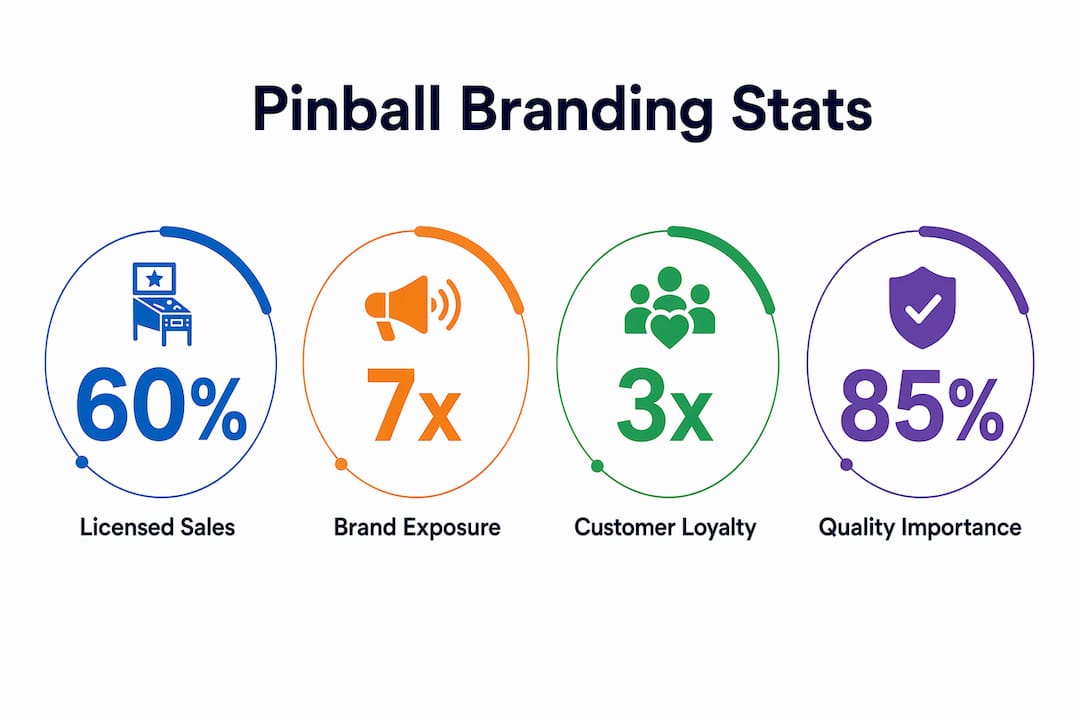
Licensed themes account for over 60% of pinball sales, indicating where brand power concentrates in this industry.
Why lifestyle branding elevates pinball beyond a game
Lifestyle branding repositions a product from something you use to something you are. Stern Pinball, the world’s largest pinball manufacturer, has executed this strategy more deliberately than any other company in the industry. Rather than marketing machines exclusively to hardcore players, Stern’s leadership has pursued placement at automotive shows, music festivals, and cultural venues, exposing pinball to audiences who associate the machines with prestige and personality rather than quarters and arcades.
That shift in context changes everything about consumer perception. When a buyer sees a beautifully lit pinball machine at a car show alongside a $200,000 sports car, the machine absorbs some of that aspirational energy. It becomes a statement piece for a game room, a conversation starter at a home bar, and an entertainment centerpiece rolled into one. The machine stops being a game and starts being a lifestyle upgrade.
- Community building: Lifestyle branding creates tribes, not just customers. Players who identify with a brand’s aesthetic and values become ambassadors who recruit new buyers.
- Cultural resonance: Machines placed in non-traditional venues reach audiences who then seek them out for home purchase, expanding the total addressable market.
- Collector loyalty: When a brand consistently delivers prestige, collectors return for every new release, treating the manufacturer’s catalog as a curated collection rather than a series of individual purchases.
- Differentiation from digital entertainment: Positioning pinball as a tactile, social, and visually dramatic experience separates it from video games and streaming in a way that pure product marketing cannot.
The lifestyle branding approach also insulates manufacturers from price sensitivity. A buyer who sees a machine as a luxury home furnishing will accept a premium price point far more readily than one who sees it as an arcade game.
Why licensing major IPs is the most powerful branding strategy in pinball
Licensing a recognizable IP is the closest thing pinball has to a guaranteed audience. When a manufacturer attaches a beloved franchise to a machine, it does not just sell to pinball fans. It sells to every person who loves that franchise, and that audience is almost always larger.
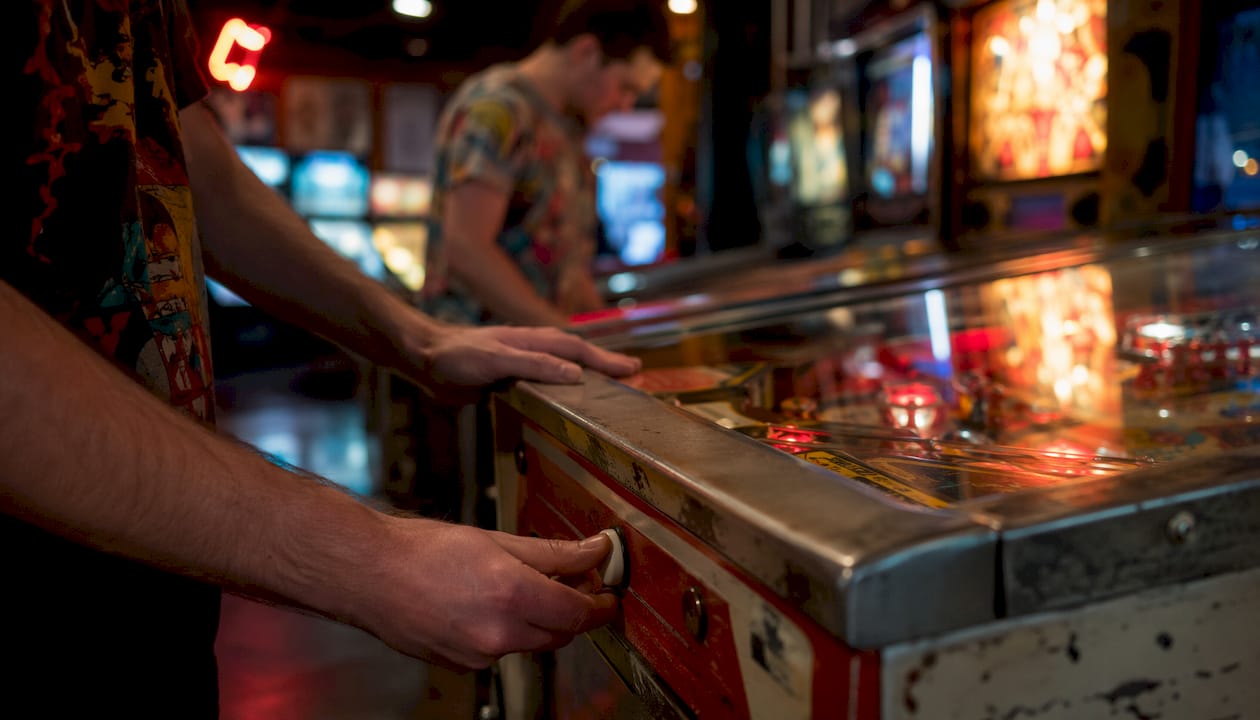
The mechanics of this amplification are concrete. When a licensed pinball machine launches, gaming and technology media outlets that never cover pinball will cover it because the IP is their beat. Licensing provides earned media in mainstream outlets like Ars Technica and PC Gamer, reaching prospective buyers who would never encounter a pinball-specific publication. That earned coverage costs the manufacturer nothing beyond the licensing fee itself.
| Licensing benefit | What it delivers |
|---|---|
| Instant recognition | Buyers identify the machine before reading a single word of copy |
| Earned media coverage | Mainstream outlets cover the IP, not the machine, pulling in new audiences |
| Emotional connection | Nostalgia and fan loyalty transfer directly to the product |
| Collectible value | Licensed themes can extend a game’s lifespan significantly. |
| Pricing power | Higher license fees justify premium machine prices that collectors accept |
Stern Pinball’s licensing philosophy reflects this logic precisely. The company’s leadership has explained that titles like Mustang were chosen not just for player appeal but to place machines at Ford automotive shows, where literally millions of people encountered pinball who had never sought it out. That is lifestyle branding and licensing working together as a single system.
Pro Tip: When evaluating a licensed pinball machine as a collector or arcade operator, look beyond the IP’s current popularity to its long-term cultural staying power. A franchise with decades of fan loyalty, like Star Wars or Metallica, will hold its desirability and resale value far longer than a title tied to a single film’s theatrical window.
Licensing deals also depend heavily on personal industry relationships, not just completed products. Industry veterans with established connections to IP holders can secure licenses for manufacturers that have yet to ship a single machine, which means the network a company builds is often as valuable as its engineering capability.
What the Rule of 7 actually means for pinball marketing
The Rule of 7 holds that a prospect needs to encounter a brand’s message seven times before making a purchase. For pinball, where machines carry price tags that demand considered decisions, the principle of repeated exposure is genuinely relevant. The Rule of 7 emphasizes repeated exposure for building familiarity, credibility, and trust with an audience over time.
Does the Rule of 7 have scientific backing?
Not exactly. Studies from the Advertising Research Foundation and the ANA indicate the Rule of 7 was never scientifically measured. Modern research suggests effective ad frequency is closer to three exposures, not seven. The underlying insight, that repetition builds recognition, remains valid. The specific number does not.
What does this mean for pinball brands and arcade operators?
Consistency and channel diversity matter more than hitting an arbitrary frequency target. A buyer who sees a machine on Instagram, then reads a review, then encounters it at a venue is already primed to purchase. Three quality touchpoints across distinct channels outperform seven repetitions of the same ad on a single platform.
How should pinball marketers apply this practically?
Spread messaging across social media, in-venue placement, influencer coverage, and editorial content. Each channel reaches a different segment of the audience at a different stage of the buying decision. The goal is to be present when the buyer is ready, not to overwhelm them before they are.
The deeper lesson from the Rule of 7 debate is that brand authority compounds over time in ways that raw frequency cannot replicate. A manufacturer with a decade of consistent quality and recognizable aesthetic does not need to advertise seven times. Its reputation does the work.
How thematic identity in pinball arcades drives spending and loyalty
Thematic identity is the practice of designing every element of an arcade environment around a coherent visual and experiential concept. It is the difference between a room full of machines and a destination. Arcades with cohesive thematic branding enjoy measurable engagement benefits compared to non-themed venues, including longer customer visits and higher spending per visit.
The mechanism is straightforward. When a customer walks into a space that feels intentional, they relax into the experience rather than scanning for an exit. Every design decision, from neon signage to machine selection to staff uniforms, signals that the operator cares about the visit. That signal translates directly into dwell time, and dwell time translates into revenue.
- Machine curation: Selecting machines that reinforce the venue’s theme creates a collection that feels curated rather than assembled, which elevates perceived value.
- Visual consistency: Matching artwork, lighting, and decor to a central concept makes the space photographable and shareable, generating organic social media exposure.
- Branded events: Tournaments and themed nights tied to the venue’s identity build a regular audience that returns on a schedule rather than on impulse.
- Staff presentation: Uniforms and training that reflect the venue’s personality extend the brand experience to every customer interaction.
For arcade operators, thematic identity is also a defense against competition. A venue with a clear personality is harder to replicate than one that simply owns more machines. The brand becomes the product, and the machines become the delivery mechanism. Operators who understand this invest in arcade machine selection as a branding decision, not just a capital expenditure.
Why product quality is the foundation every pinball brand must protect
Licensing and lifestyle branding create the audience. Product quality keeps it. This distinction is one the industry’s most experienced voices have stated plainly: a license gives a manufacturer instantaneous recognition, but it does not automatically deliver credibility. That has to be earned through the machine itself.
Industry expert Roger Sharpe, whose career spans decades of pinball licensing negotiations, has put it directly:
That gap between recognition and credibility is where brands are won or lost. A machine that carries a beloved IP but delivers mediocre gameplay, unreliable hardware, or poor artwork execution will damage the manufacturer’s reputation faster than no license at all. The fan base that was excited by the announcement becomes the loudest critic of the execution.
Manufacturers who sustain long-term brand equity treat gameplay quality and build standards as non-negotiable. Classic-title revivals, which combine nostalgia with modern improvements like LED lighting, updated electronics, and improved reliability, succeed precisely because they deliver on both the brand promise and the physical experience. The name draws the buyer in. The machine keeps them loyal.
Customer support and post-purchase experience extend this logic further. A buyer who receives attentive service after a mechanical issue becomes a brand advocate. One who feels abandoned becomes a warning to every forum and social media community they participate in. For a category where word-of-mouth carries as much weight as advertising, that distinction shapes the brand’s long-term trajectory.
Key Takeaways
Branding in pinball is the convergence of licensing power, lifestyle positioning, and product excellence, and no single element succeeds without the other two.
| Point | Details |
|---|---|
| Licensing drives over 60% of sales | Licensed themes dominate the market because they deliver instant recognition and emotional connection. |
| Lifestyle branding expands the audience | Stern Pinball’s placement at automotive shows exposed millions of new buyers to pinball as a prestige product. |
| Effective frequency is closer to three exposures | Modern research revises the Rule of 7 downward; quality touchpoints across diverse channels outperform repetition on a single platform. |
| Thematic identity increases dwell time and spending | Arcades with cohesive branding outperform non-themed venues on both visit length and per-visit revenue. |
| Quality must match the brand promise | A license delivers recognition; only excellent gameplay and build quality convert that recognition into lasting brand loyalty. |
Ready to own a machine that carries real brand prestige?
At Premiumpinballs, every machine in our inventory, whether new, refurbished, or a collector-grade classic, carries the brand identity that makes pinball a lifestyle statement rather than just a game. From iconic licensed titles to meticulously restored originals, our catalog is curated for enthusiasts, operators, and collectors who understand that the right machine is an investment in experience and prestige. Explore our top arcade machines or browse the best models of 2025 to find the title that belongs in your collection.