
TL;DR:
- Playfield wear is the gradual surface damage caused by ball impacts, friction, and environmental exposure on pinball machines. Protecting the clearcoat through regular maintenance extends the machine’s appearance, gameplay quality, and resale value, while neglect accelerates deterioration. Consistent routines like cleaning, waxing, replacing balls, and using protectors help prevent costly restoration and preserve pinball’s playability and beauty over time.
Playfield wear is defined as the progressive deterioration of a pinball machine’s playing surface caused by repeated ball contact, friction, and environmental exposure. The damage shows up as scratches, ball swirl marks, clearcoat breaches, and faded artwork, all of which degrade both the look and the feel of the machine. Collectors and enthusiasts who understand playfield wear early can protect their machines before minor surface damage becomes a costly restoration project. The clearcoat layer sitting above the artwork is your first line of defense, and once it breaks down, the artwork beneath is exposed and vulnerable. Knowing what causes this deterioration, where it strikes first, and how to stop it is the foundation of responsible pinball ownership.
What is playfield wear and why does it matter?
Playfield wear is the industry term for surface degradation on a pinball machine’s wooden playfield, driven primarily by ball impacts and friction wearing through the clearcoat and into the printed artwork below. The clearcoat is a transparent lacquer layer applied over the playfield’s graphics during manufacturing. Every time the steel ball rolls, bounces, or slides across the surface, it removes microscopic amounts of that protective layer. Over time, the cumulative effect becomes visible as dull patches, swirl marks, and eventually bare wood where artwork once lived.
The significance for collectors is direct. A playfield in excellent condition commands a premium on the secondary market, while one showing heavy wear can reduce a machine’s value considerably. Beyond resale, worn surfaces affect gameplay. A rough or pitted playfield slows the ball, creates unpredictable bounces, and diminishes the fluid, fast experience that makes machines like Addams Family or Attack From Mars so compelling. Understanding playfield deterioration signs early gives you the best chance of preserving both the play experience and the machine’s long-term worth.
One detail many collectors overlook: playfield dimples are standard micro-indentations caused by ball impact on wood beneath the clearcoat. They are not manufacturing defects. They are a normal byproduct of play, and distinguishing them from true clearcoat damage is the first step in any accurate wear assessment.
What causes playfield wear and which areas are most vulnerable?
Ball contact is the primary driver of playfield damage. The steel ball exerts concentrated force on the clearcoat with every impact, and that force compounds over thousands of plays. Dirt and grime on the playfield accelerate this process by grinding into the clearcoat as the ball rolls over them, acting like sandpaper on a finish. The result is accelerated wear that far outpaces what a clean playfield would experience under the same play volume.
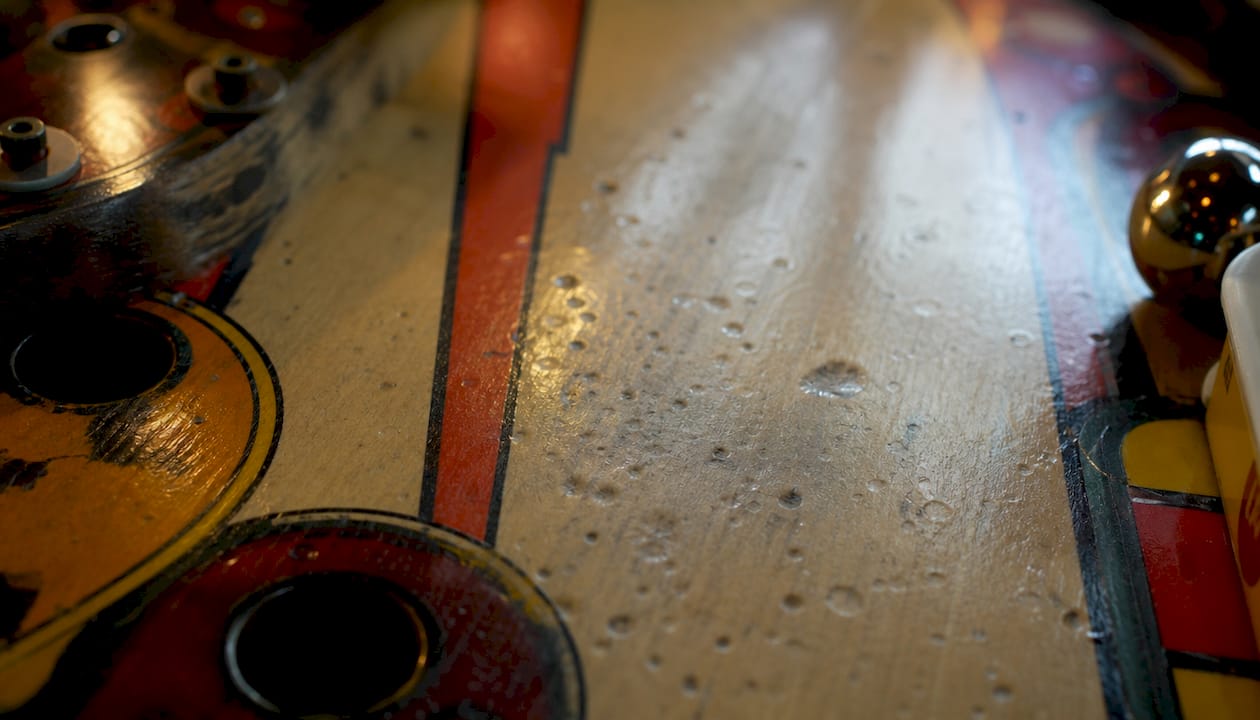
Ball condition is equally critical. Dirty or pitted balls accelerate playfield wear dramatically. A single corroded or rough ball can undo years of careful maintenance in a surprisingly short time. That single fact changes how you should prioritize your maintenance routine: inspect and replace balls before they become a problem, not after.
Wear concentrates in high-traffic zones rather than spreading evenly across the surface. The areas most vulnerable to early deterioration include:
- Slingshots: High-frequency ball contact creates rapid clearcoat erosion around the rubber posts and kicker faces.
- Pop bumpers: Repeated ball strikes in a tight radius wear through clearcoat quickly, often exposing artwork within a few years of heavy play.
- Shooter lane: The ball travels this path on every single launch, making it one of the first zones to show visible wear tracks.
- Scoop and saucer entries: The ball drops into these features repeatedly, concentrating impact force on a small surface area.
- Drain posts and outlane guides: Constant ball contact along these edges creates linear wear patterns that are difficult to reverse without restoration.
UV exposure causes artwork fading over time, adding an environmental dimension to wear that has nothing to do with ball contact. Machines positioned near windows or under strong fluorescent lighting age faster visually, even when the clearcoat remains intact. Dust and debris compound the problem by settling on the surface and acting as abrasives during play.
How can you prevent and maintain your pinball playfield to reduce wear?
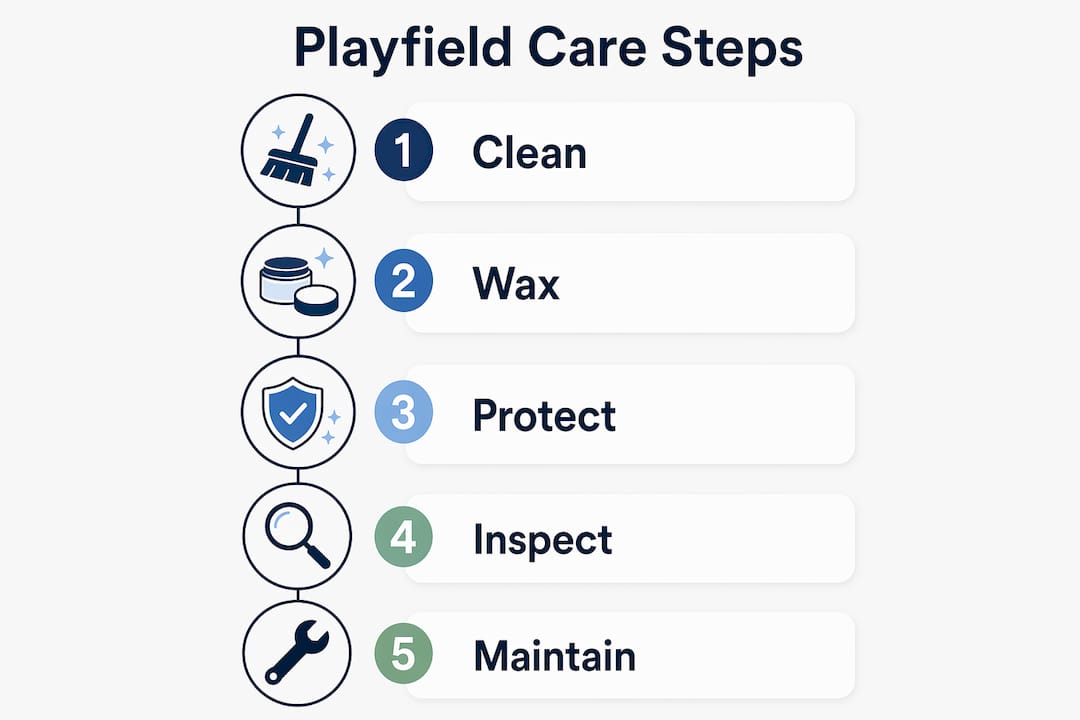
Prevention is far less expensive than restoration. A consistent maintenance routine keeps the clearcoat intact longer and protects the artwork beneath it. The sequence below represents the standard approach used by experienced collectors.
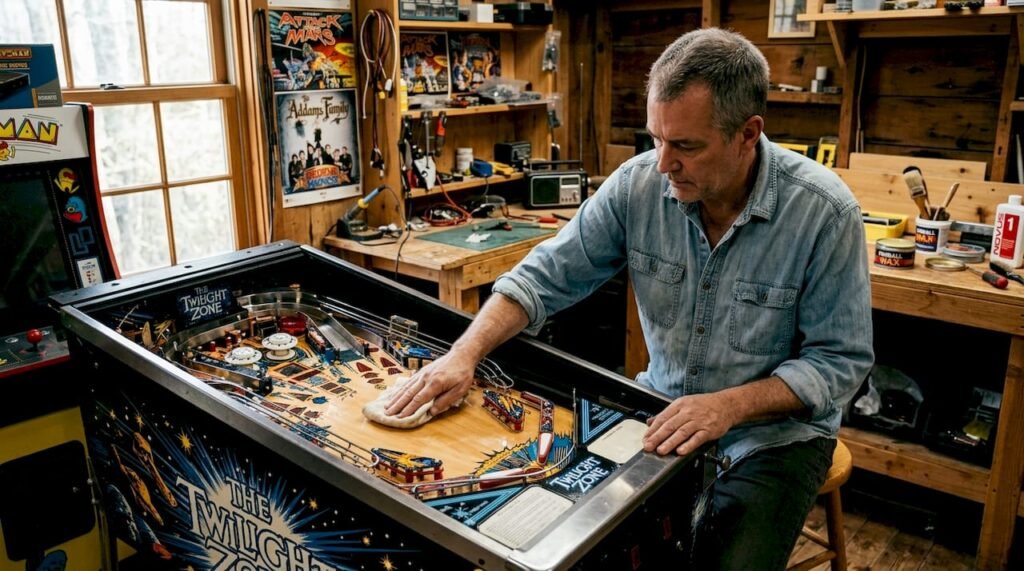
Vacuum and wipe down regularly. Use a soft brush vacuum attachment to remove loose debris from the playfield before it becomes an abrasive. Follow with a gentle wipe using a microfiber cloth dampened with a non-ammonia cleaner. Excessive cleaning with harsh chemicals or over-waxing can damage playfield artwork or create buildup, so mild and infrequent is the right approach.
Wax on a proper schedule. Applying carnauba paste wax every 3–6 months creates a barrier against friction and debris. Wax frequency should reflect how often the machine is played. A machine in a home game room used occasionally needs less frequent waxing than one in a commercial setting. Avoid liquid waxes and silicone-based products, which can cause long-term adhesion problems if restoration ever becomes necessary.
Inspect and replace balls promptly. Check your balls every few months for surface dullness, pitting, or visible corrosion. Replace them at the first sign of degradation. This single habit protects the playfield more effectively than any wax or cleaner.
Install protective hardware. Metal post protectors around slingshot posts and pop bumper bases reduce localized wear in the highest-impact zones. These small components are inexpensive and easy to install.
Control the environment. Position your machine away from direct sunlight and sources of UV light. Keep the room reasonably dust-free and maintain stable humidity levels to prevent wood warping beneath the playfield surface.
Use a playfield protector. A PET-G playfield protector sits over the surface and absorbs ball impact directly, reducing dimpling and clearcoat erosion without any permanent modification to the machine.
Pro Tip: Apply carnauba paste wax in thin, even coats and buff completely before play. Wax buildup in inserts and around plastics is harder to remove than the wear it was meant to prevent.
What are the signs that your playfield needs restoration?
Identifying the right moment to restore rather than maintain is a judgment call that separates experienced collectors from newcomers. Minor wear, meaning light swirl marks and surface dullness that respond to polishing, does not require restoration. Severe wear, where the clearcoat has been breached and bare artwork or wood is visible, does.
| Wear Level | Signs | Recommended Action |
|---|---|---|
| Minor | Light swirl marks, surface haze, dull finish | Polish with a playfield-safe compound, then wax |
| Moderate | Visible wear spots, clearcoat thinning, faded color patches | Protective overlay or targeted touch-up |
| Severe | Clearcoat breaches, chipped or missing artwork, bare wood | Professional clearcoating or full restoration |
Clearcoating a playfield is a permanent restoration method involving stripping the old finish, touching up damaged artwork, and applying fresh lacquer. The result is a playfield that looks and plays like new. The trade-off is irreversibility. Clearcoating done improperly can create adhesion failures or surface bubbling, so it requires expert application. This is not a weekend DIY project for most collectors.
Playfield protectors offer a different path. These removable PET-G sheets absorb ball impact, reduce dimpling, and bridge sunken inserts, preserving the playfield condition without any permanent change. Protectors suit machines with intact or lightly worn clearcoat. They are the right choice when you want to stop further deterioration without committing to a full restoration.
Pro Tip: Before clearcoating, photograph the playfield in detail under bright light. Those reference images are invaluable if artwork touch-up work is needed during the restoration process.
A proportionate approach works best: protect pristine or lightly worn playfields with non-intrusive overlays, and reserve clearcoating for machines where damage has already progressed beyond what a protector can address. The advantages of refurbished machines often include professionally restored playfields, which is worth considering when evaluating a purchase against the cost of restoring a worn machine yourself.
How does playfield wear impact gameplay and machine value over time?
Surface deterioration has direct consequences for how a machine plays. A worn playfield creates friction that slows ball speed, reduces the crisp, fast glide that defines a well-maintained machine, and introduces unpredictable bounces in areas where clearcoat has worn unevenly. In machines built around precise ball routing, like Attack From Mars or Ghostbusters, that unpredictability changes the scoring dynamics in ways that frustrate rather than challenge.
The aesthetic impact compounds the functional one. The consequences of unchecked surface damage include:
- Artwork degradation: Faded colors, chipped graphics, and sticker lifting reduce the visual prestige that makes a collector-grade machine worth displaying.
- Reduced resale value: Buyers on the secondary market discount heavily for playfield condition. A machine with severe wear can sell for significantly less than an equivalent example in excellent condition.
- Higher restoration costs: Late-stage restoration requires more labor, more materials, and more expertise than early intervention. The longer wear progresses unchecked, the more expensive the fix becomes.
- Gameplay mechanics disruption: Worn scoop entries and drain post areas can cause the ball to behave erratically, affecting the consistency of game rules and scoring.
The pinball gameplay mechanics of any machine depend on a smooth, consistent surface. Wear undermines that consistency in ways that accumulate gradually until the degradation becomes impossible to ignore.
Key Takeaways
Playfield wear is best addressed through consistent prevention, because once clearcoat is breached, restoration requires professional expertise and permanent modification.
| Point | Details |
|---|---|
| Define the damage early | Ball swirls, dull patches, and clearcoat breaches each signal a different level of intervention needed. |
| Ball condition is the top risk | Replace pitted or corroded balls immediately to prevent rapid, irreversible surface damage. |
| Wax every 3–6 months | Carnauba paste wax applied on a regular schedule creates the primary barrier against friction wear. |
| Match the solution to the severity | Use protectors for intact or lightly worn playfields; reserve clearcoating for machines with genuine damage. |
| Prevention protects value | Routine maintenance costs far less than late-stage restoration and preserves both gameplay and resale worth. |
Why I think most collectors wait too long to act
The most common mistake I see among pinball collectors is treating playfield care as reactive rather than routine. Collectors will spend hours researching which machine to buy and then neglect the one maintenance habit that protects their investment most: checking the balls.
Ball condition is the biggest overlooked factor in playfield wear. A rough or corroded ball causes more rapid deterioration than almost any other variable, and it is the easiest to control. A fresh set of balls costs very little. The clearcoat damage from ignoring a pitted ball for a season can cost hundreds of dollars to fix properly.
The second mistake is reaching for clearcoating too soon. Clearcoating is a powerful tool, but it is permanent and unforgiving. A machine with light swirl marks and intact clearcoat does not need a full restoration. It needs a good cleaning, a proper wax, and possibly a PET-G protector. Applying a clearcoat to a machine that didn’t need it adds complexity and cost without proportionate benefit.
My honest recommendation: build a simple quarterly routine. Inspect the balls, vacuum the playfield, apply wax if the surface feels dry or shows light hazing, and check the high-wear zones around the slingshots and pop bumpers. That 30-minute habit, done consistently, will keep most machines in excellent condition for years. When damage does appear, address it at the moderate stage rather than waiting for it to become severe. The cost difference between those two moments is significant.
— Jim
Pinball machines worth protecting, available at Premiumpinballs
A machine with a pristine playfield is a machine worth owning for decades. Premiumpinballs carries a curated selection of refurbished, used, and new pinball machines, each chosen for quality and collector appeal.

Whether you are looking for the best pinball machines for arcades or a statement piece for your home game room, Premiumpinballs offers iconic titles with detailed condition disclosures so you know exactly what you are buying. The essential maintenance checklist available on the site gives you a practical starting point for protecting any machine from day one. Browse the full inventory and find a machine that deserves the care this guide describes.
FAQ
What is playfield wear in a pinball machine?
Playfield wear is the progressive deterioration of the clearcoat and artwork on a pinball machine’s playing surface, caused by ball contact, friction, dirt, and environmental exposure. It appears as swirl marks, dull patches, and eventually bare wood or faded artwork.
How often should I wax my pinball playfield?
Carnauba paste wax applied every 3–6 months is the standard recommendation, adjusted for how frequently the machine is played. Over-waxing creates buildup that is difficult to remove, so thin coats and full buffing are required each time.
What are the first signs of playfield deterioration?
The earliest signs are light swirl marks and surface haze in high-traffic zones like the shooter lane, slingshots, and pop bumpers. These areas show wear first because they receive the most concentrated ball contact during play.
Should I use a playfield protector or clearcoat?
A PET-G playfield protector suits machines with intact or lightly worn clearcoat, offering removable protection without permanent modification. Clearcoating is the right choice only when damage has already breached the clearcoat and artwork repair is needed.
Does playfield wear affect a machine’s resale value?
Playfield condition is one of the most significant factors in pinball machine resale pricing. Machines with heavy wear sell for considerably less than equivalent examples in excellent condition, making early prevention a direct investment in long-term value.