
TL;DR:
- Pinball generates 35-50% more revenue than standard arcade games in bars.
- It creates a lively atmosphere that broadens customer demographics and encourages longer visits.
- Strategic placement and machine selection are key to maximizing pinball’s profit potential.
Pinball machines generate 35-50% more revenue than standard arcade games, yet most bar owners treat them as an afterthought. That’s a costly oversight. Far from being a relic of the past, today’s pinball machine is a sophisticated revenue engine, a social catalyst, and a statement piece that transforms an ordinary venue into a destination worth returning to. In the pages ahead, you’ll discover exactly how pinball elevates atmosphere, broadens your customer base, and delivers measurable profits that few entertainment options can match.
Table of Contents
- Pinball’s unique appeal: From retro cool to social magnet
- How pinball drives bar revenue and customer loyalty
- Pinball in today’s bar landscape: Strategic trends and benchmarks
- Practical pinball integration: Operating models and real-world success
- Why most bars miss the true value of pinball
- Upgrade your bar with top pinball machines
- Frequently asked questions
Key Takeaways
| Point | Details |
|---|---|
| Pinball boosts bar revenue | Pinball machines consistently generate more income than standard arcade games, especially with smart placement and pricing. |
| Attracts diverse audiences | Pinball draws nostalgic guests, competitive players, and casual fun-seekers, broadening your bar’s demographic reach. |
| Low-risk operator models | Revenue share arrangements let bar owners add pinball without heavy upfront investment. |
| Strategic placement matters | Machine location near high-traffic areas greatly increases play counts and revenue. |
Pinball’s unique appeal: From retro cool to social magnet
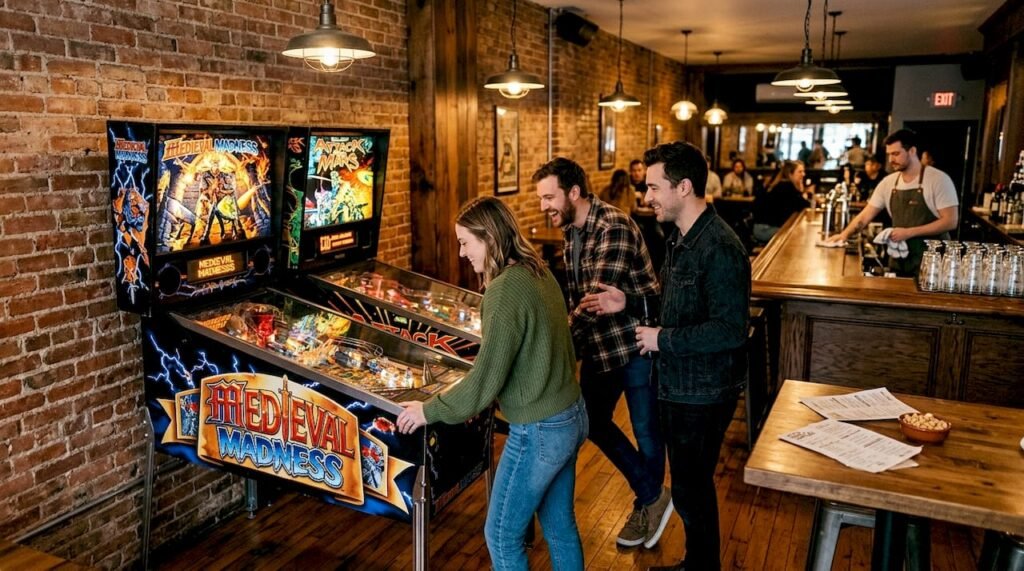
There’s something almost theatrical about a pinball machine in full swing. The flashing lights, the mechanical clatter of bumpers, the crowd gathering to watch a skilled player chase a high score — none of that can be replicated by a touchscreen or a streaming playlist. As operators have observed, pinball creates an energetic atmosphere that digital screens simply cannot match. That sensory richness is your first competitive advantage.
What makes pinball especially powerful for bars is its rare ability to bridge generational gaps. Gen X guests feel the warm pull of nostalgia, Millennials embrace it as an ironic yet genuinely fun pastime, and younger casual visitors discover something refreshingly tactile in a world saturated with apps and algorithms. The machine becomes a conversation starter, a social anchor that draws strangers into friendly competition and keeps groups lingering longer at your venue.
“Pinball appeals to nostalgia, competitive players, and casual fun-seekers — a rare trifecta that broadens any bar’s demographic reach.”
Understanding the vintage pinball benefits for venues helps clarify why themed and classic machines consistently outperform generic arcade cabinets. Iconic titles like The Addams Family, Attack From Mars, and Ghostbusters carry built-in fan bases that walk through your door specifically because you have them.
Here’s a quick look at the key demographics pinball reliably attracts:
- Nostalgic adults (35-55): Gen X and older Millennials who grew up in arcades and associate pinball with peak fun
- Competitive players: Enthusiasts who follow pinball leagues and tournaments, driving repeat visits
- Casual social groups: Date nights, birthday parties, and after-work crowds looking for tactile entertainment
- Curious younger guests: Gen Z visitors drawn to analog experiences as a novelty
- Craft beer and barcade patrons: Guests who actively seek venues that combine quality drinks with curated entertainment
Knowing which must-have pinball features resonate with each group lets you select machines that speak directly to your venue’s existing crowd while pulling in new faces.
How pinball drives bar revenue and customer loyalty
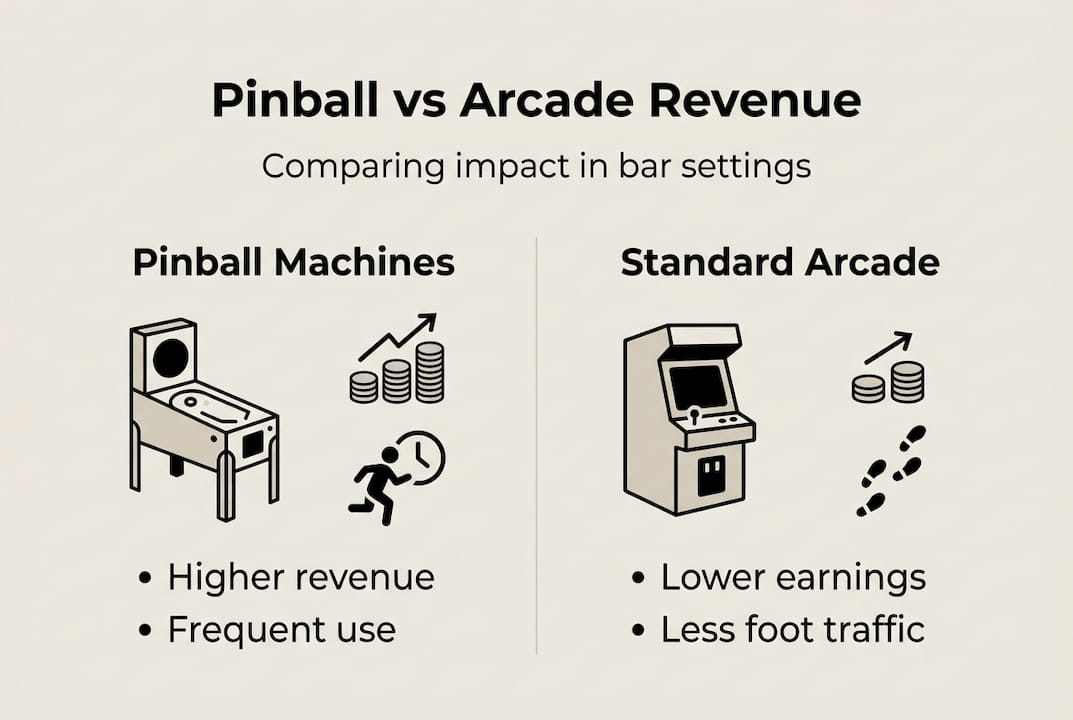
With pinball’s unique appeal established, now explore how it translates to measurable financial impact. The numbers are compelling. Optimal placement boosts plays to 45-90 per day in sports bars, and at $1-2 per play, a single well-positioned machine can generate $45-$180 in daily revenue. Multiply that across a weekend and the math becomes very persuasive.
| Feature | Pinball machines | Standard arcade games |
|---|---|---|
| Revenue premium | 35-50% higher | Baseline |
| Daily plays (sports bar) | 45-90 | 20-40 |
| Core demographics | Multi-generational | Primarily younger |
| Social interaction | High (group play, spectating) | Low to moderate |
| Maintenance complexity | Moderate | Low |
| Collector and resale value | Strong | Minimal |
The pinball ownership cost picture becomes even more attractive when you factor in revenue share models. Under these arrangements, a pinball operator places and maintains the machine at no upfront cost to you, and you split the earnings. It’s a low-risk entry point that lets you test performance before committing to ownership.
For venues ready to own outright, understanding [pinball pricing models](https://premiumpinballs.com/understanding-pinball pricing) helps you evaluate whether a refurbished classic or a brand-new premium model delivers the better return for your specific crowd.
Pro Tip: When negotiating a revenue share agreement, push for a 50-60% split in your favor if your venue has consistent weekend foot traffic above 200 guests per night. Operators value high-volume locations and will often accept less favorable terms to secure premium placement.
The 3,200+ U.S. venues currently operating pinball machines represent a proven market, not an experiment. Those operators have already validated the model, and their collective experience points to one consistent truth: placement and machine selection are the two variables that separate exceptional earners from average ones.
Pinball in today’s bar landscape: Strategic trends and benchmarks
After discussing revenue mechanisms, look at broader trends shaping bar entertainment strategies. The hospitality industry is navigating a genuine shift. Pure alcohol sales are no longer a reliable growth engine, and the evidence is stark. In Canada, the number of bars relying solely on alcohol revenue dropped from 9,000 to 3,700, a contraction that signals a structural change, not a temporary dip. American venues are watching the same trend unfold.
| Metric | Traditional bar model | Barcade or entertainment bar model |
|---|---|---|
| Primary revenue source | Alcohol sales | Alcohol + entertainment |
| Average customer dwell time | 45-60 minutes | 90-120 minutes |
| Repeat visit rate | Moderate | High |
| Revenue diversification | Low | Strong |
| Resilience to market shifts | Vulnerable | More adaptable |
Barcades — venues that blend craft beverages with curated arcade experiences — have emerged as one of the most resilient bar formats of the past decade. Pinball anchors these concepts beautifully because it occupies a prestige tier above generic arcade cabinets. Guests perceive it as more sophisticated, more interactive, and more worthy of their time and money.
Here are key benchmarks worth tracking once you introduce pinball to your venue:
- Play count target: Aim for 50+ plays per day per machine within the first 60 days of optimal placement
- Revenue benchmark: $300-$700 per machine per week in a mid-volume bar setting
- Customer return rate: Venues with pinball report noticeably higher repeat visit frequency among entertainment-seeking guests
- Dwell time increase: Expect guests to stay 20-40 minutes longer per visit when engaging with pinball
Exploring the best pinball machines for commercial settings reveals that licensed titles with strong pop culture ties consistently outperform generic machines on all of these benchmarks. Meanwhile, understanding new pinball technology helps you evaluate whether modern LCD-display machines or classic electromechanical units better suit your venue’s aesthetic and maintenance capacity.
Practical pinball integration: Operating models and real-world success
With industry context covered, here’s how venue owners can put pinball strategies into practice. The good news is that integrating pinball into your bar doesn’t require a major renovation or a significant capital outlay, especially when you approach it systematically.
- Assess your floor plan: Identify high-traffic zones near restrooms, main walkways, or bar sightlines. These spots consistently deliver the highest play counts because visibility drives impulse plays.
- Choose your operating model: Decide between outright purchase, lease, or revenue share. Revenue share models minimize upfront costs and shift maintenance responsibility to the operator, making them ideal for first-time pinball venues.
- Select the right machine: Match the title to your crowd. A sports bar thrives with high-energy, competitive machines. A craft cocktail lounge may prefer a visually stunning collector piece that doubles as decor.
- Set competitive pricing: $1-2 per play is the industry sweet spot. Price too low and you leave revenue on the table; price too high and you suppress play counts.
- Market the machine actively: Announce it on social media, run a launch night tournament, and create a weekly high-score leaderboard. These tactics cost almost nothing but generate genuine buzz.
- Track and optimize: Review play counts weekly for the first three months. If a machine underperforms in one location, move it before writing off the concept entirely.
Pro Tip: Avoid placing pinball machines in corners or near emergency exits. Poor visibility is the single most common reason a well-chosen machine underperforms. If guests can’t see it from the bar, they won’t play it.
Knowing how to choose pinball for arcades and understanding pinball machine value before you commit ensures you’re investing in machines that hold their worth and deliver consistent returns.
Why most bars miss the true value of pinball
Here’s an uncomfortable truth: most bar owners who dismiss pinball are not evaluating it on its merits. They’re filtering it through an outdated mental model that equates arcade games with low-margin, low-prestige add-ons. That mental model is costing them real money.
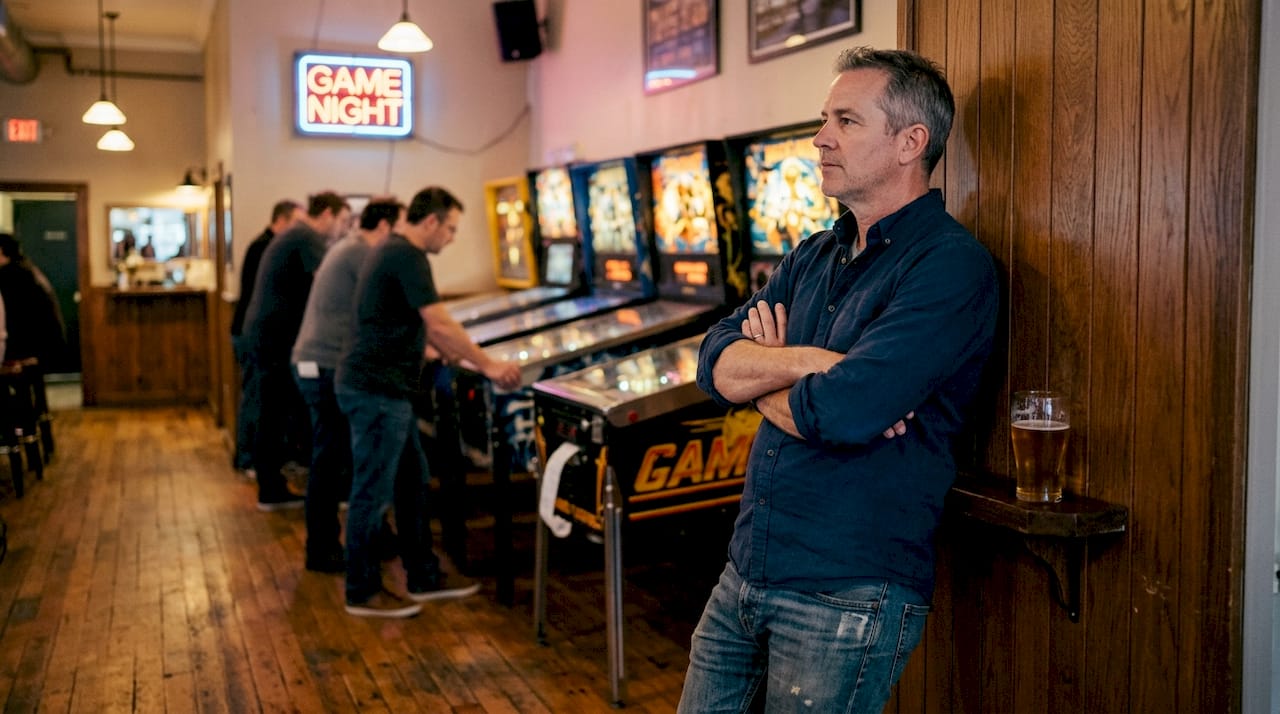
Pinball’s atmosphere and revenue impact are frequently overlooked by owners focused exclusively on traditional entertainment formats. But the venues that treat pinball as a strategic asset rather than a novelty are the ones building loyal communities, not just one-time visitors.
We believe the most forward-thinking bar operators think about pinball the way smart retailers think about store design: as an investment in experience that pays dividends in dwell time, repeat visits, and word-of-mouth. Exploring why collect pinball machines reveals a deeper truth — these machines carry cultural weight and collector prestige that generic entertainment simply cannot replicate. When your bar owns a majestic, iconic machine, it becomes part of your venue’s identity. That’s not a small thing in a crowded market.
Upgrade your bar with top pinball machines
If the data and strategies above have convinced you that pinball deserves a place in your venue, the next step is finding the right machine for your space, your crowd, and your budget.
At Premium Pinballs, we curate an exclusive selection of the best pinball machines for commercial operators, from high-demand licensed titles to visually stunning collector pieces that anchor any bar’s identity. If upfront investment is a consideration, our refurbished pinball advantages guide walks you through how a professionally restored machine delivers premium performance at a fraction of the cost. Browse our full pinball inventory and let us help you find the machine that transforms your venue into the destination your guests keep coming back to.
Frequently asked questions
How much revenue can pinball generate for my bar?
Pinball machines often generate 35-50% more revenue than standard arcade games, with popular machines averaging 45-90 plays per day in sports bars, translating to meaningful weekly income at $1-2 per play.
What’s the best location for a pinball machine inside a bar?
Pinball machines perform best in high-traffic areas near restrooms or main walkways, where maximum visibility drives impulse plays and consistent daily revenue.
Does pinball attract new demographics to bars?
Yes, pinball appeals to nostalgic Gen X and Millennials, competitive enthusiasts, and casual social groups, broadening your customer base well beyond typical bar regulars.
Are revenue share models common for pinball in bars?
Yes, many pinball operators offer revenue share agreements that eliminate upfront costs for bar owners while sharing profits, making it one of the lowest-risk ways to introduce pinball to your venue.