

TL;DR:
- Licensing in pinball manufacturing involves securing legal rights to use entertainment IP for themed machines. It influences the entire production process, from design to pricing, and impacts market value through exclusive titles. Managing licensing efficiently requires careful legal, financial, and collaborative strategies to avoid delays and maximize long-term gains.
Licensing in pinball manufacturing is the formal process by which a manufacturer secures legal rights to use intellectual property, such as film characters, music, or brand identities, to produce a themed machine. The role of licensing in pinball manufacturing extends far beyond a legal checkbox. It shapes every stage of production, from initial concept art to final pricing, and determines whether a machine captures the cultural prestige that drives collector demand. Titles like Ghostbusters, Addams Family, and Attack From Mars command premium resale value precisely because their licenses connect them to beloved entertainment history. For manufacturers and entrepreneurs entering this space, understanding pinball machine licensing is the difference between a machine that sells and one that sits.
How licensing shapes pinball design and development
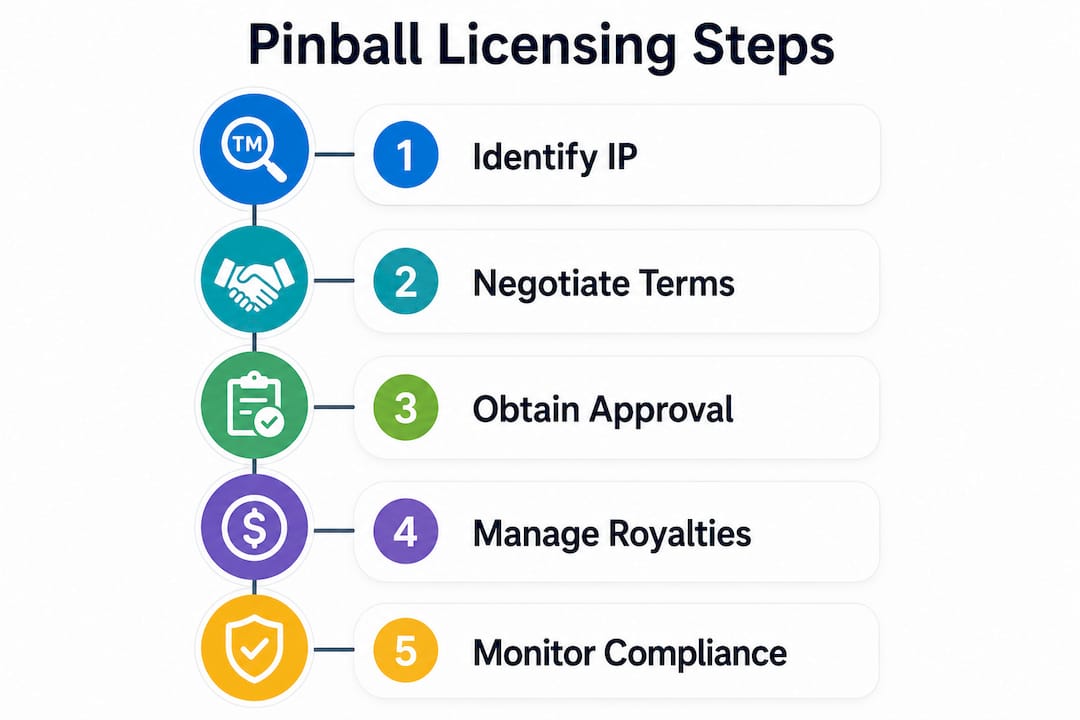
Licensing defines what a manufacturer can and cannot build. Every piece of artwork, sound clip, character likeness, and theme element requires explicit approval from the intellectual property holder before it appears on a playfield or cabinet. That approval process runs in parallel with engineering and production planning, which means delays in one stream ripple directly into the other.
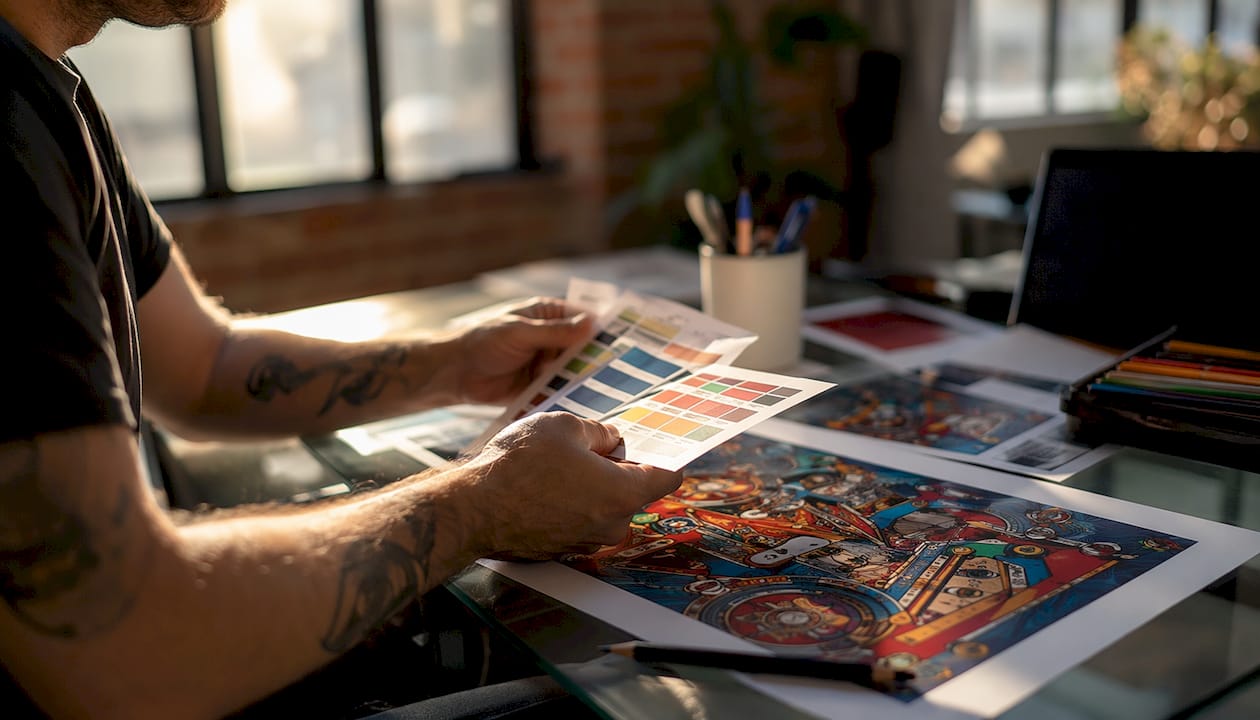
The design constraints imposed by a license are real but also creatively productive. IP holders often supply brand guidelines, approved color palettes, and character artwork that give the design team a strong visual foundation. The challenge is that any deviation from those guidelines requires a new approval round, which can add weeks to a production schedule. Music licensing is particularly demanding, requiring separate clearances from both artists and labels, and persistence is the only reliable strategy for getting through it.
Manufacturers who treat licensing as a design partnership rather than a legal hurdle tend to move faster. When the IP holder is invested in the machine’s quality, they provide faster feedback and more useful creative direction.
- Secure artwork and character approvals before committing to playfield tooling
- Obtain music clearances from both the recording artist and the label independently
- Build a minimum 60-day buffer into your production schedule for approval cycles
- Assign a dedicated licensing coordinator to manage all IP communications in one place
- Document every approval in writing, including email confirmations, to protect your production timeline
Pro Tip: Request a pre-approval meeting with the IP holder’s licensing team before submitting formal artwork. A 30-minute call can eliminate weeks of revision cycles by aligning expectations upfront.
What are the financial implications of pinball machine licensing?
Licensing fees represent one of the largest variable costs in pinball production, and they arrive in multiple forms. Manufacturers typically pay an upfront advance against royalties, then a per-unit royalty on every machine sold. Exclusivity adds another layer of cost. Securing exclusive production rights for a title means paying a premium that locks out other producers but also protects your market position for the duration of the agreement.
Licensed pinball themes capture cultural entertainment history, which elevates their long-term investment appeal compared to generic original themes. That cultural weight justifies higher retail pricing, which in turn gives manufacturers more room to absorb licensing costs without compressing margins. A machine built around a recognized IP can command a price point that an original theme simply cannot reach in the same market segment.
The cost-benefit calculation is not always straightforward. Consider these key financial factors:
- Upfront advances: These are paid before a single unit ships and are non-refundable if production stalls
- Per-unit royalties: Typically calculated as a percentage of the wholesale price, reducing margin on every sale
- Exclusivity premiums: Higher fees for sole production rights, but they protect your investment from direct competition
- Approval delay costs: Extended timelines increase carrying costs on tooling, inventory, and labor
- Lifecycle revenue: Licensed games now function as platform products with software updates, extending revenue beyond the initial sale
Licensed pinball products are positioned as ongoing platform experiences with software updates, increasing lifecycle value well beyond the initial release date.
Pro Tip: Build your royalty payments into your unit cost model from day one. Manufacturers who treat royalties as an afterthought consistently underprice their machines and erode profitability within the first production run.
Understanding pinball pricing influences helps both manufacturers and buyers appreciate why licensed titles carry a premium that reflects genuine production investment.
What challenges arise in pinball licensing agreements?
Licensing agreements carry risks that go well beyond the cost of the license itself. The contractual terms, especially around exclusivity, duration, and IP ownership of new developments, determine whether a project succeeds or collapses.
Here are the most common challenges manufacturers face:
Exclusivity duration limits: Exclusive remake rights typically last about two years. That window sounds generous, but hardware development, software builds, and approval cycles can consume most of it before a single unit ships.
IP ownership disputes over enhancements: When a manufacturer improves the original IP, such as building new software or hardware features, ownership of those enhancements must be defined in the contract. Partnership disputes over exactly this issue have caused multi-year delays and significant financial losses in real remake projects.
Trademark and copyright enforcement gaps: Courts have established that background appearances in media rarely constitute infringement, but proactive trademark management remains the manufacturer’s responsibility. Passive protection is not enough.
Sub-license scope limitations: Sub-licenses define exactly what rights are transferred. Stern Electronics’ exclusive sub-license for “Scramble” included both copyright and trademark protections recognized by courts, but only because those rights were explicitly written into the agreement.
License stacking risk: Holding too many active licenses simultaneously stretches development resources and increases financial exposure. Most experienced developers limit themselves to one or two active licenses at a time.
“The biggest mistake manufacturers make is signing a license before they have a realistic production timeline. The clock starts the moment you sign, not the moment you’re ready.”
The legal framework around pinball IP is well-established but unforgiving. Contracts that leave ownership of new developments ambiguous invite disputes that no amount of goodwill can resolve.
How do you secure and manage pinball production rights effectively?
Securing a license requires more than writing a check. Licensors prioritize quality and brand protection above all else. A manufacturer who demonstrates production competence and genuine commitment to the IP will win a license over a higher bidder with a weaker track record.
The practical steps for securing and managing licenses effectively include:
- Build a credibility portfolio first: Document your production history, quality standards, and any existing licensed work before approaching a major IP holder
- Limit simultaneous licenses: Experienced developers acquire no more than one or two licenses at a time to maintain quality and meet contractual timelines
- Negotiate enhancement ownership upfront: Define in writing who owns any new software, hardware, or artwork created during the remake process
- Use licensed and original titles together: Balancing licensed machines with original theme productions reduces financial dependency on any single IP relationship
- Maintain active trademark management: Courts favor manufacturers who actively protect and market their licensed IP rather than relying on passive legal coverage
American Pinball’s 2026 licensing partnership to reimagine classic Bally/Williams titles shows that flexible licensing models are gaining traction. That deal signals a broader industry shift toward collaborative arrangements that benefit both the IP holder and the manufacturer.
Manufacturers who use high-profile IP like Pokémon to expand their demographic reach demonstrate another dimension of licensing strategy. The right IP does not just authorize production. It opens entirely new customer segments that an original theme cannot access.
Pro Tip: When negotiating, ask the licensor directly what a successful partnership looks like to them. Their answer will tell you exactly what metrics and quality standards you need to hit to renew the agreement.
The long-term investment value of licensed machines also strengthens the manufacturer’s case to buyers, since cultural relevance drives resale prices in ways that original themes rarely match.
Key Takeaways
Licensing is the single most consequential business decision a pinball manufacturer makes, shaping design, cost, legal exposure, and long-term market position simultaneously.
| Point | Details |
|---|---|
| Licensing defines production scope | Every artwork, sound, and theme element requires explicit IP holder approval before production begins. |
| Financial planning must include royalties | Upfront advances and per-unit royalties must be built into unit cost models from the start. |
| Contract terms determine project survival | Exclusivity duration, enhancement ownership, and scope must be defined precisely to avoid disputes. |
| Limit simultaneous licenses | Holding one or two active licenses at a time protects quality and reduces financial risk. |
| Licensor trust outweighs fee size | Demonstrating production competence and brand commitment wins licenses over higher bids alone. |
Licensing strategy: what the industry gets wrong
I have watched manufacturers treat licensing as a procurement exercise. They identify an IP, negotiate a fee, sign the contract, and assume the hard part is done. The hard part has not even started.
The approval cycle is where projects quietly die. Art revisions, music clearances, and character likeness sign-offs each run on the IP holder’s timeline, not yours. I have seen machines miss their production windows by six months because a single music track could not clear in time. The manufacturers who survive this process are the ones who build approval delays into their schedules as a certainty, not a contingency.
The shift toward platform-style licensed games, with ongoing software updates and content expansions, changes the financial math in ways most manufacturers have not fully absorbed. A machine that receives post-launch updates retains buyer interest longer and commands stronger resale prices. That lifecycle extension is worth more than the initial unit margin in many cases. Manufacturers who negotiate update rights into their licensing agreements from the start are building a genuinely different business model than those who treat each machine as a one-time release.
My honest view is that the manufacturers who will define the next decade of this industry are the ones who approach licensors as long-term creative partners, not transactional vendors. That shift in posture changes every conversation.
— Jim
Premiumpinballs and the world of licensed pinball machines
Premiumpinballs curates a selection of premium pinball machines that reflects exactly what licensing makes possible: iconic titles with cultural prestige, collector appeal, and the kind of craftsmanship that holds its value over time.
Whether you are a manufacturer researching the market or an entrepreneur evaluating which licensed titles command the strongest buyer interest, Premiumpinballs offers a firsthand look at what the best licensed machines deliver. The inventory spans refurbished classics and new releases, giving you a clear picture of how licensing translates into real-world machine quality and pricing. Explore the best pinball machines for arcades to see which licensed titles are driving demand in commercial and collector markets right now.
FAQ
What is the role of licensing in pinball manufacturing?
Licensing in pinball manufacturing is the legal process of securing rights to use intellectual property, such as characters, music, or brand identities, to produce authorized themed machines. It governs design approvals, royalty payments, and exclusivity terms throughout the production cycle.
How long do exclusive pinball remake licenses typically last?
Exclusive remake rights typically last about two years, making production timeline management critical from the moment the agreement is signed.
Why do licensed pinball themes cost more than original themes?
Licensed themes carry upfront advances, per-unit royalties, and approval costs that original themes do not. Those costs are offset by stronger retail pricing power, since recognized IP commands a premium that generic themes cannot match in the same market.
What legal protections apply to licensed pinball machines?
Courts recognize copyright and trademark protections for licensed pinball products when those rights are explicitly written into the sub-license agreement. Proactive trademark management by the manufacturer strengthens that legal position beyond what passive coverage provides.
How many licenses should a pinball manufacturer hold at once?
Most experienced developers limit themselves to one or two active licenses simultaneously. Holding more stretches development resources, increases financial exposure, and raises the risk of missing contractual production deadlines.