

TL;DR:
- Collector editions include exclusive extras that boost emotional value and sales margins for brands. They appeal to loyal fans, display collectors, and market-savvy investors, but most do not appreciate significantly in value. Buyers should evaluate extras carefully, verify edition details, and prioritize emotional connection over resale potential.
Collector editions are premium versions of a product that bundle scarce or exclusive extras with core content to monetize fandom, deepen emotional attachment, and generate higher-margin sales for brands. Whether you’re eyeing a numbered hardcover, a statue-packed game box, or a limited-finish pinball machine, understanding what these releases actually do, for brands and for you, is the difference between a purchase you’ll treasure for decades and one you’ll regret by next quarter.
Here’s the quick picture before we go deeper:
- Marketing and commerce: Collector editions drive preorder velocity, command premium price points, and generate earned media through unboxing culture and fan communities.
- Emotional and identity value: They let buyers express fandom, lock in memories tied to a franchise or moment, and signal membership in a community of passionate collectors.
- Collectible and resale value: A small subset of editions, those with genuinely low print runs and enduring franchise appeal, appreciate on secondary markets. Most do not.
Who benefits most? Loyal fans who want the complete experience, display collectors who prize prestige objects, and speculators who understand the market well enough to know which releases are genuinely scarce versus artificially hyped.
Table of Contents
- What counts as a collector or special edition?
- Why do brands create collector editions?
- Why do collectors and fans actually buy them?
- What do collector editions look like across different categories?
- What are the real pros and cons for buyers?
- Are collector editions a good investment?
- How do you decide whether to buy a collector edition?
- How do you store and preserve collector editions properly?
- Where should you buy collector editions, and how do you avoid scams?
- How collector editions work for physical gaming hardware: the pinball example
- Key Takeaways
- What serious collectors know that casual buyers don’t
- Selected sources and further reading
What counts as a collector or special edition?
The terminology can feel slippery, and that’s partly by design. According to Wikipedia’s overview of special edition books, the term “collector’s edition” overlaps broadly with labels like “special edition,” “deluxe edition,” and “limited edition” across media and consumer goods. In practice, each label carries a slightly different signal.
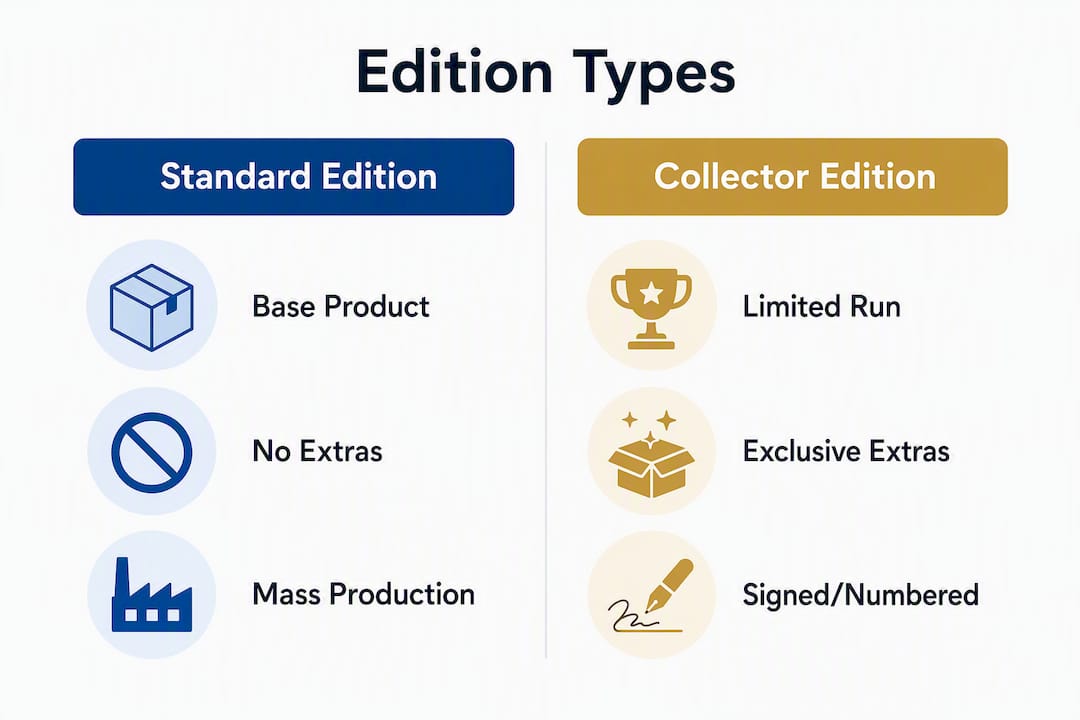
A standard edition is the base product with no extras. A deluxe edition typically adds digital content, a soundtrack, or minor physical extras. A limited edition implies a capped production run, though the cap can vary widely, from a few hundred units to several hundred thousand. A collector’s edition usually combines a physical premium bundle with the core product: think statues, artbooks, steelbooks, or numbered certificates. Numbered or hand-signed editions go further, attaching individual provenance to each copy.
The physical versus digital distinction matters more than most buyers realize. A “Digital Deluxe” edition might include a season pass and a cosmetic skin, while a physical collector’s edition ships a resin figure, a cloth map, and a lithograph. These are fundamentally different purchases, even when the marketing uses similar language.
The clearest way to evaluate any edition is to ask: would these extras exist if the core product didn’t? If the answer is no, you’re looking at a marketing bundle. If yes, you’re looking at something with genuine collector integrity.
Why do brands create collector editions?
The commercial logic is straightforward: collector editions generate incremental revenue at higher margins, accelerate preorders, and create marketing moments that standard releases cannot. As VentureBeat’s analysis of special editions in gaming notes, publishers are increasingly asking buyers, “Why just buy a game when you can buy a game, a soundtrack, a statue, a shirt, and a keychain, all inside a special box you can’t get anywhere else?” That question is a revenue strategy dressed as an invitation.
The core business goals behind most collector editions include:
- Higher margins: Physical extras cost less to produce than their perceived value, so the premium price point often yields better margin than the base product.
- Preorder velocity: Scarcity signals, especially announced limited runs, push buyers to commit early, which reduces inventory risk and provides cash flow before launch.
- Earned media: Unboxing videos, social posts, and fan community discussions generate organic reach that no paid campaign can replicate at the same cost.
- Superfan segmentation: Collector editions let brands identify and reward their most loyal customers while extracting additional revenue from that segment without discounting for the broader market.
- Backlist revival: Anniversary editions and remastered releases use collector packaging to justify premium pricing on content that already exists, extending a title’s commercial life.
Scarcity is the most powerful lever, and brands use it deliberately. A limited run of 10,000 units creates urgency. A channel exclusive, available only through one retailer, concentrates demand and often generates a waiting list. Research published in the Journal of Retailing confirms that sellout immediacy, the speed at which a limited edition disappears, directly influences perceived uniqueness and brand repurchase intent, though the effect depends heavily on whether the edition is hedonic (emotionally driven) or utilitarian in nature.
Written Word Media’s guide for indie authors makes the same point for books: limited and signed editions build premium revenue streams and deepen reader relationships, but they require clear communication about run size and distribution to avoid backlash.
Pro Tip: To spot a marketing-driven extra versus a product-driven one, ask whether the bonus content deepens your understanding or enjoyment of the core product. A companion artbook that reveals the design process is essence-aligned. A branded tote bag is not.
Why do collectors and fans actually buy them?
People buy collector editions to express identity, preserve memories tied to a franchise, and feel a sense of exclusive membership in a community they care about. That’s the short answer. The longer one involves several overlapping psychological drivers that brands understand very well.
Scarcity and FOMO are the most immediate triggers. When a product is announced as limited, the fear of missing out compresses the decision window and overrides rational price comparison. Emotional attachment to a franchise, author, or brand amplifies willingness to pay, because the purchase feels like an extension of a relationship rather than a transaction. Tactile pleasure matters too: the weight of a premium box, the texture of a cloth-bound book, or the detail on a hand-painted figure delivers a sensory experience that a digital download simply cannot.
Social signaling rounds out the picture. Displaying a collector’s edition on a shelf communicates taste, loyalty, and discernment to anyone who sees it. Consumer behavior research covered by Business Daily Media confirms that products become collectable for reasons including their symbolic value, mood-altering properties, and instrumental importance, all of which collector editions are engineered to deliver.
There is a real downside to this psychology, and brands that ignore it pay a price. When a hedonic collector edition sells out instantly, leaving loyal fans empty-handed, the frustration can reduce future repurchase intent. Successful campaigns balance genuine scarcity with enough access that the brand remains desirable rather than exclusionary.
What do collector editions look like across different categories?
The marketing goals are consistent across categories, but the execution varies considerably depending on the product type, the production economics, and the collector community’s expectations.
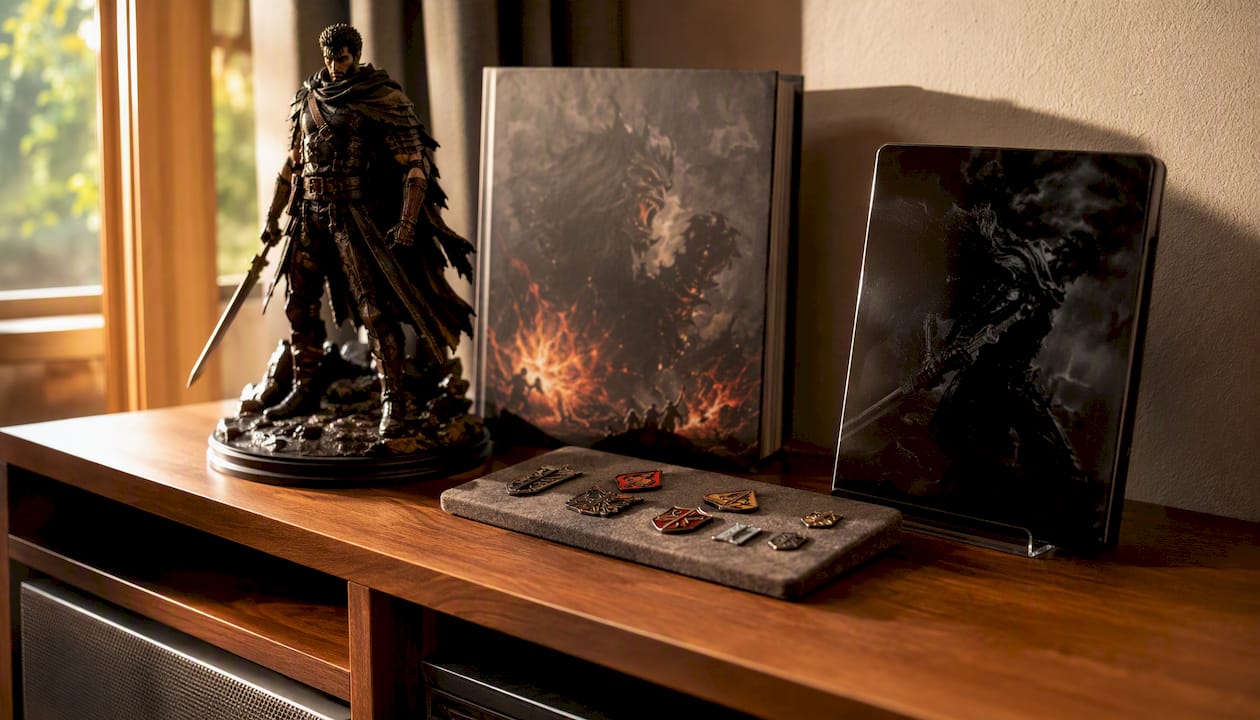
Video games are the most elaborate category. A typical collector’s edition might include a resin or PVC statue, a hardcover artbook, a steelbook case, a cloth map, a digital soundtrack, and early access or DLC codes. Production runs vary from a few thousand for niche titles to tens of thousands for major franchises, and the secondary market is active and well-documented.
Books lean on provenance and craft. Signed and numbered hardcovers, letterpress editions, slipcases, and hand-bound variants appeal to readers who prize the physical object as much as the text. Written Word Media notes that indie authors use these editions strategically to build margin and deepen reader relationships, with clear communication about run size being critical to maintaining trust.
Branded merchandise and consumer goods use limited packaging, enamel pins, apparel collaborations, and numbered product runs to create collectability around everyday items. The psychology is identical to gaming or books, but the display value and resale dynamics differ.
Hardware and physical gaming equipment, including pinball machines, represent the most substantial collector editions of all. Limited-finish runs, themed cabinet art, and numbered production units command significant premiums and occupy a category where condition and provenance matter enormously.
| Dimension | Video games | Books | Branded merch | Hardware/pinball |
|---|---|---|---|---|
| Typical extras | Statues, artbooks, steelbooks, DLC | Signed/numbered copies, slipcases, letterpress | Limited packaging, pins, apparel | Special finishes, themed art, numbered units |
| Production run | Hundreds to tens of thousands | Dozens to thousands | Varies widely | Often very limited |
| Resale signal | Strong for low-print, sealed copies | Strong for signed/numbered with provenance | Moderate | Strong for iconic titles in excellent condition |
| Display value | High (statues, steelbooks) | Moderate to high | Low to moderate | Very high |
| Replacement risk | Medium (parts available) | Low (books are durable) | Low to medium | High (parts scarce for vintage) |
The pattern that holds across every category: the more the extras are tied to the specific world or craft of the product, the stronger the collector appeal and the more durable the secondary-market value.
What are the real pros and cons for buyers?
Collector editions offer genuine rewards, but they also carry trade-offs that are easy to underestimate at the preorder screen.
Benefits worth considering:
- Exclusive lore, art, and content that deepens your connection to a franchise or author’s world
- Premium display objects that function as statement pieces in a home, office, or game room
- Potential resale upside for genuinely scarce editions tied to enduring franchises
- A sense of completeness and prestige that the standard edition simply cannot deliver
- Community belonging, because owning a collector’s edition signals membership in a passionate fan base
Trade-offs to weigh honestly:
- Price premiums are substantial, often two to five times the base product’s cost, and the extras rarely justify that gap on a pure cost-per-item basis
- Storage and display require dedicated space, protective cases, and stable environmental conditions
- Reissues and “game of the year” editions can undercut the exclusivity of an earlier collector’s release
- Resale value is unreliable for mass-produced editions; incomplete sets lose value quickly and replacement components rarely restore full worth
- Quality inconsistency is real: some statues and figures arrive with paint defects, and some artbooks are printed on paper that doesn’t match the premium price
Pro Tip: Before you commit, ask yourself one question: would I keep every item in this box for ten years even if it never appreciated in value? If the answer is yes, buy it. If you’re hedging on resale, research the secondary market first.
Are collector editions a good investment?
Most collector editions are consumption assets, not reliable investments. Buy them because you love the product and want the experience. A small, well-defined subset does appreciate meaningfully, but identifying those editions in advance requires genuine market knowledge, not optimism.
Research summarized by Summitward confirms that collectibles generally deliver emotional returns but are unreliable as financial investments, with many categories showing modest real returns after fees, storage costs, and selection biases are accounted for. The headline numbers that make collectibles sound compelling often reflect the top performers in a category, not the median outcome.
The factors that most reliably drive secondary-market value are:
- True scarcity: Low print runs that were never reissued, not just “limited” marketing language applied to a run of 50,000
- Franchise longevity: Titles with enduring cultural relevance, iconic characters, or anniversary momentum hold value better than one-hit releases
- Completeness: Play Then Sell’s 2026 collector’s edition price guide is direct on this point: incomplete collector editions, those missing boxes, inserts, or certificates, routinely lose substantial secondary-market value. Completeness is one of the biggest pricing factors, often more important than age for modern manufactured editions.
- Condition: Sealed or mint-condition copies command premiums that opened copies cannot match, regardless of how carefully the contents were handled
- Timing: Sequel announcements, remasters, and anniversary campaigns create demand spikes that can temporarily lift secondary prices
For the condition checklist, preserve the original outer box, all interior inserts and foam, any certificates of authenticity, and ideally the shrinkwrap if the edition was purchased sealed. Graded collectibles, those submitted to professional grading services, occupy a separate market tier where the sealed, ungraded copy and the professionally graded copy are effectively different products with different buyer pools.
WorthLens.ai’s analysis of collectibles as investments notes that while some collectible categories have outperformed broad market indexes over long periods, the full picture includes storage costs, liquidity constraints, and tax treatment that index comparisons routinely omit. The emotional return is real. The financial return is uncertain.
How do you decide whether to buy a collector edition?
The one rule that covers most situations: buy for emotional, display, or community reasons. Don’t buy as an investment unless you’ve done the secondary-market research and understand the specific edition’s scarcity profile.
Beyond that rule, here’s a practical checklist to run through at the product page or preorder screen:
- Confirm exactly what’s included. Read the full contents list, not just the marketing headline. Verify whether the core product (the game, the book, the hardware) is included or sold separately.
- Verify edition size and distribution channel. Is the run size published? Is this a retailer exclusive or widely available? Channel exclusives tend to hold secondary-market value better than broadly distributed editions.
- Compare the cost of buying extras separately. LVL Focus’s buyer analysis makes the point clearly: collector editions often cost significantly more than base releases, and the extras are rarely available separately at a price that justifies the premium. Know what you’re actually paying for.
- Estimate storage and display requirements. Large boxes, statues, and framed art require dedicated space and protective conditions. Measure before you commit.
- Check the return and warranty policy. Physical extras are often non-returnable once opened, and statues or electronics may carry separate warranty terms from the core product.
- Research reissue history for the franchise. If the publisher has a pattern of releasing “definitive” or “complete” editions six months after launch, the collector’s edition exclusivity may be short-lived.
Questions worth asking directly on the product page or to a seller: What is the exact production run number? Are reprint plans publicly stated? What are the dimensions and weight of display items? Does the warranty cover electronic components in the bundle?
How do you store and preserve collector editions properly?
Condition is everything in the collector market, and the gap between “excellent” and “good” condition can represent a meaningful difference in resale value. The short answer: store items in a stable, low-humidity environment, keep original packaging intact, and limit handling.
Books and printed materials deserve archival-quality protection. Store hardcovers upright to prevent warping, use acid-free mylar sleeves for dust jackets, and keep signed or numbered copies away from direct light, which fades ink and degrades paper over time.
Figures and statues are best displayed in enclosed, dust-free cases away from direct sunlight. UV-filtering acrylic cases protect paint and resin from fading. Avoid placing figures near heat sources or in rooms with significant humidity fluctuation, which can cause resin to crack or paint to lift.
Boxes and outer packaging hold more resale value than most collectors expect. Keep them in archival storage boxes or, for sealed editions, in a climate-controlled space. If the edition arrived shrinkwrapped and you don’t intend to open it, leave it sealed.
Electronics and battery-powered accessories require specific attention: remove batteries before long-term storage to prevent corrosion, and keep any firmware update notes or activation codes in a labeled envelope with the item.
Pro Tip: Photograph every item in your collection at the time of purchase: the outer box, each interior component, the certificate of authenticity, and the receipt. Store these images in a cloud folder labeled by title and date. This habit protects provenance, simplifies insurance claims, and makes resale listings significantly more credible.
Where should you buy collector editions, and how do you avoid scams?
Prefer reputable direct channels or authorized retailers for first-run purchases. Publisher storefronts, major authorized retailers, and brand-direct preorder pages offer the clearest return policies, the most reliable condition guarantees, and the lowest fraud risk. Secondary markets are legitimate options when you understand the fees, the condition grading conventions, and the verification steps involved.
Practical buying tips:
- Set calendar reminders for announced preorder windows. Many limited editions sell out within hours of going live, and late arrivals pay secondary-market premiums.
- Verify the exact SKU or edition name before purchasing. “Collector’s Edition” and “Limited Edition” are sometimes used interchangeably by different retailers for different bundles of the same title.
- Confirm return and warranty policies in writing before completing a purchase, especially for high-value items.
- Keep all receipts, order confirmations, and shipping documentation. These establish provenance and are often required for warranty claims or dispute resolution.
Red flags on resale listings: missing components described vaguely as “complete,” photos that show only the outer box without interior contents, unverifiable serial numbers or certificates, and prices significantly below current secondary-market averages. A suspiciously low price on a high-demand edition is almost always a signal of missing parts, undisclosed damage, or outright fraud. Parallel principles apply across all collectible categories, from trading cards to hardware. The NextGenCards Collector’s Guide covers how print-run verification and variant authentication work in the trading card space, and the same skepticism translates directly to any limited-edition purchase.
How collector editions work for physical gaming hardware: the pinball example
The principles that govern collector editions in games and books apply with equal force to large-format physical gaming hardware, and pinball machines are among the most compelling examples in the category. Scarcity, display value, franchise affinity, and condition sensitivity all drive the collector market for pinball, often more intensely than in smaller-format collectibles because the machines are both functional and monumental.
Why pinball machines attract collectors comes down to the same forces at work in any premium edition: iconic licensed themes, limited production runs, and the irreplaceable tactile experience of the physical object. A machine themed around a beloved franchise, produced in a numbered run with custom cabinet art, is a collector’s edition in every meaningful sense. Its display value is extraordinary, its condition sensitivity is high, and its resale trajectory depends on the same factors that govern any scarce, franchise-tied collectible.
The Addams Family pinball machine is a textbook case: a licensed theme with enduring cultural resonance, a production history that makes original examples genuinely scarce, and a collector community that tracks condition and provenance with the same rigor as any serious collectibles market.
What separates a reputable pinball seller from a casual listing is transparency and service depth. Buyers should expect:
- Detailed, accurate listings that specify whether a machine is new, refurbished, or used, with clear descriptions of any restoration work performed
- Transparent refurbishment standards that explain what was replaced, reconditioned, or upgraded, so condition claims are verifiable
- Shipping, delivery, and in-store pickup options that account for the size and fragility of the hardware
- Warranty coverage that reflects the machine’s condition tier and gives buyers confidence in a high-value purchase
- Customer support that can answer provenance questions, discuss edition details, and assist with post-purchase care
Premiumpinballs offers all of these across a catalog that includes iconic models, refurbished classics, and new premium machines, making it a natural destination for collectors who want both the prestige of a statement piece and the confidence of a vetted purchase. Explore the advantages of refurbished pinball machines if you’re weighing condition tiers, or browse Premiumpinballs’ curated selection of the best pinball machines to see what’s currently available.
Key Takeaways
Collector editions serve three distinct roles simultaneously: a marketing instrument for brands, an emotional investment for fans, and a collectible asset for a small subset of buyers who understand the resale market well enough to act on it.
| Point | Details |
|---|---|
| Buy for love, not speculation | Most collector editions are consumption assets; buy because you want the experience, not because you expect appreciation. |
| Completeness drives resale value | Missing boxes, inserts, or certificates routinely reduce secondary-market value; keep every component from day one. |
| Scarcity signals vary in quality | “Limited edition” on a run of 50,000 is marketing language; true scarcity means a low, published print run that was never reissued. |
| Preservation starts at unboxing | Photograph items at purchase, store in stable conditions, and keep original packaging to protect both condition and provenance. |
| Verify before you preorder | Confirm the full contents list, edition size, return policy, and reissue history before committing to any premium purchase. |
What serious collectors know that casual buyers don’t
The most common mistake in the collector edition market isn’t overpaying. It’s buying for the wrong reason without knowing it. A buyer who tells themselves they’re investing while actually buying for emotional reasons will make different, often worse, decisions than one who is honest about the motivation from the start.
The editions that hold value over time share a specific profile: genuinely low production numbers, a franchise with cultural staying power, and a collector community that cares about condition and provenance. Most releases don’t meet all three criteria. That doesn’t make them bad purchases. It makes them what they actually are: premium experiences with a price tag to match.
The practical habit that separates thoughtful collectors from impulsive ones is documentation. Photograph everything at purchase, store receipts and certificates with the item, and catalog your collection with condition notes. This takes fifteen minutes per acquisition and pays dividends in both resale credibility and personal satisfaction. A well-documented collection tells a story. An undocumented one is just a pile of boxes.
For physical gaming hardware, the same principles apply at a larger scale. A pinball machine in excellent, documented condition from a reputable source is a prestige object and a conversation piece. One purchased without provenance, from an unknown seller, with no service history, is a risk. The difference between those two purchases is almost entirely about the buying process, not the machine itself.
Selected sources and further reading
These sources are worth bookmarking for deeper research, price tracking, and condition verification across the categories covered in this guide.
- A Deep Dive on Special Editions | Written Word Media: — Covers the book category in detail, including how indie authors use limited and signed editions strategically. Useful for understanding the publishing side of collector edition economics.
- Special Edition Books | Wikipedia: — The clearest encyclopedic overview of how the terminology works across media categories, useful for understanding label conventions before you shop.