
TL;DR:
- A pinball playfield is a tilted surface covered with artwork where shots and scoring happen, and its condition affects play and value. Inspecting the shooter lane and flipper areas first reveals critical wear and history, while structural issues like planking can drastically reduce value. Proper maintenance and careful restoration choices help preserve the machine’s playability and worth.
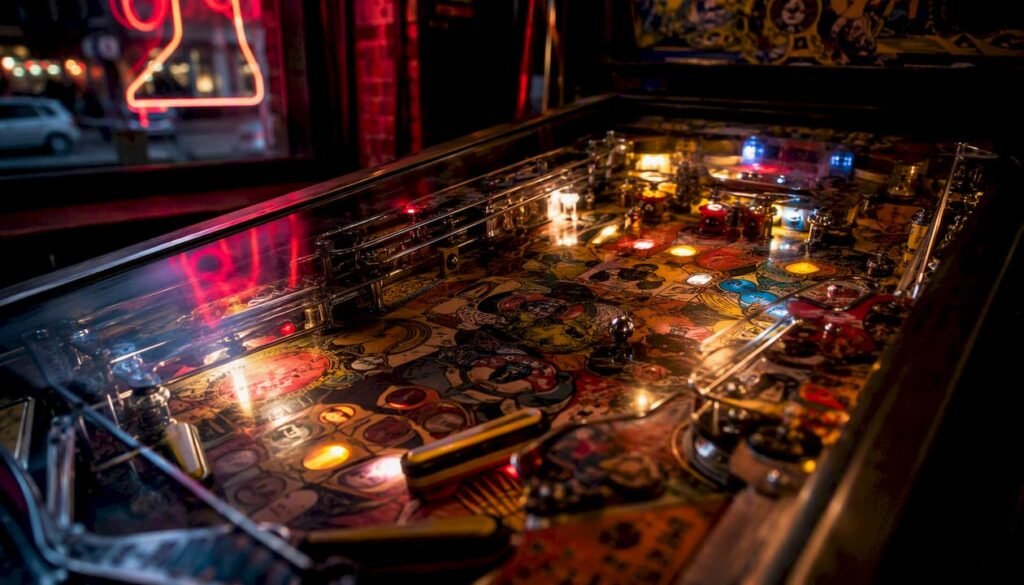
A playfield is the tilted, artwork-covered wooden surface inside a pinball machine where every shot, score, and moment of drama unfolds. Inclined at roughly 6.5 degrees, it hosts every scoring element — flippers, bumpers, ramps, targets, and inserts — and its condition determines both how the machine plays and what it’s worth on the market. At Premiumpinballs, our contributor Jim has evaluated hundreds of machines, and his consistent finding is this: buyers who understand the playfield walk away with better machines at fairer prices. Before anything else, ask the seller for a close-up photo of the shooter lane and both flipper areas. Those three spots tell you more about a machine’s history than any other single detail.
TL;DR: Request shooter lane and flipper-area photos first. If those look clean, the rest of the inspection becomes much easier.
Table of Contents
- What does a pinball playfield actually contain?
- Why the playfield is the heart of every pinball machine
- Playfield materials and wear: what you’re actually looking at
- How playfield condition shapes machine value
- Your step-by-step playfield inspection checklist
- Restoration options: repair, refinish, or replace?
- How to protect and maintain your playfield
- Key Takeaways
- What experienced collectors actually watch for
- Premiumpinballs: condition-assessed machines, U.S. delivery, and real support
- Useful sources and where to find repro playfields
What does a pinball playfield actually contain?
The playfield’s anatomy is more layered than it looks from above. Understanding the names and roles of each component lets you read a seller’s condition notes accurately and spot what’s missing from their photos.
- Flippers: The player’s primary control. A pair at the bottom of the surface, powered by solenoid coils, direct the ball toward targets and ramps. Weak or sluggish flippers are a common sign of worn coil sleeves.
- Pop bumpers: Circular, spring-loaded devices that propel the ball outward on contact. Usually grouped in clusters of three, they add unpredictability and scoring opportunities.
- Slingshots: Triangular kicker assemblies flanking the lower playfield. They fire the ball sideways when struck and wear out their rubber rings faster than almost any other component.
- Ramps: Elevated plastic or metal pathways that redirect the ball to upper areas or orbit loops. Cracked or broken ramps are one of the most expensive cosmetic repairs.
- Lanes and orbits: Narrow channels that guide the ball around the perimeter or through specific scoring zones. Orbit shots are a hallmark of modern layout design.
- Targets: Stationary or drop-down scoring elements. Drop targets reset mechanically and are prone to misalignment over time.
- Inserts: Translucent plastic windows set flush into the wood, backlit by LEDs or bulbs. Chipped or “ghosted” inserts signal heavy use.
- Shooter lane: The right-side channel where the ball is launched. High-friction contact makes this one of the first areas to show wear.
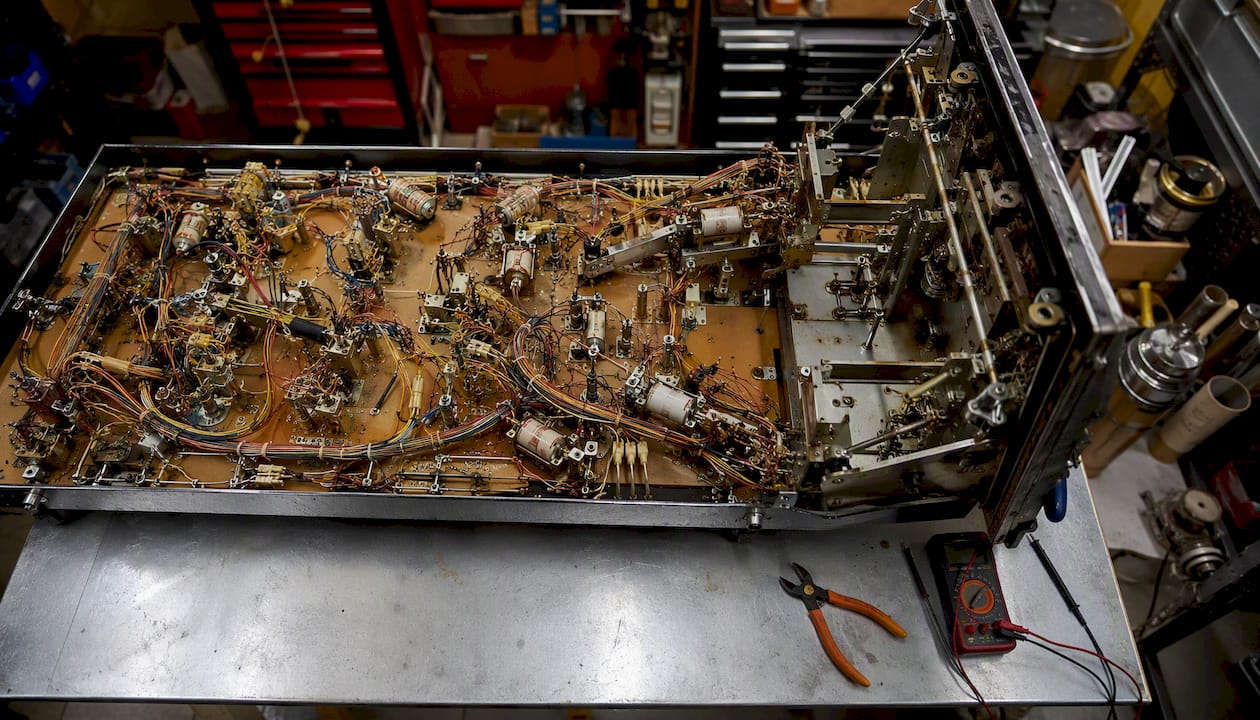
Underneath the surface, solenoids, wiring harnesses, and switches connect every top-side element to the game’s circuit boards. Some games feature separate upper and lower playfields — think Gottlieb’s Black Hole or Williams’ Black Knight — which adds inspection complexity because the upper level has its own wear patterns and wiring runs. The playfield itself sits beneath a 3/8-inch-thick glass sheet and is typically hinged for underside access.
Pro Tip: When requesting photos of a used machine, always ask for an underside shot of the solenoid bank. Corroded or burned coil wrappers visible from below often predict flipper and pop-bumper problems that won’t show up in top-down photos.
Why the playfield is the heart of every pinball machine
Layout and playfield condition largely determine how a game plays and how collectible it becomes. Designers spend enormous effort placing flippers, ramps, and targets to shape shot flow, difficulty, and replay value. A tight flipper-to-ramp angle rewards precision; a wide orbit encourages fast, flowing play. Those decisions are baked into the wood and plastic permanently.
Collectors rank desirability by how well a layout holds up over thousands of plays. A machine with a clever, balanced layout stays in demand for decades. One with a repetitive or awkward shot geometry fades from wish lists quickly, regardless of theme. Playfield condition amplifies this: a well-preserved surface on a sought-after title commands a significant premium, while visible wear on the same title can cut its market value substantially.
Key insight: Poor playfield condition is one of the fastest ways to erode resale value on an otherwise desirable machine. Buyers who prioritize cosmetic appeal over structural integrity often discover the real cost only after purchase.
Pro Tip: Look at where the ramps connect to the playfield surface. Stress cracks radiating from mounting posts signal repeated ball impact and poor support — a detail that rarely appears in wide-angle seller photos but matters enormously for long-term durability.
Playfield materials and wear: what you’re actually looking at
Most playfields use a plywood or composite substrate, screen-printed with artwork and then sealed with a protective topcoat. Vintage machines from the 1970s and 1980s typically used lacquer, which is beautiful when pristine but chips and wears through to bare wood under sustained play. Modern machines often use harder automotive-style urethane coatings — trade names like Diamond Plate — that resist wear far longer and maintain their gloss under heavy use.
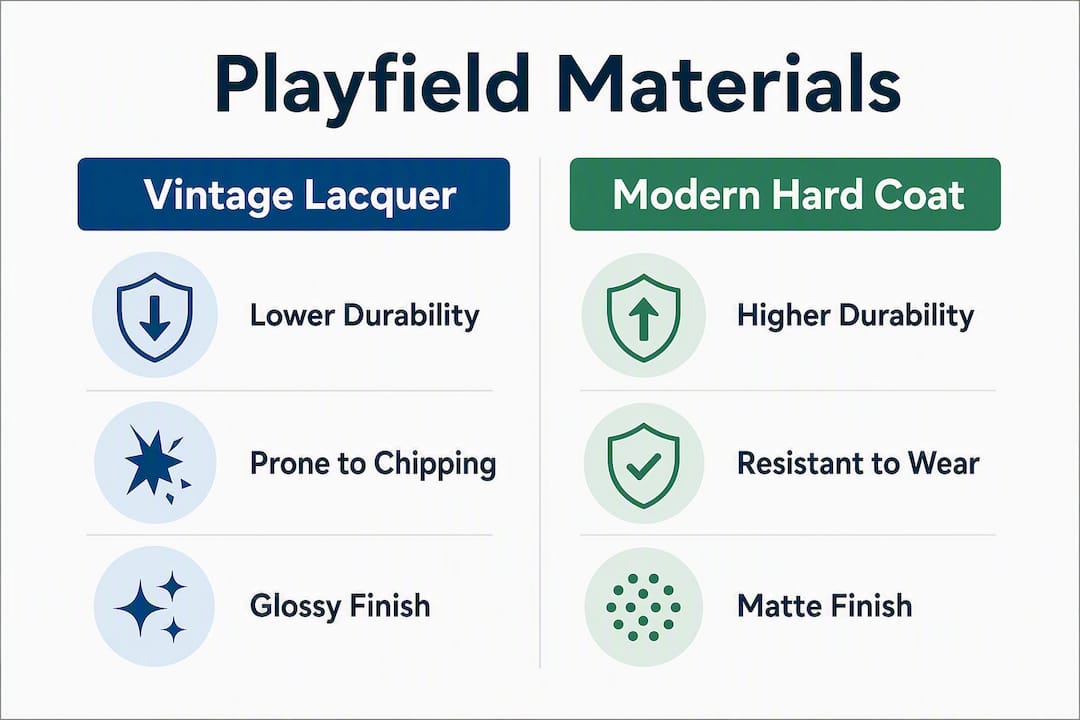
| Feature | Vintage Lacquer | Modern Hard Coat (e.g., Diamond Plate) |
|---|---|---|
| Durability | Lower; chips and wears through | Higher; resists chipping and scuffing |
| Repairability | Spot touch-ups possible | Harder to blend repairs invisibly |
| Wear appearance | Bare wood exposed at high-traffic spots | Surface dulling before wood exposure |
| Restoration cost | Moderate for cosmetic work | Higher for full refinishing |
Mylar patches were commonly applied to high-wear zones — shooter lanes, flipper areas, and scoop surrounds — to protect the artwork. The problem: Mylar ages, clouds, and lifts at the edges, and the artwork just outside the film’s edge often shows accelerated wear where the ball repeatedly crosses the boundary. Always inspect the perimeter of any Mylar strip, not just the center.
Planking is the most serious structural failure you’ll encounter. It occurs when the wood substrate separates in vertical lines, causing paint and artwork to peel in strips. Visible planking means the playfield is structurally compromised. Cosmetic repair is rarely sufficient; replacement is usually the only real fix.
Statistic: Reproduction playfields for popular titles start at roughly $800 — and that’s before labor. Budget accordingly when evaluating a machine with significant wear.
For a deeper look at wear patterns and treatment options, Premiumpinballs covers playfield wear and fixes in detail.
How playfield condition shapes machine value
Playfield condition is one of the largest single factors in market value for used pinball machines. The distinction between Home Use Only (HUO) and commercial history is where that value gap begins. HUO machines typically see a fraction of the play volume of a former arcade or bar game, which translates directly into better-preserved artwork, cleaner inserts, and less mechanical wear on flippers and solenoids.
Light surface wear — minor scuffing on the shooter lane, slight dimpling near high-traffic targets — is normal and rarely affects value significantly. Heavy wear through to bare wood, cracked plastics, or broken ramps starts to depress price meaningfully. Planking, as noted above, is a near-automatic value killer. Fully restored machines can command a premium over average-condition examples, but restoration quality and documentation matter. A repro playfield installed without records of the work can actually raise questions for serious collectors rather than reassure them.
For pricing context across condition grades, Premiumpinballs’s pinball pricing guide is a practical reference.
Your step-by-step playfield inspection checklist
Run through this sequence whether you’re inspecting in person or evaluating a seller’s photo set. A structured approach from the pinball buying checklist perspective keeps you from missing the details that matter most.
Top priority — request or inspect these first:
- Wear to bare wood at scoops, shooter lane, and flipper areas.
- Visible planking (vertical paint separation along wood grain).
- Cracked, broken, or missing ramp sections.
- Cracked or absent plastics over slingshots and pop bumpers.
- Major lacquer chipping across the upper playfield.
- Flipper strength and consistency — both sides should feel equal.
Mid priority — check after the above:
- Insert ghosting (white haze around insert edges) or chipping.
- Mylar lifting or clouding, especially at edges.
- Light and switch function across major features (ramps, scoops, drops).
- Underplayfield corrosion or leaking battery damage.
Lower priority — cosmetic only:
- Minor surface scratches that don’t penetrate the topcoat.
- Small paint touch-ups that don’t obscure artwork.
Photo request template: Ask sellers for (a) a full top-down shot with the glass removed, (b) close-ups of the shooter lane, left flipper area, and right flipper area, © close-ups of any ramp connections, and (d) an underside photo showing the solenoid bank.
Pro Tip: Blurred or overexposed close-up photos are a red flag. Sellers with nothing to hide shoot in good light and get close. If the shooter lane photo is suspiciously dark or shot from an angle, ask for a retake before proceeding.
For a complete buyer’s walkthrough, Premiumpinballs’s purchase checklist guide covers the full machine, not just the playfield.
Restoration options: repair, refinish, or replace?
Replacing a playfield with a reproduction is often only worth the investment for high-value machines, because the labor to transfer every component dwarfs the cost of the repro itself. Every ramp, plastic, mechanism, solenoid, and light must come off the old surface and go back on the new one — a process that experienced restorers frequently charge more for than the reproduction playfield’s starting price of around $800.
Repair options, from least to most invasive:
- Spot refinishing: Touch-up paint and clearcoat for minor chips. Effective on small areas; hard to match perfectly on older artwork.
- Mylar patching: Protective film applied to high-wear zones. Buys time but doesn’t restore lost artwork.
- Partial component replacement: Swapping cracked plastics, ramps, or worn rubber. Often the best value for functional restoration.
- Full repro playfield replacement: Appropriate for rare, high-value titles where a pristine surface dramatically increases resale value and collector appeal.
When a repro is appropriate: the title has strong collector demand, repro playfields are commercially available, and the machine’s other components (cabinet, backglass, electronics) are in excellent shape. When cosmetic repair or playing as-is is reasonable: the machine is a mid-tier title, wear is cosmetic rather than structural, and the buyer’s goal is enjoyment rather than resale.
Pro Tip: Document every restoration step with dated photos. A well-documented repro installation reassures future buyers and preserves provenance — undocumented restorations often raise more questions than they answer at resale.
How to protect and maintain your playfield
Routine, gentle maintenance extends playfield life and preserves value far more effectively than any single restoration. The sequence matters as much as the products you use.
- Clean the glass first. Dirt on the underside of the glass falls onto the playfield when you lift it. Use a lint-free cloth and glass cleaner before touching the surface below.
- Wipe the playfield with a mild cleaner. Novus Plastic Polish #1 or a dedicated pinball cleaner on a microfiber cloth removes ball grime without attacking the topcoat.
- Check and replace rubber rings. Worn rubber slows the ball and stresses solenoids. Replace the full ring kit annually on a home machine, more frequently on commercial units.
- Inspect and replace bulbs or LEDs. Dead inserts are easy to overlook but signal switch or socket issues worth addressing early.
- Examine the underplayfield quarterly. Look for loose connectors, cracked solder joints, and any sign of moisture or corrosion.
- Control storage conditions. Humidity above 60% accelerates wood warping and planking. Store machines in a climate-controlled space, ideally between 60°F and 75°F.
Do not use: harsh solvents (acetone, lacquer thinner), abrasive pads, or any spray cleaner applied directly to the surface. These strip topcoats and lift artwork permanently.
For commercial machines, run through steps 2 and 3 monthly rather than annually. High play volume accelerates rubber wear and solenoid fatigue at a rate that surprises most first-time operators.
Key Takeaways
The playfield is the single most important factor in a pinball machine’s playability and long-term value — inspect it first, protect it consistently, and budget realistically for restoration before you buy.
| Point | Details |
|---|---|
| Inspect shooter lane first | Wear at the shooter lane and flipper areas reveals usage history faster than any other single check. |
| Planking is a deal-breaker | Vertical wood separation is a structural failure; cosmetic repair is rarely sufficient and replacement parts start at roughly $800, with labor often costing more. |
| HUO machines command a premium | Home Use Only history means far less wear than commercial machines at the same cosmetic grade. |
| Labor dominates restoration cost | On a full repro replacement, labor to transfer components typically exceeds the cost of the reproduction playfield itself. |
| Premiumpinballs for vetted inventory | Premiumpinballs offers refurbished and used machines with condition assessments, U.S. shipping, and warranty coverage for buyers who want confidence before they commit. |
What experienced collectors actually watch for
The gap between a cosmetic issue and a structural one is where most buying mistakes happen. Surface scratches, minor insert ghosting, and small paint chips are the kind of wear that looks alarming in photos but costs little to address. Planking, cracked ramp mounting points, and burned solenoid coils are the issues that quietly double a restoration budget.
When evaluating a seller, the questions that reveal the most are simple: “Was this machine ever on location?” and “Do you have any service records?” A seller who answers both confidently and offers to show you the underside of the playfield is almost always dealing honestly. One who deflects either question, or whose photos conspicuously avoid the shooter lane, deserves more scrutiny before you proceed.
Premiumpinballs’s educational resources and refurbishment expertise exist precisely for buyers who want a trusted second opinion. Whether you’re evaluating a private sale or considering a fully refurbished machine, having a knowledgeable partner in your corner changes the outcome.
Premiumpinballs: condition-assessed machines, U.S. delivery, and real support
Knowing what a playfield should look like is one thing. Finding a machine where it already meets that standard is another.
Premiumpinballs carries a curated inventory of refurbished, used, and new pinball machines — each listed with detailed condition notes, photos, and transparent pricing. Every refurbished machine goes through a documented restoration process, so you’re not guessing about playfield condition or solenoid health. Nationwide shipping, in-store pickup, and warranty coverage mean the purchase experience matches the quality of the machines themselves. If you’re weighing a private-sale machine against a professionally refurbished option, the advantages of a refurbished pinball are worth reviewing before you decide. Browse the current inventory or request a condition report directly at premiumpinballs.com.
Useful sources and where to find repro playfields
| Source | What it covers |
|---|---|
| Pinball — Wikipedia | Playfield definition, incline, and machine overview |
| Glossary of Pinball Terms — Wikipedia | Component names, upper/lower playfield distinction |
| Anatomy of a Pinball Machine — Pinball Castle | Glass dimensions, hinge access, substrate details |
| How to Buy a Pinball Machine — HomePinballRepair | Coating types, wear indicators, repro cost benchmarks |
| Pinball Buying Checklist — Game Room Info | Inspection priorities for used machine buyers |
| Owning Your First Pinball Machine — Marco Specialties | First-owner guidance, wear zones, functional checks |
| Pinside Condition Wiki | Community-sourced condition grading standards |
| PinWiki Glossary | Playfield substrate materials, pop bumper terminology |
For reproduction playfields and parts, search U.S.-based suppliers who specialize in the specific title you’re restoring — availability varies significantly by era and manufacturer. Premiumpinballs can also point buyers toward reputable repro sources as part of its consultation process.